 Visit Porto City Guide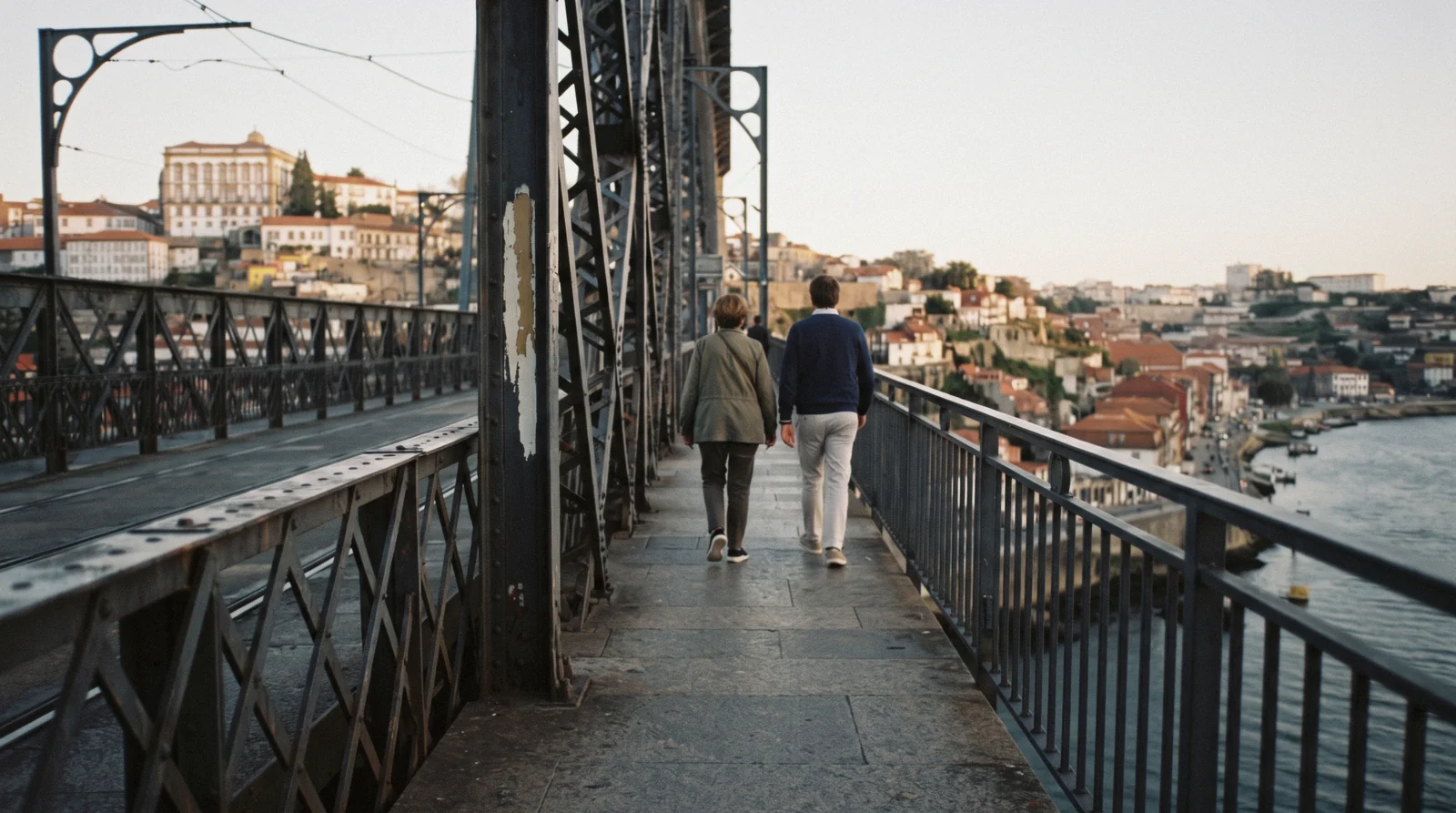
Porto for Free
Four Blue Flag beaches, one bridge deck 60 metres above the water and a tiled market hall: the free things to do in Porto are not the leftovers of the paid list, they are most of the reason the centre is a UNESCO site. The bridge deck, the market hall, the tile chapels, the station concourse, the gardens above the Douro and the whole river bank cost nothing, and the venues' own pages say so. This page prints only what an official page prices at zero, plus the rides everyone assumes are free and is charged for, plus the free-museum rule that half the internet has backwards. The paid half of the city is on things to do in Porto, the whole trip on what to see and do in Porto, the museum prices on the museums hub, and what a whole trip costs on Porto costs.
Quick answer What is free, what only looks free, and the one ride you may still pay for
Porto's free layer is the city itself: the pedestrian upper deck of the Luís I bridge, the Ribeira and Gaia quays, the Bolhão market hall, the Capela das Almas, the São Bento station concourse, the Jardins do Palácio de Cristal and every Blue Flag beach in the city charge nothing on their own pages. What is not free, whatever a listicle told you, is the heritage tram at $6.97 (€6), the Gaia cable car at $8.14 (€7) one way, the Guindais funicular at $4.65 (€4) when it runs, and the Sé cloister, museum and tower at $3.49 (€3). Portugal's free-museum days are for residents only.
Key takeaways
- The single best free hour in the city is the walk across the bridge's upper deck to the Serra do Pilar terrace and back down to Gaia — the free day route times it for the light, and the same view from a boat starts at the six-bridges cruise.
- There is no free museum Sunday for visitors: state museums went residents-only in August 2024, and the only free door on a fixed date is Serralves on the first Sunday of the month — the museums hub prices the rest.
- Mercado do Bolhão is free to walk through Monday to Saturday and closed on Sunday and public holidays, which is the single most common wasted trip on this list — what else closes covers the rest of the week.
What Is Free, and What Only Looks Free
Eleven doors a visitor expects to walk through without paying, with what the venue's own page actually charges, read in Q3 2026. The rule we applied: if the official page prints no price for the space you are standing in, it goes in the free column; if it prints one, the number is here in dollars first at €1 = $1.1622.
| Place | What it costs | When it is open | What decides it |
|---|---|---|---|
| Luís I bridge, upper deck | Free | Always, both decks | Closed on São João night, 23 June from 12:00 to 04:00 |
| Mercado do Bolhão hall | Free | Mon–Fri 8:00–20:00, Sat 8:00–18:00 | Closed Sunday and public holidays; the restaurants run to midnight |
| Capela das Almas | Free | Mon–Fri 7:30–17:30, Sat and Sun mornings | It is a working parish: hourly Masses 8:00–10:00, noon and 17:00 |
| Jardins do Palácio de Cristal | Free | April–September 8:00–21:00, October–March 8:00–19:00 | The Douro view is from the far terrace, not the dome |
| São Bento station concourse | Free | Station hours; CP publishes none for the hall | Free to walk in, so the tile panels cost nothing |
| City beaches and the Foz promenade | Free | All year; lifeguards in the bathing season | Four Blue Flags inside the city — Homem do Leme, Gondarém, Foz, Aquário |
| Sé cathedral cloister, museum and tower | $3.49 (€3) | April–October 9:00–18:30, November–March 9:00–17:30 | One ticket, no split; the church door prices nothing |
| Heritage tram, lines 1, 18 and 22 | $6.97 (€6) single | Line 1 from 8:40, line 18 from 9:15 | Not free, not Andante, not on the city card |
| Guindais funicular | $4.65 (€4) when running | Closed for maintenance, no reopening date | The stair beside it is free and takes about five minutes |
| Gaia cable car | $8.14 (€7) one way, $11.62 (€10) return | 26 April–24 September 10:00–20:00 | The bridge deck above it does the same descent for nothing |
| Serra do Pilar terrace | Free | Outdoor esplanade, no gate | The monastery itself is closed for works — only the view is available |
Prices from the venues' own pages and the 2026 STCP tariff, read in Q3 2026. Where an official page publishes nothing — the São Bento hall, the Serra do Pilar esplanade — we say so rather than invent an hour.
The Free Churches: Tiles by the Thousand, No Ticket
Porto's blue-and-white façades are the cheapest sightseeing in the city, because they are outside and because the churches behind most of them are working parishes rather than museums.
Start with the Capela das Almas on Rua de Santa Catarina, whose entire flank is a tiled wall of scenes from the lives of Saint Francis and Saint Catherine. Entry is free, and the parish publishes its hours precisely: Monday to Friday 7:30 to 17:30, Saturday 7:30 to 12:30 and again 16:30 to 17:30, Sunday 7:30 to 12:30. Masses run hourly from 8:00 to 10:00, at noon and at 17:00, which is worth knowing not because you are excluded — you are not — but because a service is not a sightseeing slot and the aisles are in use.
The cathedral is the one place where the free/paid line is genuinely blurred, and every guide states it differently. What we can source is narrow and exact: the heritage authority's ticket page prices one thing, a $3.49 (€3) ticket that covers the Gothic cloister, the treasury museum and the tower together, with no cheaper split, and prints no price at all for the nave. The terrace outside the west front — the view over the whole lower city that most people came for — has no gate and no charge.
Mass is at 11:00. The full ticket logic, including who gets in reduced, sits on the cathedral tickets page.
The same distinction runs through the rest of the city's churches. At the Clérigos the $11.62 (€10) ticket buys the tower and the museum; the church at its foot prices nothing on the official page. At São Francisco, whose interior is the gilt-carved one everyone photographs, the official site publishes hours — 9:00 to 20:00 from 1 April to 30 September, 9:00 to 19:00 from 1 October to 31 March, closed 25 December — but no price whatsoever, which is why you will not find one printed here.
Assume you pay, and check the desk.
The rule that saves the most money
Where a Porto church charges, it charges for a tower, a cloister or a treasury — the added structure — and not for the nave. That is why a day of church-going here can cost nothing while a day of tower-climbing costs $25 and up. If you are choosing one paid climb, the Clérigos tower is the one with the view of everything else on this page.
The Free-Museum Truth: Residents Only Since 2024
This is the single most repeated error about free Porto, and it costs people a wasted Sunday morning. The free-entry regime at Portuguese state museums is not a tourist benefit.
Since August 2024 the national museums' free-entry scheme has run as 52 free days a year reserved for residents, evidenced in Porto by the municipal Cartão Porto. A visitor holding a passport and a hotel booking does not qualify on those days, at the Museu Nacional Soares dos Reis or anywhere else in the network. Nothing about that is hidden — it simply contradicts a decade of older blog posts that still say "free on Sunday mornings", and those posts rank.
| Museum | Adult price | Who really gets in free | Open |
|---|---|---|---|
| Museu Nacional Soares dos Reis | $11.62 (€10) | Residents on the 52-day regime; not visitors | Tue–Sun 10:00–18:00, closed Monday and 24 June |
| Museu do Porto (each space) | $4.65 (€4), or $9.30 (€8) for seven days | Under-18s and students, any nationality; Cartão Porto holders on Sundays | Tue–Sun 10:00–17:30, closed Monday |
| Serralves, all spaces | $27.90 (€24), park alone $17.43 (€15) | Everyone, on the first Sunday of the month; under-12s always | Check the day before: the foundation publishes its hours in a script our reader could not read |
| Museu do Carro Eléctrico | $9.30 (€8) | Under-6s; a tram single cuts 30 % and a two-day tram title 50 % | Tue–Sun 10:00–18:00 |
| Clérigos tower and museum | $11.62 (€10) | Under-10s | Daily 9:00–19:00, last entry 30 minutes before |
So the honest free-museum list for a visitor is one line long: Serralves on the first Sunday of the month, where the whole estate — museum, villa, park, treetop walk — opens without a ticket, and under-12s are free on any day anyway. Everything else on the grid above is a paid door with an under-18 or student discount. The museums hub compares them properly, and the city card page explains why the pass that used to solve this is currently unbuyable.
Two consolations. The Museu do Porto's $9.30 (€8) ticket is valid for seven days across all of its spaces, which turns a museum habit into a per-visit cost of about a dollar if you use it. And the buildings with the best interiors in the city — the station hall, the market, the churches above — are not museums at all, and charge nothing.
Viewpoints, Gardens and the Deck Everyone Pays to Avoid
Porto is built on a gorge, so the views are free by geography. The paid alternatives — a cable car, a funicular, a tower — mostly sell you a shortcut up or down a hill you can walk.
The Luís I bridge is the centrepiece and the best free thing in the city. Its upper deck carries the metro's yellow line down the middle and a pedestrian walkway on each side, 60 metres above the water, and the metro operator's own works notices promise that pedestrian access stays open even during maintenance windows. The exception is São João: the deck closes from noon on 23 June until 04:00 on the 24th, for the night of the festival.
Walk it eastward from Gaia in the late afternoon and the whole granite amphitheatre of the Ribeira is lit in front of you.
At the Gaia end, two free terraces sit within three minutes of each other. Jardim do Morro is the lawn directly off the bridge deck, with the metro station of the same name behind it; it is where the city gathers for sunset with a bottle from the shop below. Beside it, the esplanade of the Serra do Pilar monastery gives the postcard angle on the bridge — and here a caveat matters: the monastery itself is closed for restoration under the PRR works programme with no announced reopening date, so the $2.32 (€2) exhibition and $4.65 (€4) dome tickets still printed on the culture ministry's website are stale.
The terrace, which is what you came for, is open and free. Both terraces give you the Douro from above for nothing, and guided tours in Porto add the stories the view alone cannot tell.
On the Porto side, the Jardins do Palácio de Cristal are open 8:00 to 21:00 from April to September and 8:00 to 19:00 from October to March, free, and their western terraces look straight down the Douro to the sea. It is a garden with peacocks, a rose collection and more benches with a view than the rest of the city combined, and it is almost always emptier than the Ribeira. The Miradouro da Vitória, a five-minute walk from the Clérigos in the old Jewish quarter, gives the tightest composition of cathedral, bridge and rooftops and costs nothing.
The free descent
Between the cathedral terrace and the Ribeira quay there is a 60-metre drop. The Guindais funicular exists to spare you it, at $4.65 (€4) one way — and it has been closed for maintenance with no reopening date, so the choice has been made for you. The stepped lanes down through the Barredo do the same job in about five minutes and are the most photographed alley system in the city.
Going back up is the ride worth buying: the metro from São Bento, a $1.63 (€1.40) Z2 single.
A Free Day in Porto, Market Door to Sunset Terrace
One day, no entry ticket, ordered by the opening hours the venues publish rather than by the map. Total cost: nothing, or $1.63 (€1.40) if you take the metro back up the hill at the end. Do not run it on a Sunday — the market and the chapel both shut early or entirely.
The logic of the route is downhill. Porto's free layer starts at the top of the city, in the Baixa, and ends at the river; the only climb is the one you choose to replace with a metro ride at the end of the day.
| Time | Stop | Why then | Cost |
|---|---|---|---|
| 08:15 | Mercado do Bolhão | The hall opens at 8:00 and the fish and produce stalls are working before the tour groups | Free |
| 09:30 | Capela das Almas and Rua de Santa Catarina | Open from 7:30, and the tiled flank faces east — morning light, no Mass until noon | Free |
| 10:30 | São Bento station concourse | The 20,000-tile hall is a working station; mid-morning is the gap between commuter peaks | Free |
| 11:15 | Cathedral terrace and the Barredo lanes | Mass is at 11:00, so the terrace outside is the visit; then walk down the steps | Free (the cloister is $3.49 / €3 if you want it) |
| 12:30 | Ribeira quay and the lower deck | Lunchtime, when the quay is at its busiest and its most alive | Free |
| 14:00 | Upper deck crossing to Jardim do Morro | The eastward view is best with the sun behind you | Free |
| 15:00 | Serra do Pilar esplanade and the Gaia bank | The lodges are on your left; the terrace is free even though the monastery is shut | Free |
| 17:30 | Jardins do Palácio de Cristal | Open to 21:00 April–September; the Douro terraces face the sunset | Free |
| 20:00 | Back up from the river | The one fare of the day, if your legs are done | $1.63 (€1.40) Z2 single |
Two swaps make the day work in other weather. In rain, the market hall, the station concourse and the churches are all roofed, and the rainy-day page turns the same geography into a dry route. In August, when the airport station's normals record just 29.3 mm of rain and daily highs near 24.8 °C, run it in reverse and finish on the sand: the city's own Blue Flag beaches at Homem do Leme, Gondarém, Foz and Aquário are free, and the beaches page has the transport.
Water, and the other small savings
Drinking water is the small saving nobody mentions. Águas e Energia do Porto reports a 99.74 % safe-water indicator on the municipal network and runs a campaign explicitly telling people to drink from the tap; a refillable bottle removes about the only recurring cost of a day spent walking.
The Market, the Station and the Streets That Are the Sight
Three free interiors that beat most paid ones, and the streets that connect them.
Mercado do Bolhão reopened after its long rebuild as a working market with an upper gallery of restaurants, and walking in costs nothing. The hours are the thing to plan around: Monday to Friday 8:00 to 20:00, Saturday 8:00 to 18:00, closed Sunday and public holidays, with the restaurant level running Monday to Saturday 8:00 to midnight. Come before 10:00 and it is a market; come at 13:00 and it is a food hall with an audience.
São Bento station is the other free interior, and the numbers behind its tiled hall — Jorge Colaço's panels of the Battle of Valdevez, the wedding of João I, the Douro harvest — are why people photograph a commuter station. CP publishes no opening hours for the concourse and no admission price, because it is a station: trains to Braga, Guimarães and the Douro leave from behind it, and the hall is on the way to the platforms.
Between the two, Rua de Santa Catarina is the shopping street, Rua das Flores the handsome one, and the lanes of the Barredo below the cathedral the medieval one. None of it costs anything, and it is the answer to the "non-touristy things to do in Porto" search that brings people here: walk the Fontainhas terrace east of the Sé for the Douro from above with no crowd at all, then follow the riverside path under the bridges. If you would rather have a guide doing the naming, the cheapest is a small-group city walk at $17.42 (€15).
Free, but bring a plan
Porto's tourist offices hand out the city map for nothing, and there are three in the centre: at the Sé on Calçada Dom Pedro Pitões, inside Trindade metro station, and the Porto Welcome Center at Praça Almeida Garrett 27. June to September they open 09:00 to 19:00, October to May 09:00 to 18:00, and the number is +351 935 557 024. Municipal Porto Free Wifi hotspots cover much of the centre and the buses, which matters if you are navigating on a phone without a local eSIM.
Free by the Calendar: The Festivals You Can Simply Turn Up To
Four dated events that cost nothing to attend, from the official 2026 calendars. They are the reason to move a trip by a week.
São João, the night of 23 to 24 June. Porto's own festival takes over the whole city: the fireworks are launched at midnight and run about twelve minutes, fired from the river between the Luís I and Arrábida bridges, per the municipal culture agency's programme. Everything about watching them is free — the quays, the Gaia bank, the Jardim do Morro lawn. The bridge's own deck closes from noon on the 23rd until 04:00 on the 24th, so pick a bank and stay on it.
| Event | 2026 dates | What it costs | Where it happens |
|---|---|---|---|
| São João | Night of 23–24 June, fireworks at 00:00 for about 12 minutes | Free | River between the Luís I and Arrábida bridges; both banks |
| Queima das Fitas | 2–9 May, the cortejo on 5 May | Free to watch the parade | The student parade crosses the city centre |
| Serralves em Festa | 29–31 May | Free | The Serralves park and museum, normally $27.90 (€24) |
| Porto Marathon | 8 November, from 08:00 | Free to watch | Finish at the Queimódromo, Matosinhos |
Serralves em Festa is the one to plan a trip around if you care about the art: for three days at the end of May the estate that normally charges $27.90 (€24) opens free for a continuous programme of performance. Add the monthly free first Sunday and Serralves is, over a year, the most generous major institution in the city.
Two dates to avoid rather than target if you are watching money: the São João night pushes every hotel rate in the city up, and the best-time page has the month-by-month picture, including the fact that November is the wettest month on the airport station's 1991–2020 normals at 165.9 mm.
The Rides That Are Not Free, Whatever You Read
Every free-Porto list we read for this page got at least one of these wrong: the tram, the funicular and the cable car all charge. The fares are from the 2026 STCP tariff and the operators' own pages, read in Q3 2026.
The tram is not free. The three heritage lines — 1 along the river to Foz, 18 up to the Carmo, 22 around the Baixa — charge $6.97 (€6) for an adult single and $4.07 (€3.50) for a child, $9.30 (€8) for two trips on the same day and $13.95 (€12) for a two-day adult title. The Andante travel passes and the Andante Tour tourist titles explicitly exclude them: the tariff prints exceto elétricos e funicular. So does the city card.
If you want the seafront ride cheaply, the ordinary STCP bus down the river costs a normal single fare; the tram page sets out the difference.
The funicular is not free, and right now it is not running. The Guindais funicular's own tariff is $4.65 (€4) one way and $6.97 (€6) return, with a $3.49 (€3) card holder's fare, and it is closed for maintenance with no reopening date published. Blogs still print €2.50, which was never the 2026 price.
The cable car is not free and not on any pass. The Gaia cable car between the bridge's upper deck and the lodges is $8.14 (€7) one way, $11.62 (€10) return, $4.07 (€3.50) for a child aged 5 to 12 one way and $26.10 (€22.50) for a family, and it runs 10:00 to 20:00 from 26 April to 24 September with shorter hours the rest of the year. It is a five-minute descent that the bridge deck and the lanes beside it do for nothing — the case for paying is the view sideways along the river, not the transport. The cable car page has the fare bands.
And the pass that would have paid for them
The Porto.CARD used to bundle transport and museum discounts, at leaflet prices of €7.50 to €18 for the walker version and €15 to €41.50 with transport. Its official sales page now redirects to the tourism board's homepage, third parties report sales suspended since July 2026, and no official statement confirms or denies it. Do not plan a budget around it; ask at the Sé or Trindade office. The city card page prints the whole contested picture.
The Cheap Paid Layer Over the Free City
Five bookings under $30 for the days when free stops being enough — a guided walk, the tower, the tower after dark, the river and one cellar. Prices and ratings as listed by the operator in Q3 2026; the official prices they compare against are on the tickets index.
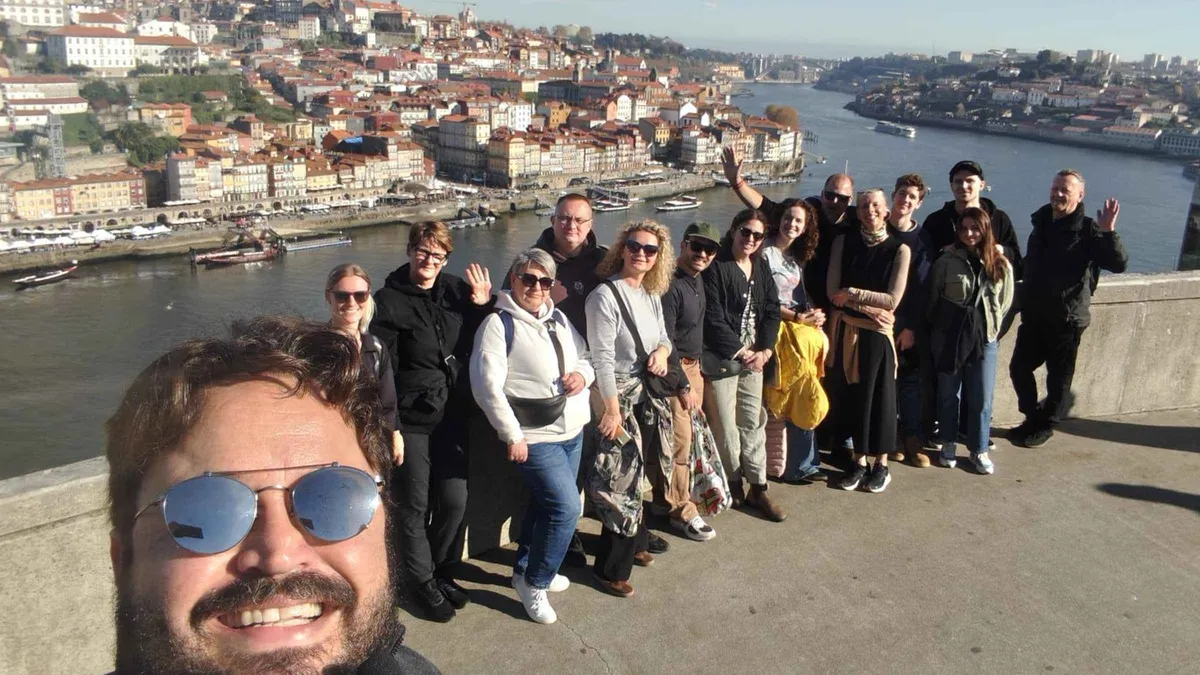 from €15
Porto: City Highlights Guided Walking Tour
listed at $17.42
A two-and-a-half-hour English walk from the Lions Fountain with a guide under a white umbrella. The cheapest scheduled walking tour on this page, from the Hi Lisbon team's Porto branch.
Check Availability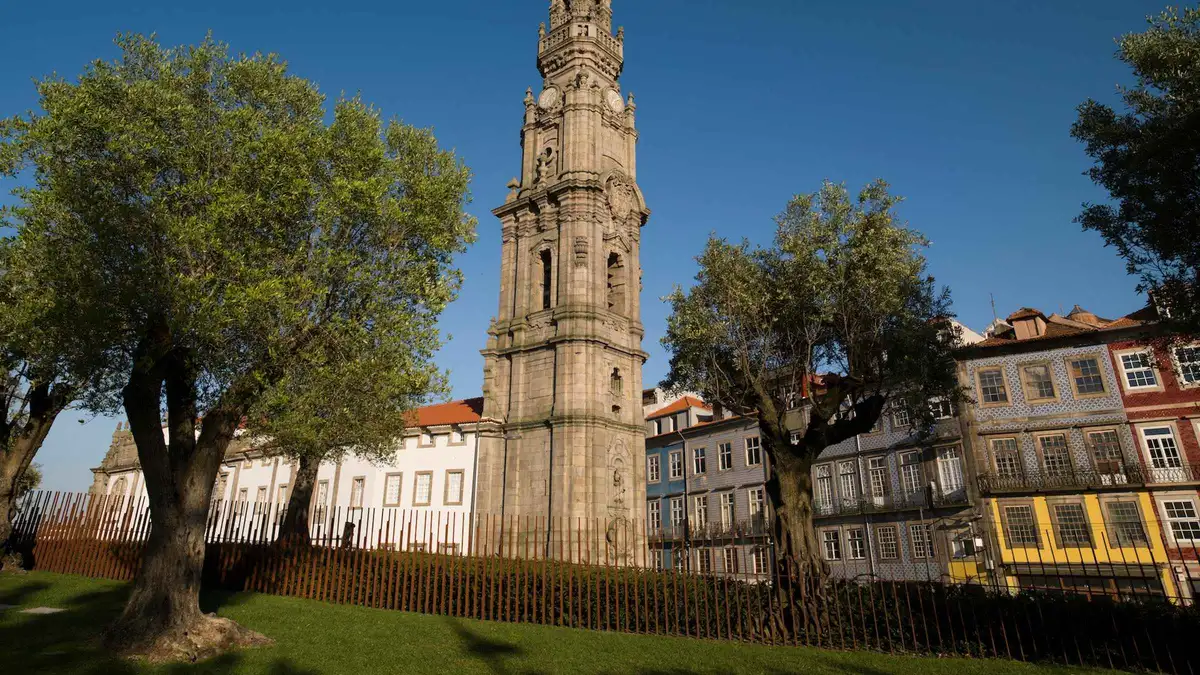 from €10
Porto: Torre dos Clérigos Entrance Ticket
listed at $11.61
The daytime climb up Porto's 225-step baroque bell tower, sold by the Irmandade dos Clérigos itself. Backpacks stay in the storage room, and the tower has no lift.
Check Availability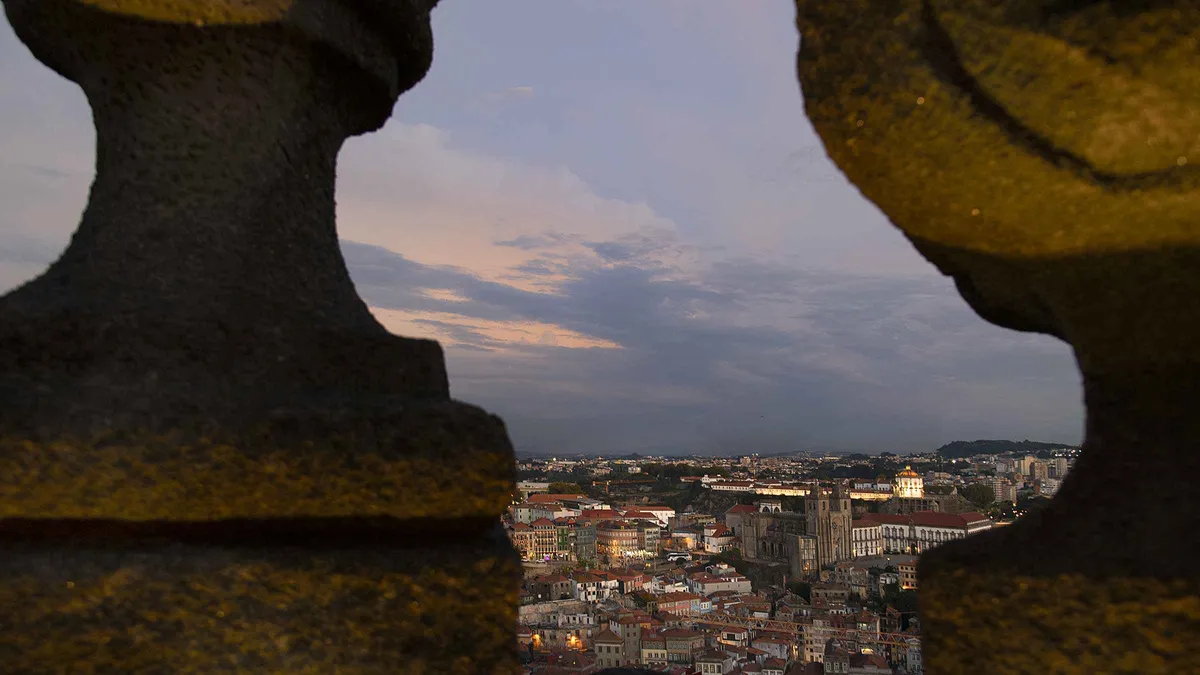 from €5
Porto: Ticket for the Clérigos Tower at Night
listed at $5.81
The same 225-step tower after dark, in groups capped at ten, for the lit-up city rather than the daytime crowd. Swap the voucher at the ticket office when you arrive.
Check Availability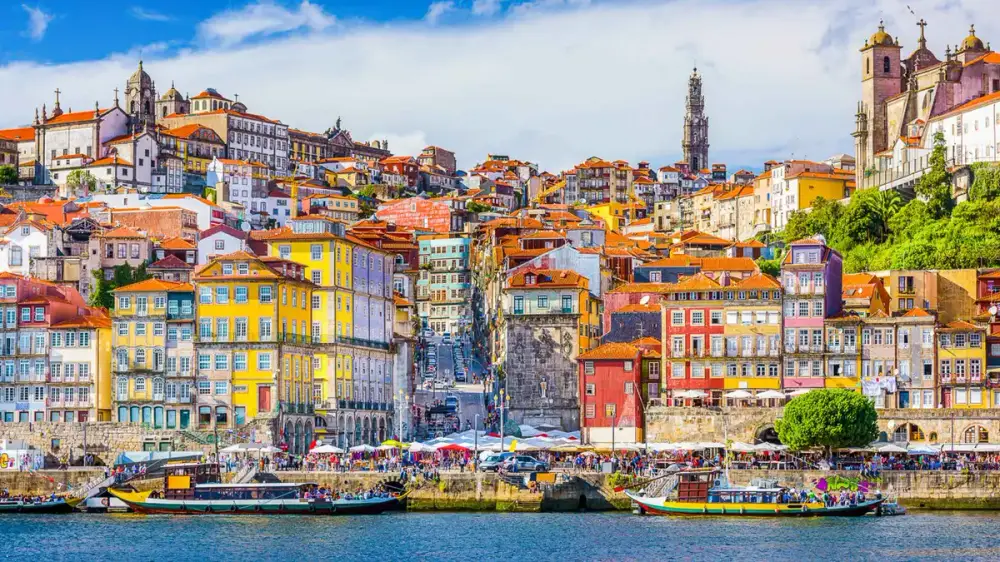 from €18
Porto: Six Bridges Cruise
listed at $20.90
The 50-minute Six Bridges loop on a traditional-style boat, the cheapest way onto the river and the most-booked. Audio comes by QR code on your own phone; the 4.2 rating reflects the crowds.
Check Availability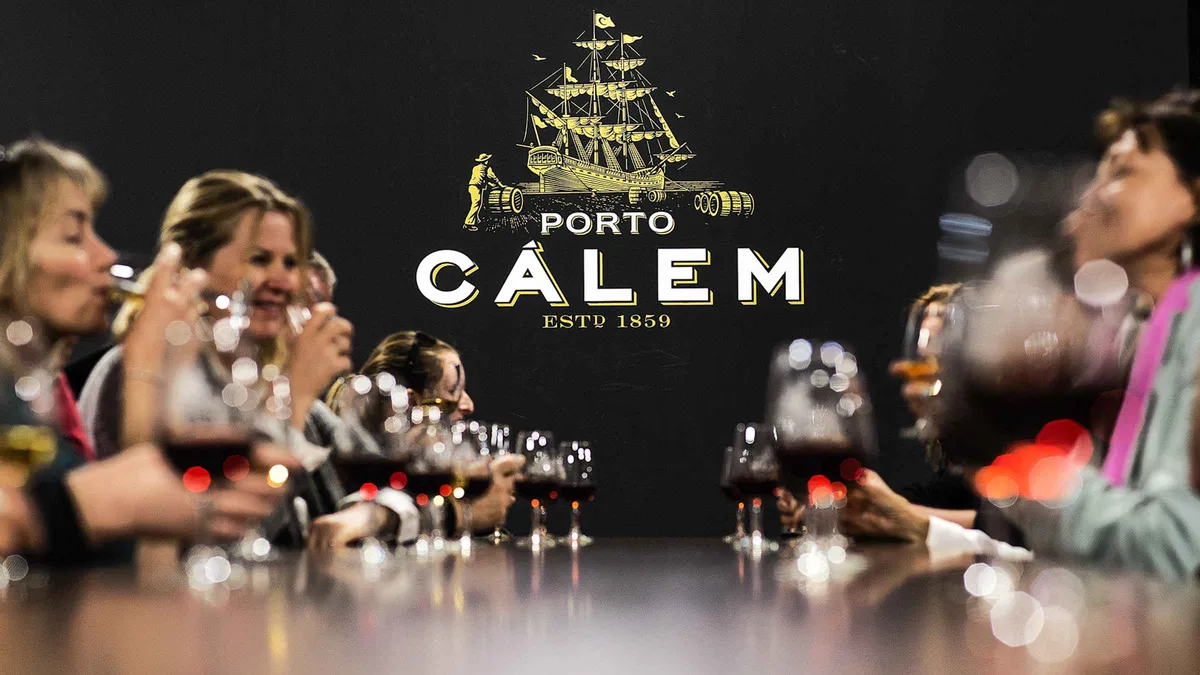 from €22
Porto: Cálem Cellar Tour, Interactive Museum & Wine Tasting
listed at $25.55
The riverfront Cálem cellar: a 15-minute interactive museum, a half-hour guided tour in four languages and two ports at the end. Short, cheap and central — pick it when time is tight.
Check AvailabilityPrices, ratings and details are the platform's own. Dollar figures are the listed prices. The platform bills in your account's currency.
Free Porto: The Questions
What can you do in Porto without paying for anything?
A full day, and a good one: the Bolhão market hall from 8:00, the Capela das Almas, the São Bento tile concourse, the cathedral terrace, the Ribeira quay, the bridge's pedestrian upper deck, the Jardim do Morro and Serra do Pilar terraces on the Gaia side, and the Jardins do Palácio de Cristal until 21:00 in summer. The hour-by-hour route puts them in the order the opening times allow.
Is the cathedral free to enter?
The heritage authority's ticket page prices one product only — a $3.49 (€3) ticket covering the cloister, the treasury museum and the tower together — and prints no admission price for the church itself. The terrace outside, with the view over the lower city, has no gate. Mass is at 11:00. The tickets page has the detail.
Is the tram free in Porto?
No. The heritage lines charge $6.97 (€6) for an adult single, $4.07 (€3.50) for a child and $13.95 (€12) for a two-day title, and the Andante passes exclude them in so many words. The one free ride in the city is your own legs across the bridge deck; the tram page explains what the fare buys.
Which museums can you enter for free?
One reliable free door for visitors: Serralves, free on the first Sunday of every month, and free for under-12s any day. The Portuguese state scheme that people remember as "free Sundays" became a residents-only regime of 52 days a year in August 2024, evidenced by the municipal Cartão Porto. The museums hub prices every other door, and the Museu do Porto seven-day ticket at $9.30 (€8) is the cheapest way to see several.
What are the cheapest paid options when free is not enough?
In this order by price: the Clérigos tower at night for $5.81 (€5) on its limited seasonal dates, a small-group walking tour at $17.42 (€15), the fifty-minute six-bridges cruise at $20.90 (€18) — the cheapest way onto the water, not the best boat — and a Cálem cellar tour with tasting at $25.55 (€22). Porto costs puts them into a daily budget.
What can young adults do in Porto for free?
The free layer aimed at young adults is the evening one: the Jardim do Morro lawn at sunset, where the city drinks a supermarket bottle looking at the bridge; the student quarter around Rua de Cândido dos Reis and the Galerias de Paris, where the drinking happens in the street outside the bars and Thursday is the student night; the beaches at Foz and Matosinhos in summer, free and reachable on a normal transport title; and the free stretch of the Queima das Fitas student festival from 2 to 9 May 2026, whose parade on 5 May crosses the centre. Bars charge; standing outside them does not. The nightlife page covers what a night out costs once you go in.
Does the rest of a trip here cost more than the sightseeing?
The sightseeing is not expensive: the headline doors run $11.62 to $18.54 (€10–€15.95) and the whole free list above costs nothing. What costs money here is sleeping — the city charges a $3.49 (€3) per-night tourist tax up to seven nights, with under-13s exempt — and eating in the Ribeira. Where to eat and the costs page carry those numbers.
What is there to do for free in Porto on a Sunday?
Sunday is the awkward day: the Bolhão market and the Capela das Almas afternoon are both shut, and the state museums' free days do not apply to visitors. What works is outdoors — the bridge deck, the Gaia bank, the Crystal Palace gardens, the Foz promenade and the city beaches — plus Serralves free if it is the first Sunday of the month. The closures page lists the Sunday and Monday gaps together.
Where to Go Next
The three pages that turn a free day into a whole trip.
Things to do in Porto
Every sight in the city ranked and priced, with what each one is actually for. The full list.
The paid half of the listPorto museums
Prices, closed Mondays, the seven-day Museu do Porto ticket and the residents-only free regime in full. The museums hub.
Where the free-day rule bitesPorto with kids
Which of these free spaces suit a pushchair, where the under-12 tickets are and what the beaches offer. Porto with kids.
Free works better with childrenFree Porto on Video
Three films that show the free layer moving: a local's list of what to do and which traps to skip, a ten-stop city walk, and a run-through of the free sights. Prices spoken on camera are from their filming dates; ours were read in Q3 2026.
Best Things to Do in Porto (and 5 Tourist traps) – A Local's No-BS Guide
A Porto guide on what is worth paying for and what is not — the same argument this page makes with prices attached.
Video: PortoalitiesTop 10 Free Things To Do In Porto, Portugal
Ten free stops, most of them on the route above, filmed in order along the river.
Video: Travel TrolleyPORTO, PORTUGAL | 10 Incredible Things To Do In & Around Porto
A wider city walk that shows how short the distances between the free stops really are.
Video: World Wild HeartsVideos load from YouTube only when you press play.
Prices, hours and terms are set by the venue or operator and confirmed at checkout.
We may earn a commission if you book through one of our links, at no extra cost to you. Full affiliate disclosure