 Visit Porto City Guide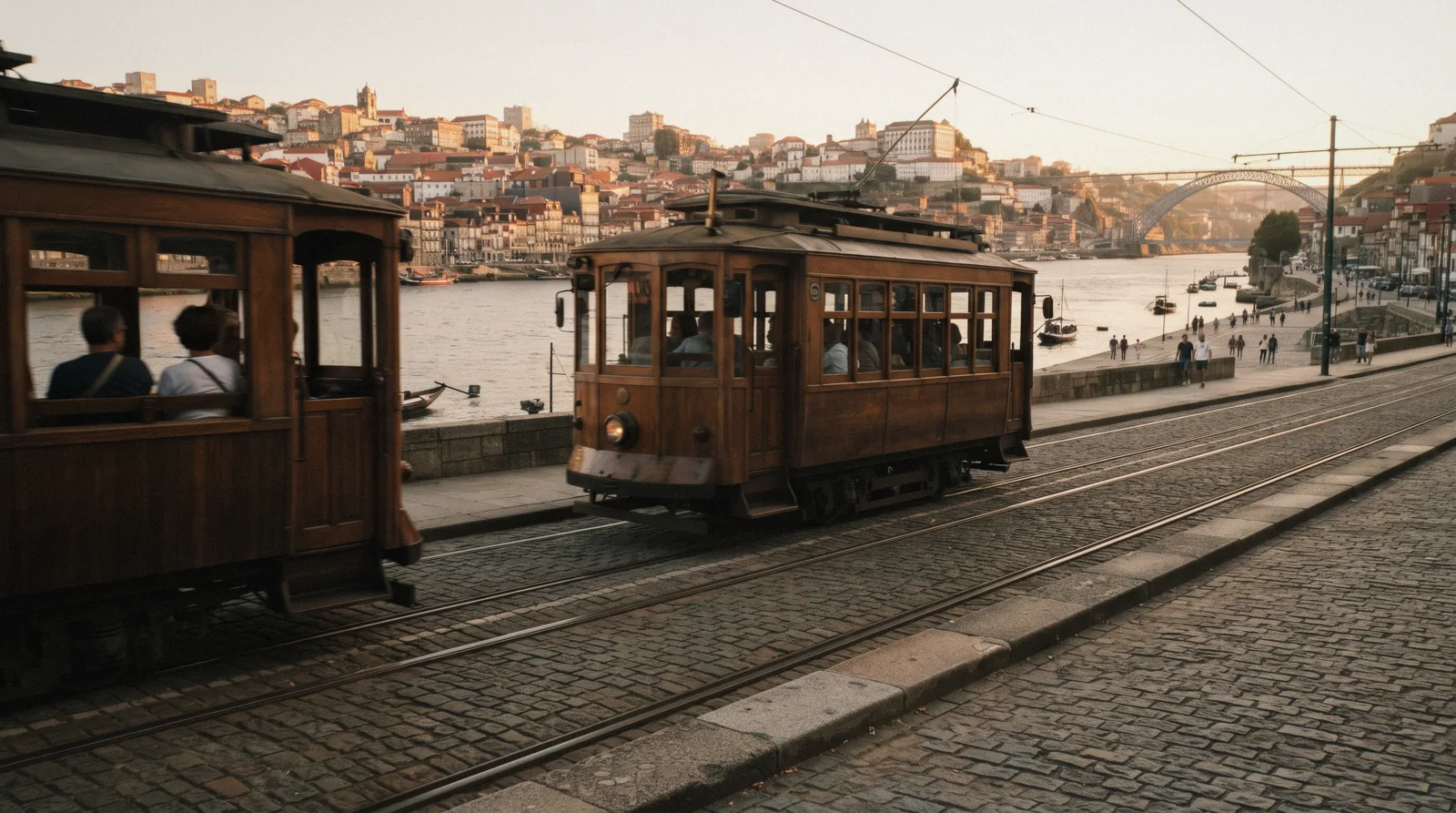
The Porto Tram
The Porto tram is not public transport with a nostalgic paint job: it is three heritage lines run by STCP as the Porto Tram City Tour, on a network that opened in 1872, with tickets sold only on board by the conductor and a fare that no Andante title and no city card covers. This page prints the 2026 fares, the two published timetables, what each of lines 1, 18 and 22 actually does, the cross-discount into the tram museum at Massarelos and what it is worth, and the honest answer to whether the ride is worth six euros; the getting around page has the Andante system the tram sits outside of, the Porto.CARD page explains why the card does not help here, and things to do in Porto put the ride into a first day.
Quick answer The fare, where you pay it, the three lines and which one to ride
A single trip on a Porto heritage tram is $6.97 (€6) for an adult and $4.07 (€3.50) for a child aged 4 to 12, and it is sold only on board by the conductor — there is no ticket office, no machine and no online sale. Two trips the same day cost $9.30 (€8) and a two-day ticket $13.95 (€12) adult, $6.97 (€6) child. Read on stcp.pt in Q3 2026.
Key takeaways
- Your Andante ticket does not work here. Only a monthly Andante pass covering the PRT1 and PRT2 zones is accepted; an Andante single, an Andante 24 or an Andante Tour buys nothing, and neither does the Porto.CARD, which excludes the trams by name
- Ride line 1 if you ride only one: it runs along the Douro from Infante to the river mouth at Passeio Alegre, and it is the one with the water beside it the whole way — the three lines explains the difference
- A tram ticket cuts the price of the tram museum at Massarelos: a single-trip ticket makes the $9.30 (€8) entry $6.51 (€5.60), and a two-day ticket makes it $4.65 (€4). It does not work the other way round
- The funicular dos Guindais is closed for maintenance and the Gaia cable car is a separate private fare, so nothing in Porto's cabin-and-rail category is covered by a single pass
Key facts
Opening hours
| Line 1, Infante–Passeio Alegre, daily, about every 20 minutes | 08:40–20:43 |
|---|---|
| Line 18, Carmo–Passeio Alegre, daily, about every 30 minutes | 09:15–19:45 |
| Museu do Carro Eléctrico, Tuesday–Sunday, last entry 30 minutes before | 10:00–18:00 |
Closed Line 22 hours are not published by STCP. The tram museum closes Mondays, from 13:00 on 24 December and Easter Sunday, and all day on 25 December and 1 January
Admission
- Adult
- $6.97 (€6) one trip; $9.30 (€8) two trips the same day; $13.95 (€12) two-day ticket
- Reduced
- $4.07 (€3.50) child 4–12 one trip; $6.97 (€6) child two-day ticket. Museum $9.30 (€8) adult, $4.65 (€4) for 6–18s, students, over-65s and Porto Card holders, $3.72 (€3.20) on a monthly Andante pass
- Free
- Museum: under-6s, visitors with a disability and, on a limited daily quota, the unemployed. No free tram fare is published for any age
Planning it
- Time needed
- Not stated by STCP. Our routing: 25 minutes end to end on line 1, 45 minutes for the museum
- Book ahead
- Optional — walk-up usually fine
- Address
- Museu do Carro Eléctrico, Alameda Basílio Teles 51, 4150-127 Porto (Massarelos, on the river road)
Every tram fare STCP publishes, next to the transport titles people assume will cover it and the two sightseeing products that do the same job on wheels. Figures from the STCP tram page and 2026 tariff, the Metro do Porto tariff and GetYourGuide, all read in Q3 2026 and converted at €1 = $1.1622. The important column is the third one: what each title actually admits you to.
Are you buying transport or buying a ride? At $6.97 (€6) a trip the tram is the most expensive way to move two kilometres in Porto, and the cheapest way to spend twenty-five minutes on the Douro.
| Option | Price | Includes | Cancel | Book |
|---|---|---|---|---|
| Tram single, bought on boardOne scenic ride, which is what most visitors actually want; buy it on the car you are already sitting in | $6.97 (€6) adult; $4.07 (€3.50) child 4–12 | One trip on line 1, 18 or 22; also 30% off entry to the tram museum | Not applicable — cash or card with the conductor | Official site |
| Tram two-day ticket, bought on boardAnyone riding three or more times, or a family pairing the ride with the museum at Massarelos | $13.95 (€12) adult; $6.97 (€6) child 4–12 | Unlimited trips on all three lines over two days; also 50% off the tram museum | Not applicable | Official site |
| Andante titles — what they do not buyEverything else you do in Porto. Read this row before you assume a day ticket covers the tram | $1.63 (€1.40) Z2 single; $6.22 (€5.35) Andante 24 | Buses, metro and urban trains. Not the trams and not the funicular — only a monthly PRT1+PRT2 pass is accepted on board | Not applicable | Official site |
| City Sightseeing hop-on hop-off bus, 24 or 48 hCovering ground rather than riding a museum piece; note the 4.0 rating, the lowest of any product on this site | $32.52 (€28) | Two bus lines, 16-language commentary, a port tasting and a Gaia walk; the 48-hour ticket adds a night tour; 4.0 from 3,494 reviews | Free up to 24 hours before | Check Availability |
| Electric tuk-tuk tour of the centre, 50–105 minThe same riverfront with a guide talking; the tram gives you the view and no commentary at all | $29.03 (€25) | A guided loop of the old town, plus an open-dated Six Bridges cruise ticket on the combined option; 4.5 from 7,203 reviews | Free up to 24 hours before | Check Availability |
The fare figures come from STCP's leaflet edition of March 2024, which prints the numbers without row labels, cross-checked against the product list on the current STCP page. A 2026 revision may exist that we have not seen; the conductor's tariff card on board is the last word, and $6.97 (€6) is what the current pages support.
No tour sells the tram — here is what does the same job
We checked every listing on this site in Q3 2026: not one sells a Porto tram ticket, because STCP sells them only on board. These three are the guided alternatives that cover the same riverfront, priced as listed.
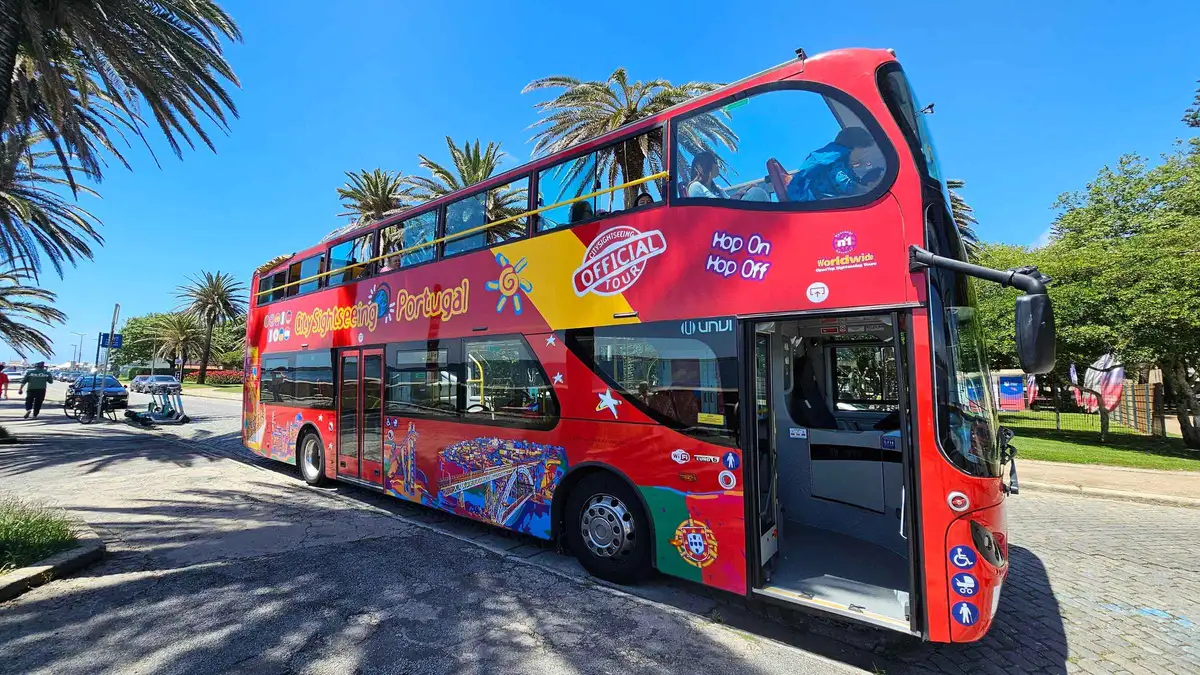 from €28
City Sightseeing Porto Hop-On Hop-Off Bus & Bookable Extras
listed at $32.52
The City Sightseeing bus on two lines with 16-language commentary, a port tasting and a Gaia walk thrown in; the 48-hour ticket adds a night tour and the cruise. Its 4.0 rating is the lowest on this page.
Check Availability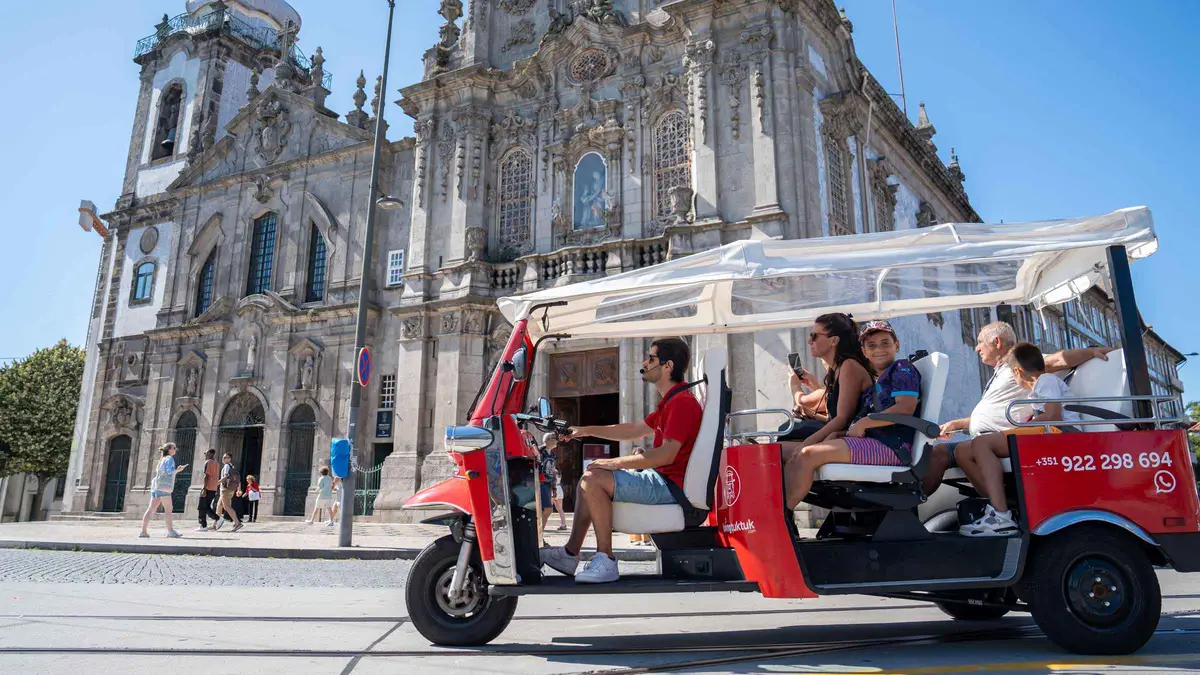 from €25
Porto: Guided Tour by Tuk-Tuk & Optional Douro River Cruise
listed at $29.03
A 50-minute electric tuk-tuk loop through the centre, with an open-dated Six Bridges cruise ticket on the combined option and a walking-tour voucher for the next day. Shared bookings may be split across several tuk-tuks.
Check Availability from €28
Porto: City Highlights 3-Hour Guided Electric Bike Tour
listed at $33.10
Three hours by e-bike across the historic centre and the riverfront with Bluedragon, in five languages. The weight limit is 118 kg and the operator can refuse riders who cannot handle a bike, without refund.
Check AvailabilityPrices, ratings and details are the platform's own. Dollar figures are the listed prices. The platform bills in your account's currency.
The three lines: what each one does, and which to ride
STCP says the network today consists of three distinct lines running through the most emblematic areas of the city. Only two of them have published timetables, which is a fact worth knowing before you stand at a stop.
Line 1, Infante–Passeio Alegre: the river line
This is the one to take. It leaves from Infante, beside the Palácio da Bolsa and a minute from Ribeira, and runs west along the water the whole way to the Passeio Alegre garden at the river mouth in Foz. STCP puts it at every day between 08:40 and 20:43, roughly every 20 minutes.
The reason it works is geometry: the track is on the quay, so for most of twenty-five minutes the Douro is directly outside the window on the left going out, and the ridge of the city is on the right. It also drops you at the Foz do Douro end, which is a real destination — the promenade, the fort, the beaches — rather than a turning circle.
Line 18, Carmo–Passeio Alegre: the hill line
Line 18 runs from Carmo, at the top of the town beside the Clérigos tower, down through Massarelos and along to Passeio Alegre; STCP describes it as connecting the riverfront, the historic Massarelos parish and the Cordoaria garden. Every day between 09:15 and 19:45, about every 30 minutes.
It is the line for the Palácio de Cristal gardens and for the tram museum, and its climb through the older streets is the more interesting ride of the two if you have already done the waterfront. The half-hour headway is the catch: miss one and the wait is longer than most of the walks it replaces.
Line 22, the Carmo–Batalha loop: the one with no timetable
STCP names three lines but publishes running hours for only two. Line 22's hours are not stated anywhere on the Porto Tram City Tour page we read in Q3 2026, and the operator's leaflet does not carry them either. It is the circular route around the upper town between Carmo and Batalha, passing Aliados and the Guindais slope; it is the line locals point tourists at and the one nobody can tell you when to catch.
Our advice is to treat line 22 as opportunistic: if a car is at the stop, ride it; do not build twenty minutes of your afternoon around waiting for one. And if the conductor tells you a time, that is better information than any website has.
One historical footnote that puts the fare in perspective. STCP dates the network to 1872, the year the city's first American tram line was inaugurated, which makes this one of the oldest street railways still carrying passengers anywhere in Europe. What you are paying $6.97 (€6) for is a working antique with a conductor selling paper tickets, not a transport link — and that reframing is the whole answer to whether it is worth it.
Porto tram tickets: on board only, and what does not work
This is where the money and the confusion both sit. STCP prints every tram product with the same line under it — "Exclusively purchased on board" — and that single phrase disposes of most of what is written about tram tickets online.
There is no ticket office for the trams, no vending machine at any stop, and no online sale on stcp.pt or anywhere else. You board, you sit down, and the conductor comes to you with a card reader and a roll of tickets. That is the system, and it is why the queue at a tram stop moves slowly at busy hours: everyone is being sold to individually once the car is moving.
| Title | Price | What it covers | Where you buy it |
|---|---|---|---|
| Adult, 1 trip | $6.97 (€6) | One journey on line 1, 18 or 22 | On board, from the conductor |
| Child 4–12, 1 trip | $4.07 (€3.50) | One journey; under-4 fare not stated | On board |
| Adult, 2 trips same day | $9.30 (€8) | Two journeys on the same day | On board |
| Adult, 2-day ticket | $13.95 (€12) | Unlimited journeys on all three lines for two days | On board |
| Child 4–12, 2-day ticket | $6.97 (€6) | The same, for a child | On board |
| Andante monthly pass, PRT1+PRT2 | Monthly subscription | Accepted on the trams — the only Andante product that is | Andante shops and machines |
What does not work on a Porto tram: an Andante single at $1.63 (€1.40), an Andante 24 at $6.22 (€5.35), an Andante Tour 1 at $9.01 (€7.75) or Tour 3 at $19.23 (€16.55), the $2.91 (€2.50) on-board bus ticket, and the Porto.CARD, whose own leaflet excludes the trams and the Gaia cable car by name. STCP's own tariff page marks the Andante Tour titles "exceto elétricos e funicular" — except trams and funicular. If a blog tells you a 24-hour transport pass covers the tram, it is out of date or wrong.
The practical consequence for a day that mixes modes: a metro trip in, a tram ride along the river and a cable car across in Gaia is three separate purchases at three separate counters, totalling $16.74 (€14.40) for one adult before any attraction ticket. The getting around page sets out the zones; the Porto costs page puts a day's transport into a budget.
The tram museum at Massarelos, and the discount that only runs one way
The Museu do Carro Eléctrico occupies the old Massarelos power station on the river road, and it is the one place where the tram ticket in your pocket is worth more than the ride it bought. Prices from museudocarroelectrico.pt, read in Q3 2026.
Standard entry is $9.30 (€8). Children and young people aged 6 to 18, students, over-65s and Porto Card holders pay $4.65 (€4); a family ticket for one adult and one child is $9.30 (€8); holders of a monthly Andante subscription pay $3.72 (€3.20). Under-6s, visitors with a disability and — on a limited daily quota — unemployed visitors go free.
Groups of ten or more pay $6.97 (€6) an adult, with a guided visit as a $2.32 (€2) per-person supplement.
| Ticket you already hold | Museum price | Saving against the standard $9.30 |
|---|---|---|
| Nothing | $9.30 (€8) | — |
| Tram single-trip ticket, adult | $6.51 (€5.60) | 30% off — $2.79 |
| Tram single-trip ticket, child or youth | $3.25 (€2.80) | 30% off the youth fare |
| Tram two-day ticket, adult | $4.65 (€4) | 50% off — $4.65 |
| Tram two-day ticket, child | $2.32 (€2) | 50% off the youth fare |
| Monthly Andante subscription | $3.72 (€3.20) | The cheapest paid entry published |
The discount runs one way only, and the museum says so plainly: a tram ticket gives you money off the museum, and a museum ticket gives you nothing off the tram. So the order matters — ride first, then walk in.
Opening hours are Tuesday to Sunday, 10:00 to 18:00, with last admission thirty minutes before closing. It shuts on 25 December and 1 January, and from 13:00 on 24 December and Easter Sunday. Free-entry days are three a year: the day of the tram parade on the first Saturday of May, International Museum Day on 18 May, and the Entrelinhas event on a Saturday or Sunday in December. Note that riding a tram on parade day still needs a paid ticket.
Getting there: lines 1 and 18 both stop at Museu do Carro Eléctrico, and so do STCP buses 403, 500 and 900. By metro the nearest station is Casa da Música, which the museum itself puts at 23 minutes' walk down Rua D. Pedro V — far enough that the tram really is the sensible approach. It is also the closest thing Porto has to a wet-weather option on this page; the rainy day page has the rest. Once you have ridden the rails, the Porto guided tours at guided tours in Porto are a natural next step for seeing the rest of the city on foot.
Is the Porto tram worth $6.97, and which ride to choose
Six euros for two kilometres is a lot of money, and pretending otherwise would be useless. Here is the case each way, and the routing we would actually pay for.
Our answer: ride line 1 one way, out to Foz, at about 17:30, and come back by bus or on foot along the promenade. That gets you the whole river frontage in good light, ends somewhere worth ending, and costs $6.97 (€6) once rather than twice. A two-day ticket only pays for itself at the third trip, or at the second trip plus the museum.
Against the fare: it is more than four times the $1.63 (€1.40) Andante single that runs the same corridor by bus, the cars are crowded from mid-afternoon, and they are old enough that a summer car is hot and a rainy one is steamy. In favour: nothing else in the city puts you at window height beside the Douro for twenty-five minutes, the cars are the genuine article rather than replicas, and the fare includes a discount worth $2.79 at the museum if you use it.
| What you want | Ride this | Cost | The honest alternative |
|---|---|---|---|
| The river, once | Line 1, Infante to Passeio Alegre | $6.97 (€6) | Bus along the same road for $1.63 (€1.40) with no view worth the name |
| The old streets and the gardens | Line 18, Carmo to Massarelos | $6.97 (€6) | Walk it in 25 minutes downhill for nothing |
| A loop of the upper town | Line 22, if a car is at the stop | $6.97 (€6) | No timetable is published — do not wait for it |
| Tram plus the museum | Two-day ticket | $13.95 (€12) plus $4.65 (€4) entry | Single ticket plus $6.51 entry is cheaper if you ride once |
| Getting somewhere | Any of them | $6.97 (€6) | The metro or a bus, every time |
One caveat that decides it for some people: the heritage cars have steps up from the street and no ramp, and STCP does not publish an accessibility statement for them. If steps are a problem, the Gaia cable car is step-free, and so is the metro.
How Much Time To Give The Tram
The ride is short; the waiting is not, because two of the three lines run at 20- and 30-minute headways and the third publishes nothing at all. Three routings against the published hours.
Everything below assumes you start at Infante or Carmo, which is where both timetabled lines begin, and includes a realistic wait for a car.
| Routing | On the tram | Door to door from Ribeira | What you skip |
|---|---|---|---|
| Line 1 out to Foz, one way | About 25 minutes | 1 h 15 with the walk on the promenade at the far end | The return ride, deliberately — walk or take a bus back |
| Line 18 down to the tram museum | About 20 minutes | 2 hours including 45 in the museum | The riverfront run; line 18 takes the inland route |
| Two-day ticket, both lines and the museum | About 1 hour of riding | Half a day | Nothing, but you need three rides for the ticket to pay |
The quiet departures are the first of the day on each line — 08:40 on line 1 and 09:15 on line 18. From about 14:00 the cars fill and stay full until the light goes, which in July is nearly 21:00 and in December is before six.
Dos And Don'ts On The Porto Tram
The short version, for the afternoon you ride.
Do
- Board first and pay the conductor — there is no other way to buy a ticket, and looking for a machine wastes the departure
- Ride line 1 west along the river if you only ride once; it is the line with the Douro outside the window
- Keep the ticket: it takes 30% off the tram museum with a single and 50% with a two-day ticket, and the discount does not work in reverse
- Take the first car of the day if you want a seat and a clear window — 08:40 on line 1, 09:15 on line 18
- Ride line 22 only if a car happens to be at the stop; STCP publishes no hours for it at all
- Treat the conductor's tariff card as the authority: the printed fares come from a leaflet dated March 2024
Don't
- Don't expect your Andante single or 24-hour title to work — only a monthly PRT1+PRT2 pass is accepted
- Don't count on the Porto.CARD: its own leaflet excludes the trams and the cable car by name
- Don't use the tram to get somewhere on a schedule; at 20- and 30-minute headways it is a ride, not a service
- Don't buy the two-day ticket for one journey — it only pays off at the third ride, or the second plus the museum
- Don't plan on a step-free boarding: the heritage cars have steps and STCP publishes no accessibility statement for them
Porto tram map: where the lines start and where the museum is
The two terminals with published timetables, the museum the tram ticket discounts, and the sights along the two routes.
Next stop from the tram
Walk minutes are our estimates from the GPS distances and the terminal positions.
Palácio de Cristal
Eight hectares of free terraced gardens with the best free river view on this bank, open from 08:00 daily. The Palácio de Cristal page has the hours and the walk.
15 min uphill from Massarelos, or a stop on line 18Ribeira
The riverfront quarter where line 1 begins, and the place to eat before or after the ride. The Ribeira page has the streets and the traps.
3 min from the Infante terminalPalácio da Bolsa
The merchants' exchange next to the line 1 stop: $16.27 (€14) and a mandatory 30-minute guided tour, with the language set by arrival order. The Bolsa page explains the queue.
2 min from the Infante terminalPorto tram questions
How do you pay for the trams in Porto?
On board, from the conductor, in cash or by card. STCP prints "Exclusively purchased on board" under every tram product: there is no ticket office, no machine at any stop and no online sale. A single is $6.97 (€6) adult and $4.07 (€3.50) for a child aged 4 to 12. The fare table lists every title and where it is sold.
Does an Andante ticket cover the Porto tram?
Only a monthly Andante pass covering the PRT1 and PRT2 zones. An Andante single at $1.63 (€1.40), an Andante 24 at $6.22 (€5.35) and the Andante Tour titles all exclude the trams — STCP's tariff marks the Tour titles "exceto elétricos e funicular". The Porto.CARD excludes them too, and the getting around page sets out what the Andante zones do cover.
Where do you catch tram 1 in Porto?
At Infante, on the riverside beside the Palácio da Bolsa and three minutes from Ribeira. Cars run daily from 08:40 to 20:43, about every 20 minutes, west along the Douro to Passeio Alegre at the river mouth. The three lines describes what each one does.
Are the trams in Porto currently running?
Yes. STCP publishes daily timetables for line 1 (08:40 to 20:43) and line 18 (09:15 to 19:45), read in Q3 2026. It publishes no hours at all for line 22, so treat that loop as opportunistic. The separate funicular dos Guindais is the service that is closed for maintenance, with no reopening date.
How much is the Porto tram museum?
$9.30 (€8) standard and $4.65 (€4) for 6- to 18-year-olds, students, over-65s and Porto Card holders; $3.72 (€3.20) on a monthly Andante subscription, and free for under-6s. A tram single takes 30% off, bringing it to $6.51 (€5.60), and a two-day tram ticket takes 50% off. The museum section has the full table and the opening hours.
Which Porto tram line is the best one to ride?
Line 1, out from Infante to Passeio Alegre: the track runs on the quay so the Douro is beside you for most of twenty-five minutes, and it ends at Foz do Douro rather than at a turning circle. Line 18 is the better ride if you have already done the waterfront. Our comparison sets each against its free or cheaper alternative.
How old are the Porto trams?
STCP dates the network to 1872, the year the city's first American tram line opened, and the cars in service are genuine heritage vehicles rather than replicas — which is what the $6.97 (€6) fare is buying. The Museu do Carro Eléctrico at Massarelos, in the old power station, holds the collection that is not in service.
Where the tram fits in a Porto day
It is an afternoon, not an errand, and it works best when the far end of the line is the point.
Our routing: finish lunch in Ribeira, walk two minutes to Infante, take line 1 at about 17:30 and ride the twenty-five minutes to Passeio Alegre with the river on your left. Walk the Foz promenade to the fort and the lighthouse while the sun goes down over the Atlantic — the Foz do Douro page has that walk — and come back on a bus for $1.63 (€1.40) rather than paying the fare twice.
The museum version: take line 18 from Carmo down to Massarelos in the late morning, spend forty-five minutes in the Museu do Carro Eléctrico with 30% off the entry because you rode there, and carry on into the Palácio de Cristal gardens up the hill, which are free and open until 21:00 in summer.
On a Monday the trams run and the museum does not, so that is the day for line 1 and Foz. In the rain, the tram is a poor buy — the windows steam and the far end is a seafront — and the rainy day page has better uses of six euros.
The Porto Tram On Film
Three rides on the heritage lines, including a full cab-view run of line 1. Fares quoted on film are from their filming dates; the figures here were read in Q3 2026.
Cab Ride on Porto's Vintage Tram Line 1 (Elétricos do Porto, Portugal) 4K
The whole of line 1 from the driver's window — the twenty-five minutes this page recommends buying.
Video: Rail RelaxationTram Ride in Porto: What Tourists don't know
A local channel on the fare, the conductor and the things the STCP page does not print.
Video: PortoalitiesPorto Tram Line 1 (Infante-Passeio Alegre) and Foz Do Douro Walk
The exact routing we suggest: ride out to Passeio Alegre, then walk the Foz promenade.
Video: Joshosaurus RexVideos load from YouTube only when you press play.
Prices, hours and terms are set by the venue or operator and confirmed at checkout.
We may earn a commission if you book through one of our links, at no extra cost to you. Full affiliate disclosure