 Visit Porto City Guide
The Ponte das Barcas: Porto's Bridge of Boats and the Day It Went Down
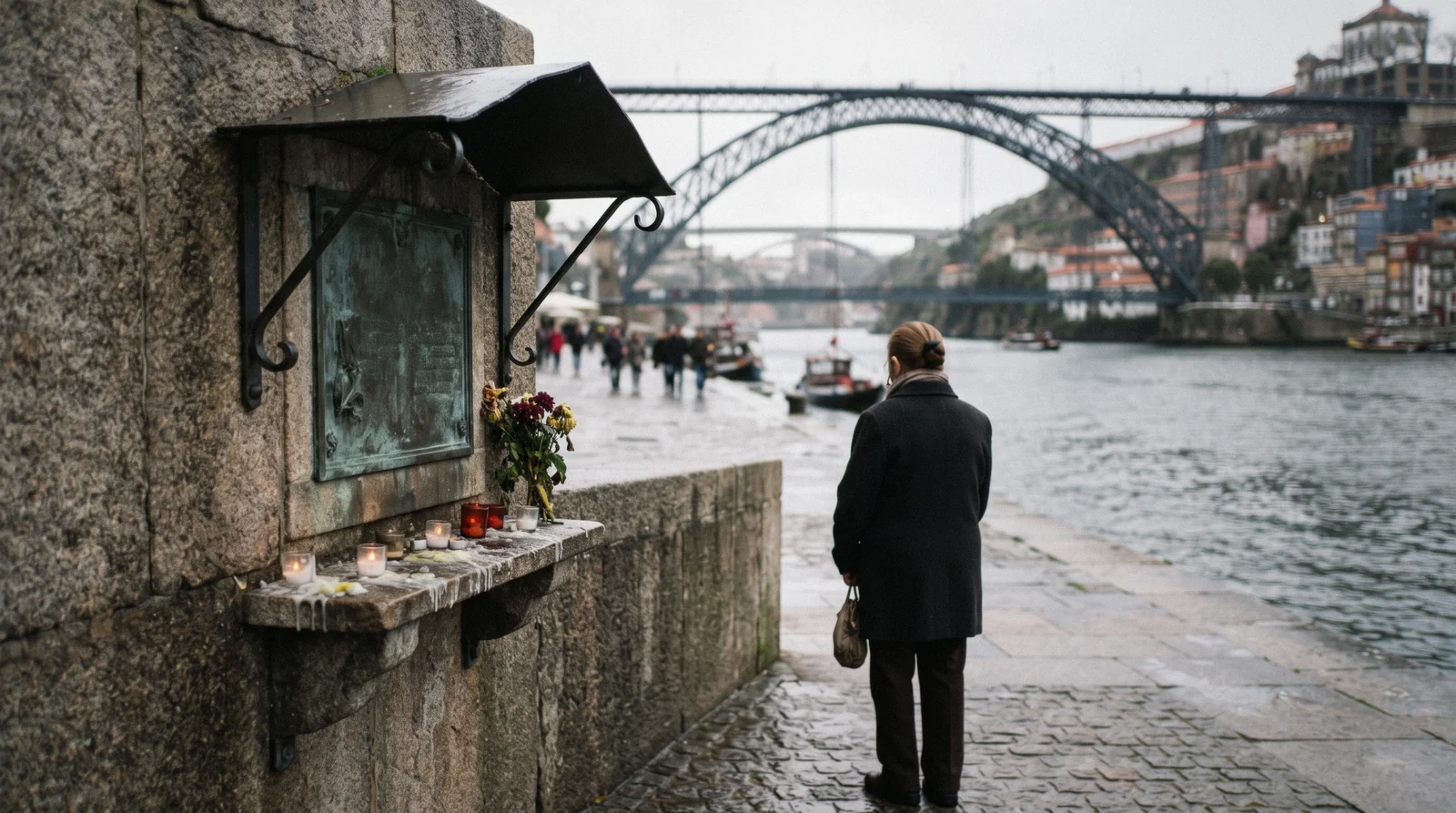
The Ponte das Barcas disaster is the reason a small bronze panel on the Ribeira quay (see things to do in Porto) is never without candles. On 29 March 1809, as Marshal Soult's army broke into the city from the north, the population ran for the only crossing of the Douro — a bridge made of twenty moored boats with a road laid over them — and the crossing failed under them. Around four thousand people are usually said to have died, a figure that no one counted and every source states differently. This page sets out what the bridge was, what happened that morning, why the causes are still argued by the historians who have looked at them, and where the event is visible in the city today. The history comes from the sources named in the text — the English and Portuguese Wikipedia entries and the works they cite, the public broadcaster's education service RTP Ensina, and the city tourism board's own record of the memorial; the practical details of visiting are from each venue's own page as at in Q3 2026. Dollar figures are converted at €1 = $1.1622.
Quick answer What the bridge was, what happened on 29 March 1809, the contested toll, and what to see now
The Ponte das Barcas was a pontoon bridge of about twenty boats, some 200 metres long, designed by the architect and engineer Carlos Amarante and opened in 1806 a short distance downstream of where the Luís I bridge stands today. On the morning of 29 March 1809, French troops under Marshal Soult stormed Porto; soldiers and civilians fled south across the bridge towards Gaia; and under the weight of the crowd — and, depending on which account you read, after the middle section had been opened — the crossing gave way. The English and Portuguese Wikipedia articles and RTP Ensina all give a figure of around four thousand dead; the city's tourism board says only 'hundreds'; some guides print six thousand. Nobody counted. What you can visit is the Alminhas da Ponte on the Ribeira quay, a bronze relief of 1897 that locals still light candles at.
Key takeaways
- The memorial stands on the Cais da Ribeira, at river level a short walk downstream of the Luís I bridge; it costs nothing, it is outdoors and open at any hour, and the candle shelf beside it is in daily use
- The victims' remains were interred at the church of São José das Taipas, itself designed by Amarante, where a painting of the disaster hangs on the Altar of Souls — the churches hub places it among the city's other free interiors
- The Portuguese battery that shelled the crowded bank stood at Serra do Pilar across the river, whose monastery is closed for works while its terrace stays open — it remains the best place to read the geography of the battle
- Two stone pillars of the suspension bridge that replaced the pontoons in 1843 still stand beside the Luís I bridge, which makes the whole sequence — boats, cables, iron arch — readable in one view from the quay
What the Bridge of Boats Was
A crossing that came and went with the river
For most of its history Porto had no bridge at all. The Douro between the city and Vila Nova de Gaia was crossed by boat and raft, and from 1744 by a regular passenger service, on a river that runs fast and floods hard. When an army or a festival needed a solid crossing, a temporary bridge of boats was assembled and then taken away again; the English Wikipedia article on the disaster traces references to such improvised crossings back to the chronicler Fernão Lopes, writing of an army of King Ferdinand I in the fourteenth century.
What changed in 1806 was permanence. A pontoon bridge designed as such was inaugurated on 15 August 1806, the work of Carlos Amarante, an architect and engineer whose churches stand in both Porto and Braga. The Portuguese Wikipedia entry describes twenty barges linked by cables and a deck about 200 metres long. The English article, quoting the University of Porto engineering professor Manuel de Azeredo, places it a few metres downstream of the present Luís I bridge and quotes a nineteenth-century description praising the way it 'rose and fell with the tides, could be opened and closed to allow passage of large river traffic, and finally could be dismantled and re-established when the vicissitudes of the river demanded it.'
The detail that mattered on the day
That last virtue is the one to hold on to. The bridge was designed to be opened in the middle so that river traffic could pass — the rabelo boats that brought wine down from the Douro could not have worked otherwise. A crossing built to be interrupted is a crossing with a gap in it, and on 29 March 1809 the gap is at the centre of every account of what went wrong.
It is worth being clear about scale, too. Twenty boats and 200 metres is a narrow, low, flexible structure with railings and a plank roadway, at the mercy of the tide beneath it. It was designed for carts, animals and ordinary foot traffic moving at a walk in both directions. It was not designed for a city.
The First Battle of Porto, in Sequence
The sequence below follows the English Wikipedia accounts of the First Battle of Porto and the bridge disaster, which in turn cite Simão José da Luz Soriano's history of 1871, Charles Oman's History of the Peninsular War of 1902, and a 2016 study of the second French invasion by Daniela Alves, Hélder Barbosa and Jorge Ricardo Pinto.
-
1807–1808
The first invasion, and its reversal
French and Spanish troops take Portugal in 1807 and are expelled a year later. In January 1809 Napoleon orders a second attempt.
-
12–20 March 1809
Soult comes down from the north
Marshal Soult crosses the northern border, takes Chaves on 12 March and Braga on 20 March, then turns for Porto.
-
28 March
The letter, and the first probes
Soult writes to the Bishop of Porto, who holds authority in the city, saying the French wish only to rid Portugal of the English and threatening 'rivers of blood' if the city resists. French troops probe the defensive lines running from the coastal fort of São Francisco Xavier in the west to Freixo in the east; the attacks fail.
-
06:00, 29 March
The full assault
The French attack along the whole line. The defenders — put at around 30,000 by the English Wikipedia infobox, only 4,500 of them regulars, against some 16,000 French — outnumber the attackers on paper and are outclassed in practice: poorly armed, poorly trained, losing cohesion as the line breaks.
-
Late morning
The city runs for the bridge
Soldiers and civilians flee south towards Gaia over the Ponte das Barcas, with French troops behind them. The crossing gives way. Portuguese cavalry, pushed back to the waterfront, cut and trample a path through the crowd; artillery is firing across the water; the deck fills with people who cannot go forward or back.
-
Afternoon
The sack
The French take the city with minimal losses of their own and Soult permits it to be sacked, the looting continuing until 1 April. French soldiers later lay planks across the wrecked bridge to cross, driving back the Portuguese gunners on the far bank, and pull some survivors from the water.
-
12 May 1809
The British cross the river
Six weeks later Wellesley's forces cross the Douro upstream in wine barges, retake the city and push Soult into Spain. The bridge of boats is never rebuilt; the crossing reverts to ferries until 1843.
How Many Died: the Figures, and Who Gives Them
No one counted the dead of 29 March 1809, and the numbers in circulation are estimates made at different times, for different things — some for the bridge alone, some for the whole day's fighting. These are the figures we could attribute to a named source, with what each one actually measures.
| Figure | Given by | What it counts |
|---|---|---|
| 'Around 4,000' | English Wikipedia's article on the disaster, following Soriano (1871) and later writers | Deaths on and around the bridge; the article states the exact number is unknown |
| 'Cerca de quatro mil' | RTP Ensina, the Portuguese public broadcaster's education service | Deaths in the collapse; no source is named for the estimate |
| 'More than four thousand' | Portuguese Wikipedia's entry on the Ponte das Barcas | Drownings, described explicitly as an estimate |
| 'Hundreds of people' | visitporto.travel, the city tourism board, on its record of the memorial | Deaths at the memorial's site; the board prints no larger figure |
| 'Possibly 6,000' | portostopover.com, a Porto city guide | Drownings; no source given, and the highest figure in general circulation |
| '4,000 civilians', with 8,000–10,000 Portuguese killed overall | English Wikipedia's article on the First Battle of Porto | The whole day, not the bridge: the battle, the flight and the sack together |
The last row is the one that muddies every retelling: a civilian figure for the entire battle is not the same as a drowning figure for the bridge, and the two are routinely quoted as if they were. Where a page gives you a precise number without saying what it measures, treat it as folklore.
Why It Failed: Three Explanations, None Settled
The English Wikipedia article states plainly that the causes are unclear and disputed, and the explanations it collects are not mutually exclusive.
Weight. The simplest account is that a structure sized for carts took the mass of a fleeing city, and that the deaths came principally from the partial collapse of the deck and the falls that followed. Twenty linked boats have no redundancy: once one goes down at one end of a hinge, the roadway above it does too.
The open span. The second account is that Portuguese soldiers opened the central section — the part built to open for river traffic — and that the crowd behind kept pushing people into a gap they could not see until they were in it. Whether this was done to stop the French, in panic, or not at all is exactly what is not resolved; it is the version that most Portuguese retellings emphasise.
The guns and the horses. The third is not a cause of the collapse but of the death toll. Portuguese cavalry forced back to the riverside cut a path through the crowd with their swords, and people were trampled under the horses. Artillery was firing from the Serra do Pilar battery on the Gaia bank towards the French on the Porto side; the sources say those Portuguese gunners killed more of their own civilians than enemy soldiers. French guns were firing from the Porto bank as well, though the English article flags that claim as needing a better source than it has.
One further version circulates widely in guidebooks and on plaques of the memory-tourism kind: that the Bishop of Porto, who had already withdrawn to the Gaia side, ordered the bridge raised and shelled behind him. The bishop's prior retreat is in the sources; the order is not one we could find in the academic or encyclopaedic accounts, and it belongs in the category of things the city has always believed rather than things that are established. The bridge itself keeps almost none of this visible, which is why the guided Porto walking tours that pass the riverside site tend to pause there, laying the competing versions out where the boats once were.
What Stands There Now
The Alminhas da Ponte, Cais da Ribeira
The memorial is easy to walk past, which is part of its character: a bronze relief set into the quay wall under a small iron canopy, with a shelf beside it for candles. It was made in 1897 by José Joaquim Teixeira Lopes — Teixeira Lopes the elder, father of the better-known sculptor — and it replaced an earlier shrine on the same spot that had held a painting of the disaster. The city tourism board lists it at Cais da Ribeira, postcode 4050-509, with no opening hours and no price, because it is a piece of street furniture that happens to be a war grave marker. Porto's heritage department describes it as one of the more unusual neoclassical works in the city; the candles and flowers left there are not a tourist ritual but a local one.
The name means 'the little souls of the bridge' — alminhas are the roadside soul-shrines found all over northern Portugal, where passers-by pray for souls in purgatory. Putting one on the quay was a way of making the river itself the grave.
São José das Taipas, and the painting
The victims' remains were interred at the church of São José das Taipas, in the Vitória quarter above the river — a building by Carlos Amarante, the same man who designed the bridge. On its Altar of Souls hangs a painting of the disaster in oils on copper; the English Wikipedia article attributes it to António da Cunha, while the Portuguese entry dates a work of this subject there to 1845, and the painting has its own scholarly literature, including a 2009 study by Foteini Vlachou on how the event was pictured in Portugal and in France. The church keeps parish hours rather than visitor hours, so treat it as a stop you may find closed; the churches hub has the ones that reliably open.
The bicentenary markers, and the column at Boavista
On 29 March 2009, the two-hundredth anniversary, President Aníbal Cavaco Silva inaugurated a sculpture of steel elements marking the points on each bank where the bridge's cables were anchored — a quiet piece of work that only makes sense once you know what you are looking at, which is the best argument for reading this page before you walk the quay.
The grander monument is inland and rarely connected to the story by visitors: the 45-metre column in the middle of the Boavista roundabout, the Monumento aos Heróis da Guerra Peninsular, begun in 1909 and finished in 1951 to designs by the Porto architect José Marques da Silva with the sculptor Alves de Sousa. A lion — the Anglo-Portuguese alliance — stands over a fallen French eagle at the top, and around the base, among the soldiers, are the civilians of the bridge.
The bridges that came after
The pontoons were never replaced in kind. On 17 February 1843, without ceremony, a suspension bridge opened on the site: the Ponte Pênsil D. Maria II, 170.14 metres of deck and 6 metres wide on eight iron cables slung between stone pillars 18 metres tall, according to the Portuguese Wikipedia entry. It served about 45 years, and was dismantled in 1887 once the Luís I bridge opened.
Its two stone pillars still stand on the Porto bank beside the modern bridge, along with the ruins of a guardhouse, and they are the reason the quay reads as a palimpsest: boats, then cables, then Eiffel-school iron, all on the same hundred metres of water. The Luís I bridge page covers the crossing that ended the sequence.
Walking It in an Hour, for Nothing
Start on the terrace beside the cathedral, where you can see the whole reach of the river the battle was fought over — the Sé's own ticket is $3.49 (€3) for cloister, museum and tower, open to 18:30 from April to October and 17:30 from November to March, though the terrace outside costs nothing. Walk down through the lanes to the Ribeira quay and find the Alminhas at river level, downstream of the bridge; give it a minute, because the point of it is that nobody does.
Cross the lower deck of the Luís I bridge on foot to the Gaia side — ten minutes, free — and look back at where the boats were moored, roughly under the modern arch. Then climb, or take the cable car at $8.14 (€7) one way and $11.62 (€10) return, running from 10:00 to 20:00 between late April and late September, to the Serra do Pilar terrace, where the Portuguese battery stood. The monastery itself is closed for restoration with no reopening date published, but the terrace is the viewpoint, and it is the one place where the geography of 29 March 1809 explains itself: the city on the far bank, the drop to the water, the narrow crossing between them.
Done slowly with a coffee, that is about 2 kilometres, ninety minutes and roughly $4, and it is the best free history walk in Porto. The free things to do page has the rest of them.
Walking the Battle With a Guide, or on Your Own
No operator sells a Ponte das Barcas tour; the story turns up inside general city walks, whose guides stop at the Alminhas if you ask. Prices are the euro figures listed as at in Q3 2026, and each card opens the operator's own page and calendar.
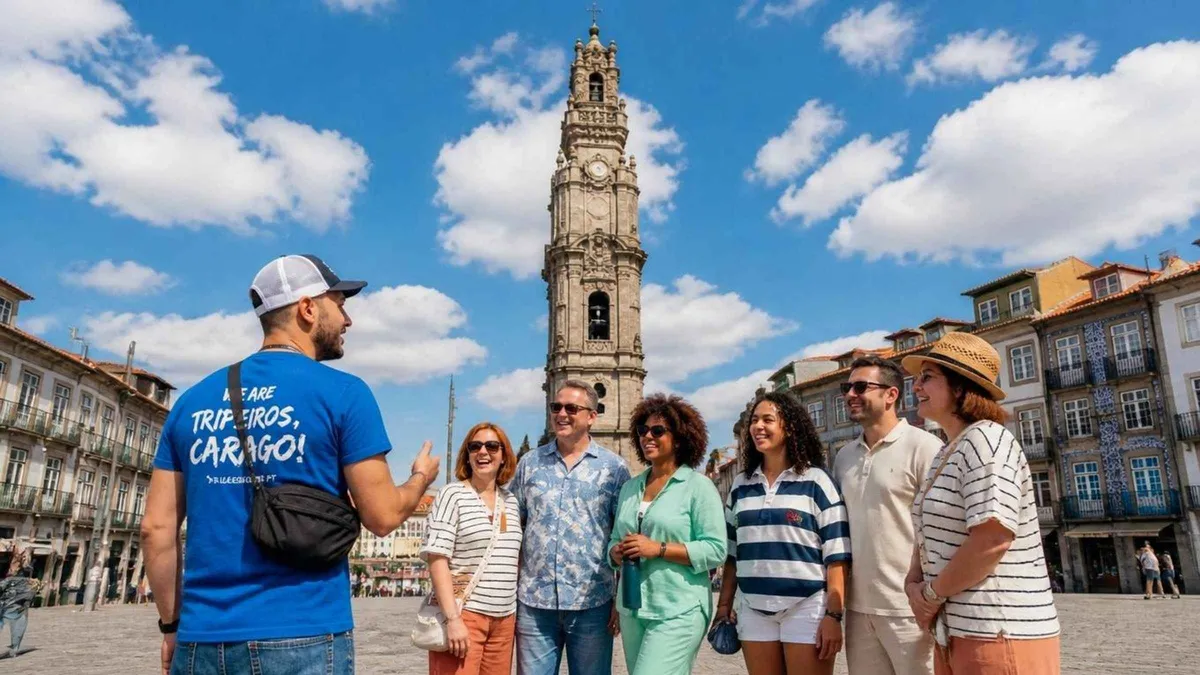 from €29
Porto: 3-Hour Guided City Highlights Walking Tour
listed at $33.68
The three-hour Bluedragon walk through the historic centre, offered in five languages with a private option. The most-booked classic walking tour in Porto, and a public tour needs at least two people.
Check Availability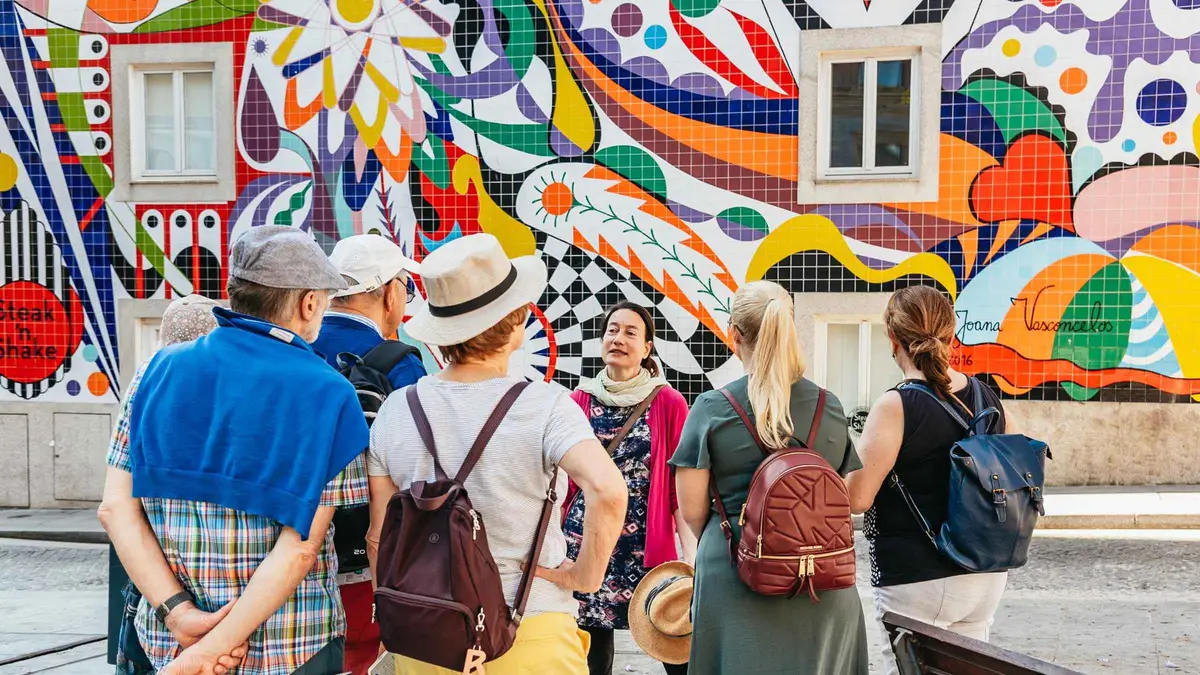 from €29
Porto Walking Tour: Highlights & hidden gems - max 8 pax
listed at $33.68
A capped-at-eight walk in English or German with restaurant recommendations written down at the end. The best-rated small-group walk here, with a two-person minimum to run.
Check Availability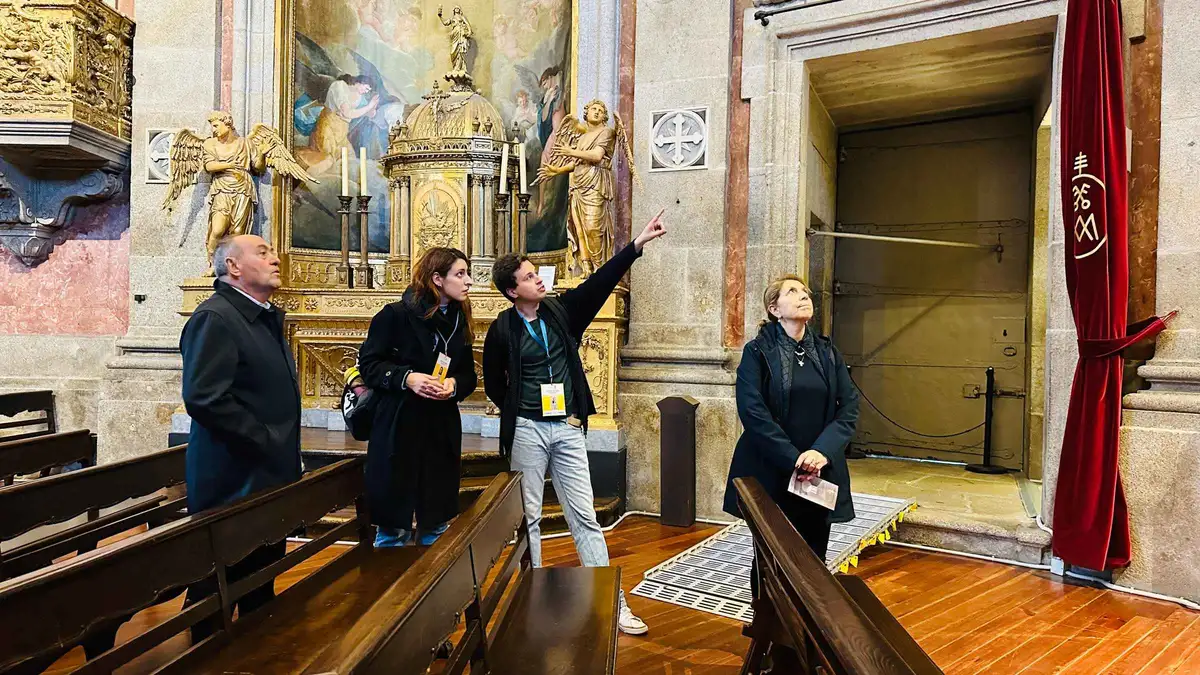 from €34
The Beautiful Story of Porto: Guided Tour with Entry Tickets
listed at $39.95
Three hours with a licensed guide inside the Cathedral, Clérigos Church and the São Bento da Vitória monastery, with a tasting of local delicacies. Best for a first morning when you want the entry tickets handled.
Check Availability from €18
Porto: Six Bridges Cruise
listed at $20.90
The 50-minute Six Bridges loop on a traditional-style boat, the cheapest way onto the river and the most-booked. Audio comes by QR code on your own phone; the 4.2 rating reflects the crowds.
Check AvailabilityPrices, ratings and details are the platform's own. Dollar figures are the listed prices. The platform bills in your account's currency.
The Ponte das Barcas: the Questions People Ask
How many people died in the Ponte das Barcas disaster?
Nobody knows, and this page prints the range rather than a number. Around four thousand is the figure given by the English and Portuguese Wikipedia articles and by RTP Ensina; the city tourism board says 'hundreds'; some Porto guides print six thousand. A separate figure of 4,000 civilian deaths appears in accounts of the whole First Battle of Porto, which is a different thing being measured. The table above sets each figure beside its source.
Where was the Ponte das Barcas, and can you see anything of it?
It crossed the Douro a few metres downstream of the present Luís I bridge, between the Ribeira quay and Gaia. Nothing of the bridge survives — it was made of boats — but the Alminhas da Ponte relief of 1897 marks the site on the Cais da Ribeira, and steel markers placed for the bicentenary in 2009 show where its cables were anchored on each bank.
What are the Alminhas da Ponte?
A bronze bas-relief of 1897 by José Joaquim Teixeira Lopes, set in the quay wall on the Cais da Ribeira under an iron canopy, with a shelf for candles beside it. 'Alminhas' are the soul-shrines of northern Portugal; this one commemorates the people who drowned on 29 March 1809. It is outdoors, free and unticketed, and residents still leave lit candles and flowers there.
Why did the bridge collapse?
The causes are disputed. The weight of the crowd is the simplest explanation; a second account holds that the central section — built to open for river traffic — had been opened, and people were pushed into the gap. Cavalry cutting through the crowd and artillery fire from the Serra do Pilar battery raised the toll further. The English Wikipedia article says outright that the causes are unclear, and the popular story that the Bishop of Porto ordered the bridge raised behind him is not supported by the accounts we could check.
What replaced the Ponte das Barcas?
Ferries, and then in 1843 the Ponte Pênsil D. Maria II, a suspension bridge of about 170 metres on iron cables. It was dismantled in 1887 once the Luís I bridge opened, but its two stone pillars still stand on the Porto bank beside the modern crossing.
Is there a museum about the 1809 disaster?
No dedicated museum. The closest thing to an exhibit is the painting of the disaster on the Altar of Souls at the church of São José das Taipas, where the victims' remains were interred; the church keeps parish hours and may be closed when you pass. The museums hub lists what the city's collections do cover.
Was this the worst bridge disaster in history?
It is routinely listed among them, and on the usual figure of around four thousand deaths it would be the deadliest bridge collapse ever recorded. That ranking rests entirely on an estimate nobody made from a count, in a city under assault, which is worth remembering whenever you see it stated as a fact.
The Disaster on Film
Three short accounts. Two are in Portuguese and one is the same lecturer's English version, which together are the most substantial telling of the story available on video.
O Desastre da Ponte das Barcas I (1809)
Part one of a two-part account filmed in Porto, in Portuguese: the bridge, the invasion and the morning of 29 March.
Video: PeterinPortoPonte das Barcas' Disaster II (1809)
The second part in English, covering the collapse itself and the memorials that followed.
Video: PeterinPortoTragédia da Ponte das Barcas
The Portuguese public broadcaster's radio-documentary treatment, in Portuguese, on how the event is remembered.
Video: RTP Antena 3Videos load from YouTube only when you press play.