 Visit Porto City Guide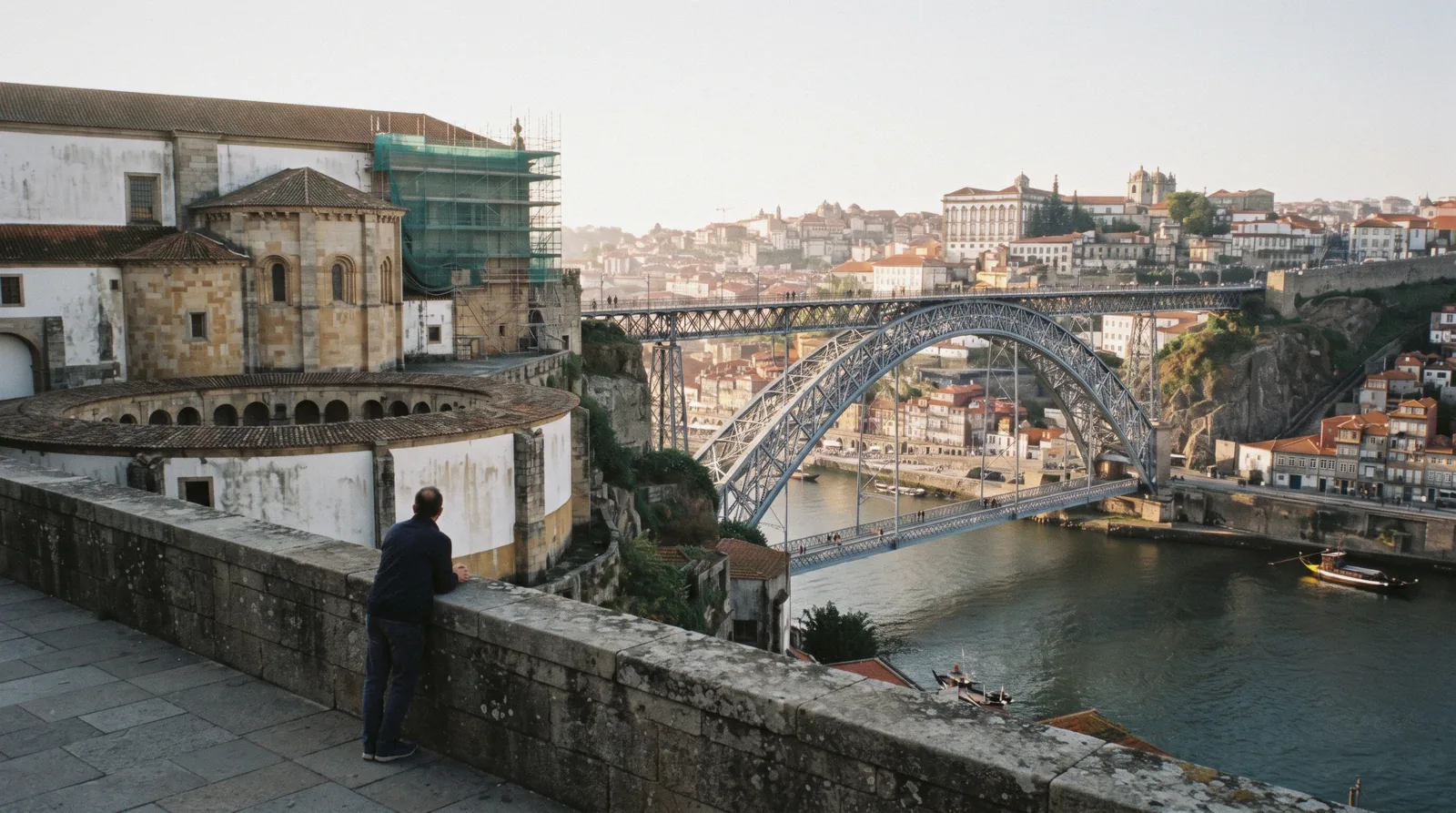
Serra do Pilar
Serra do Pilar is the sixteenth-century monastery on the bluff above the Gaia end of the Douro road bridge, unique in Portugal for having both a circular church and a circular cloister, and the source of the photograph most people have seen of Porto before they arrive. It is temporarily closed for requalification works, with no reopening date on any official page — but the terrace outside it, which is where that photograph is taken from, is public space, free, and open at all hours. This page prints exactly what is shut and what is not, the pre-closure prices that stale pages still show, how to walk up in five minutes, and the monastery's history from D. João III to the artillery regiment that still occupies part of it; the bridge below is on the Luís I bridge page, the cabin ride to its foot on the Gaia cable car page, the wider bank on the Vila Nova de Gaia page, and the first day that takes in both banks is one of the things to do in Porto.
Quick answer What is closed, what is still open and free, and where to stand
The Monastery of Serra do Pilar is temporarily closed for requalification works. Its own ticket page at Património Cultural prints "Temporariamente encerrado para obras de requalificação" with no reopening date, and no ticket is on sale anywhere. The terrace outside the walls — the viewpoint over the Douro, the bridge and the whole Porto bank — is public space, free, and unaffected. Read in Q3 2026.
Key takeaways
- Nobody publishes a reopening date. The state's ticket system says only "temporarily closed"; culturaportugal.gov.pt still prints hours and prices with no closure notice at all, which is the page most blogs are copying
- You are not missing the view: the photograph everybody wants is taken from the free terrace, not from inside. What is open says exactly where the line runs
- It is five minutes uphill from the upper station of the Gaia cable car and eight from the far end of the bridge's upper deck — both walks are on pavement
- Part of the site is a working army barracks, the Regimento de Artilharia da Serra do Pilar, which is one reason access here has always been partial
Key facts
Opening hours
| Monastery, church and cloister | Closed–Closed |
|---|---|
| Terrace and viewpoint outside the walls, public space | Open–No stated closing time |
| Pre-closure hours, April–October (not current) | 10:00–18:30 |
| Pre-closure hours, November–March (not current) | 10:00–17:30 |
Closed Closed entirely for requalification works; before the closure it shut on Mondays
Admission
- Adult
- No ticket sold. The stale culturaportugal.gov.pt listing still prints $2.32 (€2) for the Património a Norte exhibition and $4.65 (€4) for the exhibition with the dome
- Reduced
- Not stated — no reduced category was published even before the closure
- Free
- The terrace and viewpoint outside the monastery walls, at all times
Planning it
- Time needed
- Not stated. Our routing: 20 minutes on the terrace, 35 if you walk the wall to both ends
- Book ahead
- Optional — walk-up usually fine
- Address
- Largo de Aviz, 4430-329 Vila Nova de Gaia
There is no ticket to compare, and printing a price table anyway would be the dishonest thing to do — so this table compares the three ways people actually reach the viewpoint, with what each costs. Figures from Património Cultural, gaiacablecar.com and GetYourGuide, read in Q3 2026 and converted at €1 = $1.1622. The two paid rows are walks that cross the bridge and reach the bluff; neither enters the monastery, because nobody can. The terrace itself is free and needs no row: it is public space with no gate.
Are you coming for the view or for the building? The view is free and available today; the building is shut, and no official page will tell you when that changes.
| Option | Price | Includes | Cancel | Book |
|---|---|---|---|---|
| Official entry, Património CulturalNobody, for now. Check this page before you plan an interior visit — it is the only source that carries the closure | No ticket on sale — closed for works | Nothing: the church, the round cloister and the dome walkway are all shut | Not applicable | Official site |
| The other official page, culturaportugal.gov.pt — staleNobody should book from it. We list it because it is the page most blogs and aggregators are copying, and it is wrong | $2.32 (€2) exhibition; $4.65 (€4) exhibition and dome | Prints Tuesday–Sunday hours and both prices with no closure notice anywhere on it | Not applicable | Official site |
| Three-hour guided city highlights walkAnyone who wants the bridge and the bluff explained; the walk reaches the deck, and the terrace is eight minutes on from it | $33.68 (€29) | Guide in five languages, the historic centre and the bridge deck; 4.8 from 2,932 reviews | Free up to 24 hours before | Check Availability |
| Walking tour with a Douro cruise and the cable car, 3–4 hThe lazy route up: the cable car's upper station is five minutes below the terrace | $69.67 (€60) | Guide, cable-car ticket, river cruise, Livraria Lello entry on the Lello options; 4.7 from 1,279 reviews | Free up to 24 hours before | Check Availability |
The prices still printed on culturaportugal.gov.pt — $2.32 (€2) for the Património a Norte exhibition, $4.65 (€4) with the dome — are pre-closure figures on a page that carries no closure notice. Treat them as history, not as a fare, and do not turn up with cash expecting a ticket desk.
The walks and rides that reach the bluff
No tour enters the monastery — it is closed — and none of the 49 listings on this site sells entry to it. These three reach the terrace or its foot, and each says plainly what it does. Prices in euro as listed in Q3 2026.
 from €29
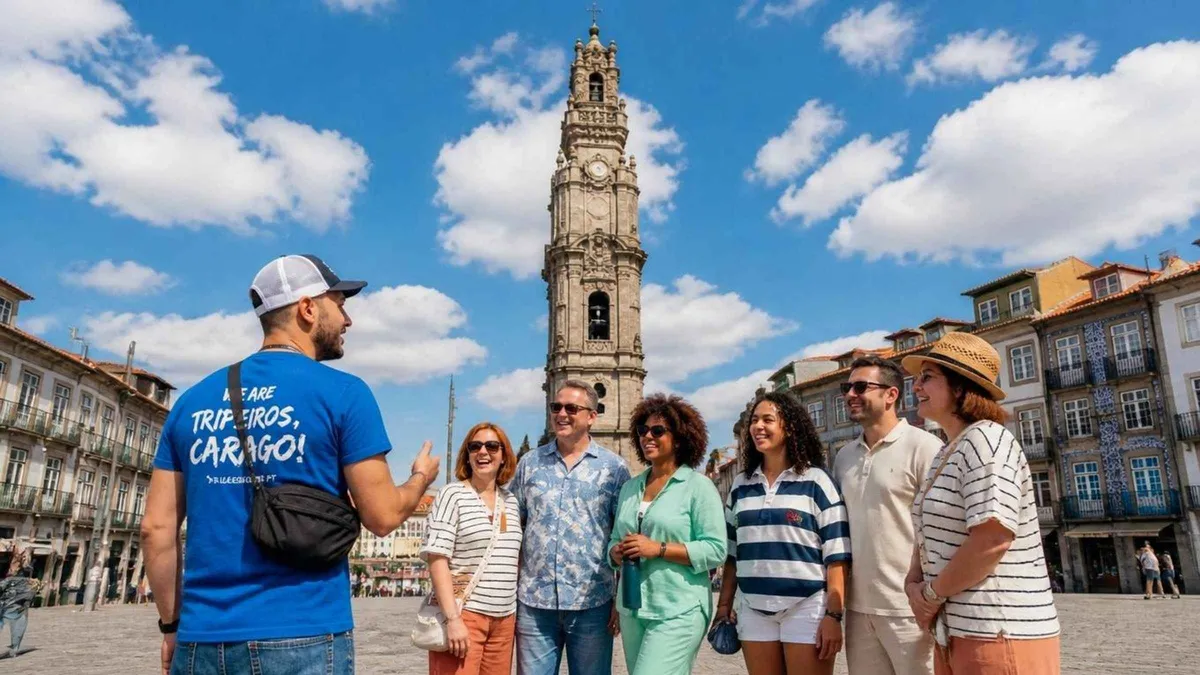
Porto: 3-Hour Guided City Highlights Walking Tour
listed at $33.68
The three-hour Bluedragon walk through the historic centre, offered in five languages with a private option. The most-booked classic walking tour in Porto, and a public tour needs at least two people.
Check Availability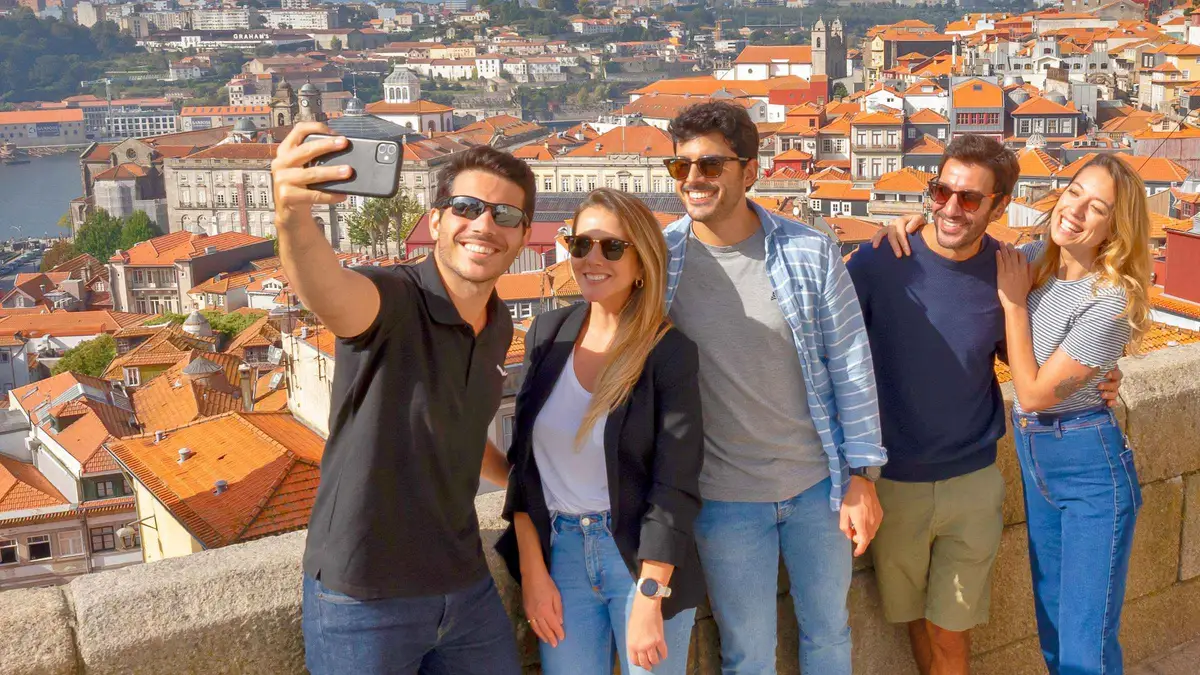 from €60
Porto: Walking Tour, Lello Bookshop, Boat and Cable Car
listed at $69.67
A guided walk that folds in the Gaia cable car ride and a Douro river cruise, with Lello entry as an option. Suits a first day when you want the three riverside set pieces handled in one booking.
Check Availability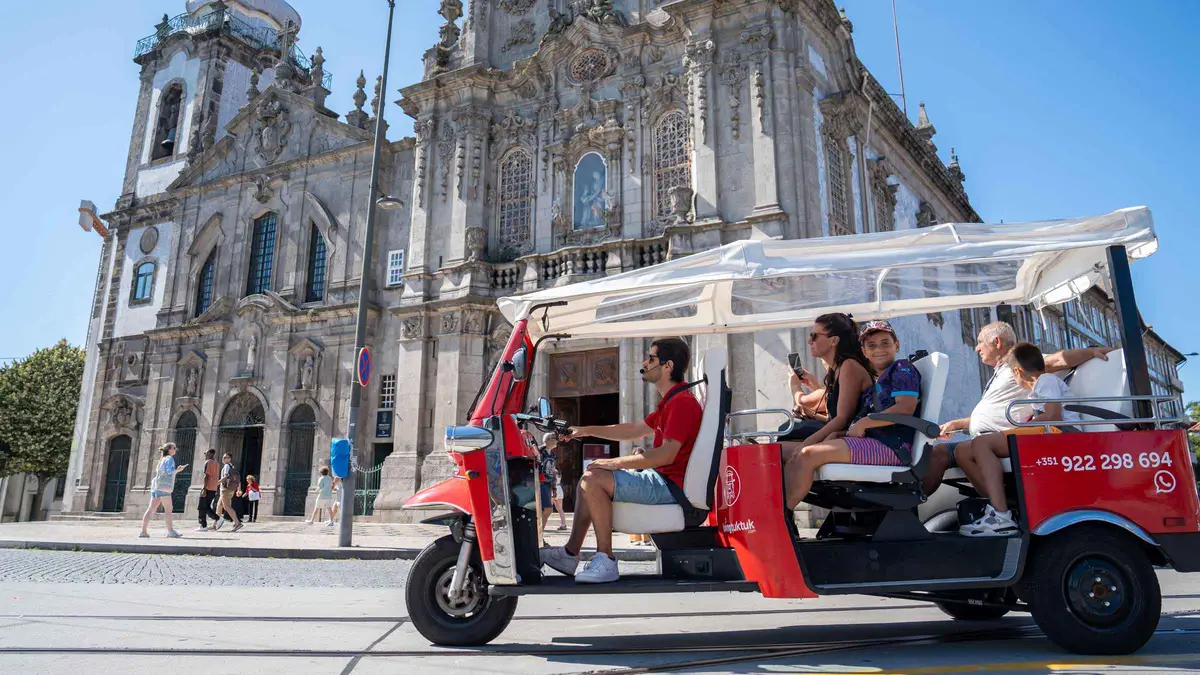 from €25
Porto: Guided Tour by Tuk-Tuk & Optional Douro River Cruise
listed at $29.03
A 50-minute electric tuk-tuk loop through the centre, with an open-dated Six Bridges cruise ticket on the combined option and a walking-tour voucher for the next day. Shared bookings may be split across several tuk-tuks.
Check AvailabilityPrices, ratings and details are the platform's own. Dollar figures are the listed prices. The platform bills in your account's currency.
What is closed at Serra do Pilar, and what is not
The confusion is worth clearing up in one section, because the two halves of this site are governed by different bodies and only one of them is shut.
Closed: the church, the round cloister and the dome
Património Cultural, I.P. runs the monument, and its ticketing system lists Serra do Pilar with one line under Horário: "Temporariamente encerrado para obras de requalificação" — temporarily closed for requalification works. We read it in Q3 2026. The loja.patrimoniocultural.gov.pt shop page carries the same closure. Neither gives a reopening date, a works schedule or a contact for one, and there is no ticket on sale in the system.
What that shuts is the whole interior: the circular church, the circular cloister with its Ionic colonnade, the Património a Norte exhibition space that occupied part of the building, and the walkway around the dome that the $4.65 (€4) ticket used to buy. If you have read that you can climb the dome for a view over the river, that was true and is not true now.
Open: the terrace, the viewpoint and the walk up
The esplanade outside the monastery walls is ordinary public space. It has no gate, no ticket and no published hours, and it is where every photograph of Porto-from-Gaia is taken: the bluff stands directly above the Gaia end of the bridge, so you look down the iron arch and straight across at the Ribeira, the cathedral ridge and the tower on the skyline. Nothing about the works has changed that, and the works are behind you when you stand at the wall.
This is the honest headline of the page. The monastery being shut costs a visitor the interior of a building most of them had not heard of; it costs them nothing at all of the view they came up for.
Also on the site: a working artillery regiment
Part of the complex is occupied by the Regimento de Artilharia da Serra do Pilar, and has been for generations — Património Cultural names it on its own page. That is why the site has never been fully open in the way a cathedral is, why the ticketed area was always a fraction of what you can see from outside, and why fences and signage here belong to two different institutions. Do not treat the military section as part of the visit.
The view: what you are looking at from the wall
It is worth knowing what is in front of you, because from this height the whole of the old city reads as one picture and almost every landmark on this site is in it.
Directly below is the upper deck of the Luís I bridge, the 1886 iron arch, with the metro crossing it and the pedestrian walkway on either side; the lower deck runs at river level to the Ribeira. Across the water the Ribeira frontage stacks up in one unbroken wall of houses, and above it the ridge carries the cathedral on the left and, further back on the skyline, the baroque bell tower of Clérigos — the two vertical marks in the picture.
Upstream and down, the other bridges appear one after another: the Infante D. Henrique concrete arch immediately upriver, the Maria Pia rail arch beyond it, and downstream the Arrábida. Below and to your right, the black-tiled roofs of the port lodges run along the Gaia quay, with the cable car cabins crossing above them every few minutes.
The light matters more here than at any other viewpoint in the city. The whole scene faces roughly north-west from where you stand, so a morning at 08:30 puts hard clean light on the Porto frontage, and an evening from about 19:00 in summer puts the sun behind the buildings and turns the river silver. Both work; the middle of the day flattens everything. Once the light has done its work, the quaysides and streets laid out below are the same ground covered by guided tours in Porto, so the view doubles as a map for the walk ahead.
A note on the crowds, since nobody publishes a figure. The terrace has room for perhaps a hundred people at the wall, and in July and August it is at that between 18:00 and dark, with a queue of a sort at the two best corners. At 08:30 we would expect a handful of people. This is our routing advice from the site's geometry, not a measurement.
What the terrace does not have is a railing you can lean a camera on at every point — the wall is a low parapet in some stretches and a full-height one in others, and the good corners are the two where it drops. Nor is there any interpretation panel naming what you are looking at, which is the small practical reason this section exists at all.
Serra do Pilar history: a round church, Wellington's headquarters, a siege
Three things happened on this hill that are worth carrying up with you, and all three are on Património Cultural's own page for the monument.
1537: the monks of Grijó move to the hill
In the middle of the sixteenth century, by order of King João III, the Augustinian canons of São Salvador de Grijó were transferred to the hill then called the serra de São Nicolau de Vila Nova. The new monastery was founded here in 1537 under the invocation of São Salvador do Mundo. What went up over the following decades is the reason the building matters architecturally: both the church and the cloister are circular in plan, a Renaissance idea taken from Italian models and executed nowhere else in Portugal at this scale.
Património Cultural calls it one of the most notable buildings of European classical architecture on the strength of those two rooms.
1809: Wellington plans an attack from these walls
In 1809 the monastery was occupied by Wellington's troops, and the attack on Porto — then held by Napoleon's army — was planned from here. The reason is obvious once you stand at the wall: the site commands the river, both banks and every approach to the city, which is exactly what a siege engineer wants. That campaign came a year after the city's worst disaster on this stretch of water, told on the 1809 bridge page.
1832: fortress in the Siege of Porto, and the barracks that stayed
During the Siege of Porto in 1832, in the civil war between liberals and absolutists, the monastery was turned into an improvised fortress. It never really stopped being one: the Regimento de Artilharia da Serra do Pilar occupies part of the complex today. Through the twentieth century the buildings went through several conservation and restoration campaigns, and the Património a Norte exhibition space was installed in one wing.
In December 1996 the whole hill was included in the area UNESCO listed as World Heritage together with the historic centre of Porto across the water.
Serra Do Pilar In Eight Dates
The hill from the founding of the monastery to the works that closed it, in the dates its own official page records.
-
1537
The monastery is founded
The canons of São Salvador de Grijó are transferred by order of King João III to the serra de São Nicolau de Vila Nova, under the invocation of São Salvador do Mundo.
-
16th century
A circular church and a circular cloister
The plan that makes the building exceptional in Portugal, and the reason Património Cultural ranks it among the notable works of European classical architecture.
-
1809
Wellington's troops occupy the site
The attack on Porto, then held by Napoleon's army, is planned from these walls — the hill commands both banks and every approach.
-
1832
An improvised fortress in the Siege of Porto
The monastery is fortified during the civil war between liberals and absolutists; the military presence never entirely leaves.
-
1886
The iron bridge arrives below the bluff
The Luís I bridge opens beneath the hill, and the view from the terrace becomes the view everyone now photographs.
-
20th century
Conservation campaigns and an exhibition space
Several restoration campaigns; the Património a Norte display opens in part of the building, and the artillery regiment keeps the rest.
-
December 1996
Inside the UNESCO World Heritage area
Listed together with the historic centre of Porto on the opposite bank.
-
Present
Closed for requalification works
Both Património Cultural ticket pages carry the closure and none carries a reopening date; the terrace outside the walls stays open and free.
Sources: the monument's own page in the Património Cultural ticketing system and the loja.patrimoniocultural.gov.pt shop listing, both read in Q3 2026.
How to walk up to Serra do Pilar
Every approach is short and every approach is uphill; the difference is how much of the hill you climb yourself. Transport fares are the 2026 Andante tariff and the cable-car fare, read in Q3 2026.
The address is Largo de Aviz, on the crest above the Gaia end of the bridge, and the terrace is signed from the road. What follows are the four ways up, with the one we would take in bold in the last column.
| From | Route | Cost | Time and effort |
|---|---|---|---|
| The Porto bank, on foot | Cross the upper deck of the bridge and keep straight on past Jardim do Morro | Free | About 15 minutes; flat across the deck, then one short climb — the routing we would take |
| Jardim do Morro metro | Out of the station, uphill on Avenida da República and left at Largo de Aviz | $1.63 (€1.40) two-zone Andante single | About 8 minutes uphill |
| The Gaia quay, by cable car | Cable car up to the upper station, then five minutes on foot | $8.14 (€7) one way | About 12 minutes and no stairs — the accessible option |
| The Gaia quay, on foot | The stepped path up the slope from Cais de Gaia | Free | About 20 minutes, steep and uneven underfoot |
Two practical notes. First, there is no car park you would want to use: the streets around Largo de Aviz are residential and narrow, and the getting around page explains why nobody should drive into either bank of this gorge. Second, the terrace has no café, no toilets and no shelter; the nearest of all three is back at Jardim do Morro or down at the quay, so a rainy visit here is a five-minute one, and the rainy day page has the alternatives.
Dos And Don'ts At Serra Do Pilar
The short version, for the morning or the evening you walk up.
Do
- Come for the terrace, which is free and open, and treat the closed monastery as a bonus that is not currently available
- Walk up at about 08:30 for hard morning light on the Porto frontage, or from 19:00 in summer for the sun behind the city
- Cross on the bridge's upper deck rather than climbing from the quay; it is flat, it is free and it is the better approach
- Take the cable car up if stairs or a hill are a problem — the upper station is five minutes below the terrace on pavement
- Read the Património Cultural ticket page before you plan an interior visit; it is the only source that carries the closure at all
Don't
- Don't trust culturaportugal.gov.pt on this monument: it still prints hours and the $2.32 (€2) and $4.65 (€4) prices with no closure notice
- Don't turn up expecting to climb the dome — that walkway is inside the closed section, and no ticket is on sale
- Don't wander into the fenced military section; the artillery regiment occupies part of the complex and it is not part of any visit
- Don't plan a rainy hour here: there is no café, no shelter and no toilet on the terrace
- Don't drive up: Largo de Aviz is a narrow residential street and the Andante fare from São Bento is $1.63 (€1.40)
How Much Time To Give Serra Do Pilar
With the interior closed this is a viewpoint stop, and viewpoint stops are the easiest thing in a city to get wrong in both directions — five rushed minutes, or an hour waiting for a light that is not coming. Three routings, with the door-to-door time from the Porto bank.
The terrace itself takes as long as it takes to walk the wall and pick the city apart, which is about twenty minutes if you are naming things and five if you are not. Everything else in the timings below is the approach.
| Routing | On the terrace | Door to door from the Sé | What you skip |
|---|---|---|---|
| The quick look | 10 minutes | About 40 minutes there and back on foot | The far end of the wall, where the downstream bridges line up |
| The full stop, both ends of the wall | 30 minutes | About 1 hour on foot both ways | Nothing — this is the routing we would take, ideally at 08:30 |
| Terrace, then down to the lodges | 20 minutes | About 45 minutes one way with the cable car down | The walk back; you carry on along the Gaia quay instead |
One caution about timing an evening visit. Sunset here is behind the city, so the good half-hour starts well before the sun goes and ends when it does; arriving at the printed sunset time means arriving late. In midsummer that window is roughly 19:00 to 20:30, and it coincides exactly with the busiest hour on the wall.
Five Things Most Visitors Do Not Know About Serra Do Pilar
Each of these is on an official page or in the UNESCO listing, and each changes what you do when you get to the top. Sources in brackets.
- The church and the cloister are both circular, which is unique in Portugal at this scale and the reason the building is ranked with the notable works of European classical architecture — not the view (Património Cultural, monument page, read in Q3 2026).
- The monastery was founded in 1537 by canons moved here from São Salvador de Grijó on the order of King João III, under the invocation of São Salvador do Mundo — the name Serra do Pilar came later (Património Cultural, monument page).
- Wellington's troops occupied the site in 1809 and planned the attack on French-held Porto from these walls, which is what the commanding position over both banks was actually good for (Património Cultural, monument page).
- An artillery regiment still occupies part of the complex, so this has never been a fully open monument even when the ticket desk was working (Regimento de Artilharia da Serra do Pilar, named on the Património Cultural page).
- The hill was included in the UNESCO World Heritage area in December 1996 together with the historic centre across the river — the listing covers both banks, which is why the bridge below is part of it too (Património Cultural, monument page, citing the December 1996 classification).
Serra do Pilar map: the terrace, the walk up and what is below
The monastery and its free terrace, the two stations that serve the hill, and the sights within fifteen minutes on foot.
Next stop from the terrace
Walk minutes are our estimates from the GPS distances; everything except the bridge deck is downhill.
Luís I Bridge
The iron arch you have been photographing, walkable on both decks and free at all hours. The Luís I bridge page has the deck rules and the São João closure.
4 min walkGaia Cable Car
The gondola from the bridge deck down to the lodge quay: $8.14 (€7) one way, last boarding 20:00 in high season. The cable car page has the five season timetables.
5 min walk downhillPort wine cellars
The lodges under the bluff: Taylor's at $29.10 (€25) with no booking, Cockburn's and Graham's by reservation. The port cellars page compares them.
12 min walk down, or 5 min by cable carSerra do Pilar questions
Can you go inside the Monastery of Serra do Pilar?
Not at the moment. Património Cultural's ticket page for the monument prints "Temporariamente encerrado para obras de requalificação" and sells no ticket, so the circular church, the round cloister and the dome walkway are all shut. We read it in Q3 2026. What is closed and what is not draws the line precisely — the terrace outside is unaffected.
When will Serra do Pilar reopen?
No official page states a date. The ticketing system says only "temporarily closed", the shop listing repeats it, and neither gives a works schedule. Anyone printing a month is guessing. Check the official ticket page before you plan an interior visit; until it changes, plan the terrace and the bridge instead.
Is the Serra do Pilar viewpoint free?
Yes. The esplanade outside the monastery walls is ordinary public space with no gate, no ticket and no published closing time, and it is where the famous view of Porto is taken from — not from inside the building. The free things to do page lists the other viewpoints that cost nothing.
How do you get up to Serra do Pilar?
Fifteen flat minutes across the upper deck of the bridge from the Porto side, eight minutes uphill from Jardim do Morro metro on a $1.63 (€1.40) two-zone Andante single, or five minutes on pavement from the top of the Gaia cable car at $8.14 (€7) one way. The four approaches are compared with times and effort.
How much did Serra do Pilar cost before it closed?
The stale culturaportugal.gov.pt listing still shows $2.32 (€2) for the Património a Norte exhibition and $4.65 (€4) for the exhibition with the dome walkway, Tuesday to Sunday 10:00 to 18:30 in summer and to 17:30 in winter. Those are pre-closure figures on a page carrying no closure notice; nothing is on sale now. The table above explains why we print them as history.
Why is the Serra do Pilar church and cloister unusual?
Both are circular in plan, which no other monastery in Portugal has at this scale — a Renaissance idea from Italian models, built after the canons of São Salvador de Grijó were moved here in 1537 by order of King João III. Património Cultural calls it one of the notable buildings of European classical architecture. The history section has the rest, including Wellington's use of it in 1809.
Is there an army barracks at Serra do Pilar?
Yes — the Regimento de Artilharia da Serra do Pilar occupies part of the complex, and Património Cultural names it on the monument's own page. That military presence dates from the site's use as a fortress in the 1832 Siege of Porto and is why the visitable area was always a fraction of what you can see from the terrace. Do not cross into the fenced section.
Where Serra do Pilar fits in a Porto day
Twenty minutes here changes how the rest of the city reads, which is why we would put it early rather than save it for the last evening.
Our routing: walk out across the upper deck of the bridge at about 08:30 on your first full morning, spend twenty minutes at the wall picking out the cathedral, the Clérigos tower and the six bridges, then drop down — by the cable car if you would rather not take the stepped path — to the lodges for a mid-morning cellar visit. That puts the whole geography of the two banks in your head before you have paid for anything.
The evening version works too, and is the one most people take: up at about 19:00 in summer for the low sun on the Porto frontage, then dinner on the Gaia quay. The trade is that you share the wall with everyone else who read the same advice.
Because the interior is closed, this is a stop rather than a visit, and it costs nothing — which makes it one of the few things on this site that fits into a rainy day, a Monday or a tight one-day plan without a booking or a fare.
Serra Do Pilar On Film
Three films from the hill: the walk up, the view from the terrace, and the building itself before the works. What they show inside is what is currently closed; the figures on this page were read in Q3 2026.
THE VIEW FROM SERRA DO PILAR - THE BEST VIEW OF PORTO
The terrace panorama that is free and open, filmed from the wall this page sends you to.
Video: Luis GaioPortugal Walking Tour 4K | Porto Cathedral to the Monastery of Serra do Pilar
The full walk from the cathedral ridge across the bridge deck — the approach we recommend.
Video: Urban PathfinderMOSTEIRO DO SERRA DO PILAR, PORTO, PORTUGAL
The monastery itself, including the round cloister that the requalification works have closed.
Video: McDAGOSVideos load from YouTube only when you press play.
Prices, hours and terms are set by the venue or operator and confirmed at checkout.
We may earn a commission if you book through one of our links, at no extra cost to you. Full affiliate disclosure