 Visit Porto City Guide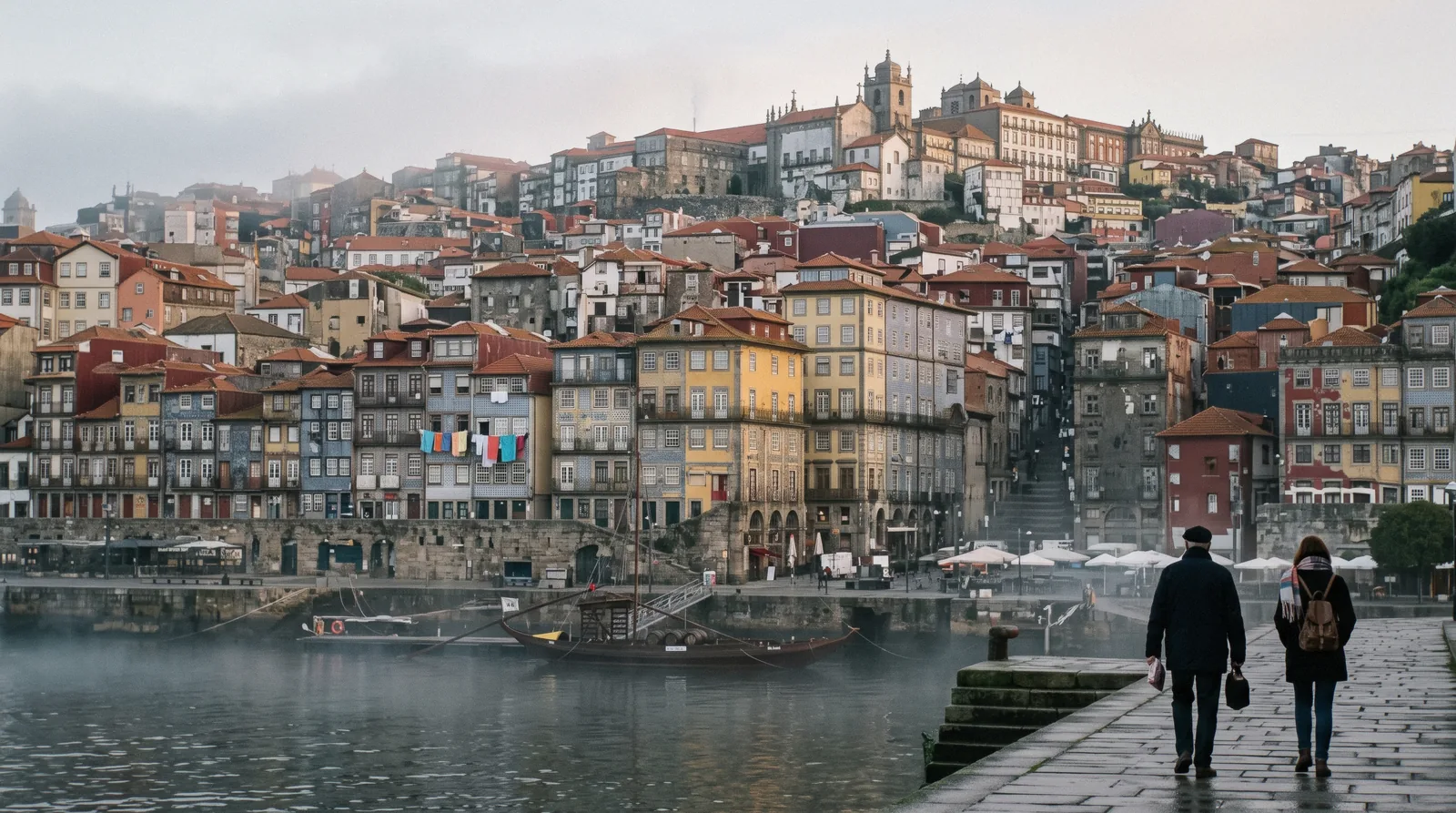
Porto Neighborhoods
Porto neighborhoods are stacked on a slope, and that slope is the decision. The seven areas on this page — Ribeira, Baixa, Cedofeita, Miragaia, Vila Nova de Gaia, Foz do Douro and Matosinhos — differ less in what they contain than in what they cost you in climbing, in noise after midnight and in minutes to the water. This page — part of our guide to what to see and do in Porto — compares them on those four things, adds the nearest metro station and a median room rate read on Google Hotels in Q3 2026, and says which one suits a first visit. The where to stay page turns the same seven into rate bands and the tourist tax; the getting around page has the fares that link them.
Quick answer The quiet one, the loud one, the flat one and the one across the river
Stay in Baixa if it is a first visit: it is flat by Porto standards, it holds São Bento, the Clérigos and the Bolhão, and every metro line reaches it at Trindade or Aliados. Ribeira is the postcard and the noisiest, with a climb back up to everything else. Gaia has the view of Porto, the port lodges and the cheapest median rate of the seven, but its own $3.49 (€3) city tax since August 2026 and a bridge or a cable car between you and the city. Foz and Matosinhos are the coast — quiet, 25 to 40 minutes out, and the only two with beaches.
Key takeaways
- The steepest fact on this page: the Funicular dos Guindais that lifts you out of Ribeira is closed for maintenance with no reopening date, so the walk up from the river is stairs or a long ramp. Plan a Ribeira base around that, or take the tuk-tuk loop, which climbs it for you
- Metro reaches five of the seven. Foz has none — tram 1 along the river or a bus — and Ribeira's nearest is São Bento, four minutes uphill. The Andante 24-hour Zone 2 ticket is $6.22 (€5.35) and covers metro and buses but not the heritage trams at $6.97 (€6)
- Rates split the map more sharply than character does: a median midweek double read in Q3 2026 was $144.10 (€124) in Ribeira, $148.80 (€128) in Baixa, $123.20 (€106) in Cedofeita and $94.10 (€81) in Gaia. The where to stay page has the full bands and the tax on both banks
The Seven Areas On Noise, Hills, The River And The Metro
Four things decide where a week in Porto is comfortable, and none of them appear in a hotel listing. Night noise and the climb are our readings, walked and timed, not official measurements; the walk to the river is our estimate from the district's centre to the nearest quay; the metro column names the station and the line letters that serve it, from the network map in Q3 2026.
| Area | Noise after midnight | The climb | Walk to the river | Nearest metro |
|---|---|---|---|---|
| Ribeira | Loudest of the seven — bars on the quay run to about 02:00 at weekends | Severe: everything else in the city is above you, and the funicular is closed | On it | São Bento, line D, about 4 minutes uphill |
| Baixa | Loud around Galerias de Paris and Aliados on Friday and Saturday, quiet by two streets away | Moderate: the streets tilt but the main axis is level | 10–12 minutes down, longer back | Aliados, Bolhão or Trindade, lines A, B, C, D, E, F |
| Cedofeita | Quiet — residential blocks, restaurants closing around midnight | Gentle: the flattest of the seven inland | 15–18 minutes down through Miragaia | Lapa or Carolina Michaelis, lines A, B, C, E, F |
| Miragaia | Quiet after the riverside restaurants close | Steep in short bursts between the quay and Cedofeita | 3–6 minutes | São Bento, line D, about 10 minutes |
| Vila Nova de Gaia | Quiet on the lodge terraces, busier on the Cais at weekends | Steep from the Cais up to Jardim do Morro; the cable car does it for $8.14 (€7) | On it, other bank | Jardim do Morro or General Torres, line D |
| Foz do Douro | Quiet, apart from the summer beach bars | Flat along the coast road | On the river mouth | None — tram 1 or bus, 25–30 minutes from Ribeira |
| Matosinhos | Quiet inland, busy on the beach strip in summer | Flat | Not on the Douro; it is the ocean here | Senhor de Matosinhos or Matosinhos Sul, line A |
Metro runs about 06:00 to 01:00 on every line, per Metro do Porto in Q3 2026; the heritage trams and the Guindais funicular are outside the Andante system, and the funicular is closed. Fares are on the getting around page.
The Seven, Grouped By Which Side Of The Water, Numbered To The Map
Sort with the chips or filter by side of the river. The from-price is the median rate Google Hotels returned for a midweek double, Wednesday 14 to Thursday 15 October 2026, two adults, room only, read in Q3 2026 and converted at €1 = $1.1622 — a middle figure for the area, not a quote. Time needed is how long the district itself is worth on foot. Ratings belong to the linked tour where one exists.
The Porto bank, in the centre
-
Ribeira
UNESCO riverfront, the postcard from €124Half a daybook-ahead tier 2 of 3
The arcaded houses stacked on the quay under the Luís I bridge, and the single most photographed 200 metres in northern Portugal. Restaurants price accordingly; the cruise boats leave from the pontoons in front. It is loud late, it is a climb out in every direction, and it is still where most first-timers want to sleep for a night or two.
Tip: The quay is the eating trap and the alleys behind it are not; walk two minutes up Rua da Fonte Taurina before choosing a table. The Ribeira page routes the streets.
-
Baixa
The commercial centre: Aliados, Clérigos, Bolhão from €128A full daybook-ahead tier 2 of 3
The city as it works: the Avenida dos Aliados, São Bento station, the Clérigos tower, the Bolhão market, the shopping length of Rua de Santa Catarina and the tiled churches on it. Every metro line stops here, which is what makes it the sane first-visit base, and the nightlife street of Galerias de Paris is inside it — a plus or a problem depending on your floor.
Tip: Ask for a room off the street on the Galerias side. Bolhão is closed on Sunday and holidays, so a Sunday base here is quieter than you expect.
-
Cedofeita
Residential and design, west of the centre from €106Half a daybook-ahead tier 2 of 3
The quarter behind the university and the Rua de Miguel Bombarda galleries: independent shops, the flattest walking in the inland city, restaurants that fill with people who live here. Nothing on the tourist list is inside it except the galleries, and that is the point — it is 12 minutes on foot from the Clérigos and several decibels quieter.
Tip: Gallery openings on Rua de Miguel Bombarda run on Saturday afternoons every six weeks or so; the Cedofeita page has the walk and the Palácio de Cristal gardens at the end of it.
-
Miragaia
The old fishermen's slope between Ribeira and the museums from €112Two hoursbook-ahead tier 2 of 3
Downstream of Ribeira and up the hill from it: the tightest lanes in the old city, laundry across the street, the Alfândega customs house on the water and the walk up to the Palácio de Cristal gardens. It has the widest spread of rates on this page because it mixes hostel beds with riverside apartments — the median was $130.20 (€112) and the top of the range four times that.
Tip: Ten minutes downstream of the crowds on the same bank, with the same river. The Miragaia page has the steps and the gardens above them.
Across the water
-
Vila Nova de Gaia
The port lodges and the view back at Porto from €81Half a daybook-ahead tier 2 of 3
A separate municipality with its own council, its own tourist tax of $3.49 (€3) a night since 21 August 2026, and the entire port trade: Taylor's, Graham's, Cockburn's, Cálem and Sandeman are all on this slope. The rates are the lowest of the seven and the view is the best, because you are looking at Porto rather than standing in it.
Tip: The upper deck of the Luís I bridge is the free way across at Jardim do Morro; the cable car is $8.14 (€7) down to the Cais and covered by no pass.
-
Foz do Douro
Where the river meets the Atlantic from €41Half a daybook-ahead tier 2 of 3
The mouth of the Douro: a lighthouse, a seafront promenade, the Blue Flag beaches of Homem do Leme and Gondarém, and Porto's most expensive addresses behind them. There is no metro, so the connection is tram 1 along the river from Infante or a bus, and the median rate here read lower than anywhere except Gaia because the sample is mostly rooms and guesthouses rather than hotels.
Tip: Tram 1 is a heritage line at $6.97 (€6) a ride, not transport — the tram page explains which pass covers what. Sunset is the reason to come.
-
Matosinhos
Fish restaurants, surf, the working port from €76Half a daybook-ahead tier 2 of 3
North of the river mouth, on the metro: eighteen Blue Flag beaches in the 2026 list, the grilled-fish street of Rua Heróis de França, the Leixões cruise terminal and the city's surf schools. Line A runs to Senhor de Matosinhos from 05:59 to 01:00, which makes it the one coastal base that behaves like part of the city.
Tip: The beaches page has the Blue Flag list and the 13 June to 13 September season; a surf lesson with equipment is the cheapest way to use the water.
Numbers match the list — tap a pin for the guide.
Tours That Cross Several Of These Neighbourhoods In One Go
The quickest way to see which slope you want to sleep on is to be driven or walked across four of them in an afternoon. Prices as listed in Q3 2026; each card opens the operator's page with the live calendar.
 from €29
Porto: 3-Hour Guided City Highlights Walking Tour
listed at $33.68
The three-hour Bluedragon walk through the historic centre, offered in five languages with a private option. The most-booked classic walking tour in Porto, and a public tour needs at least two people.
Check Availability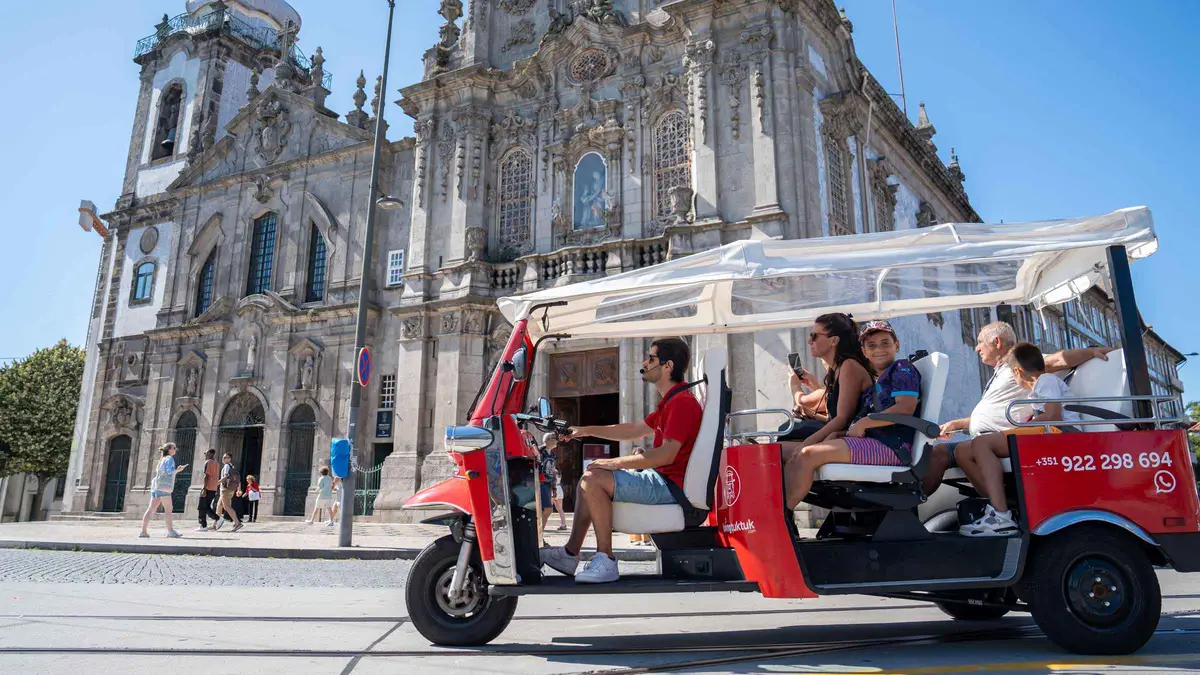 from €25
Porto: Guided Tour by Tuk-Tuk & Optional Douro River Cruise
listed at $29.03
A 50-minute electric tuk-tuk loop through the centre, with an open-dated Six Bridges cruise ticket on the combined option and a walking-tour voucher for the next day. Shared bookings may be split across several tuk-tuks.
Check Availability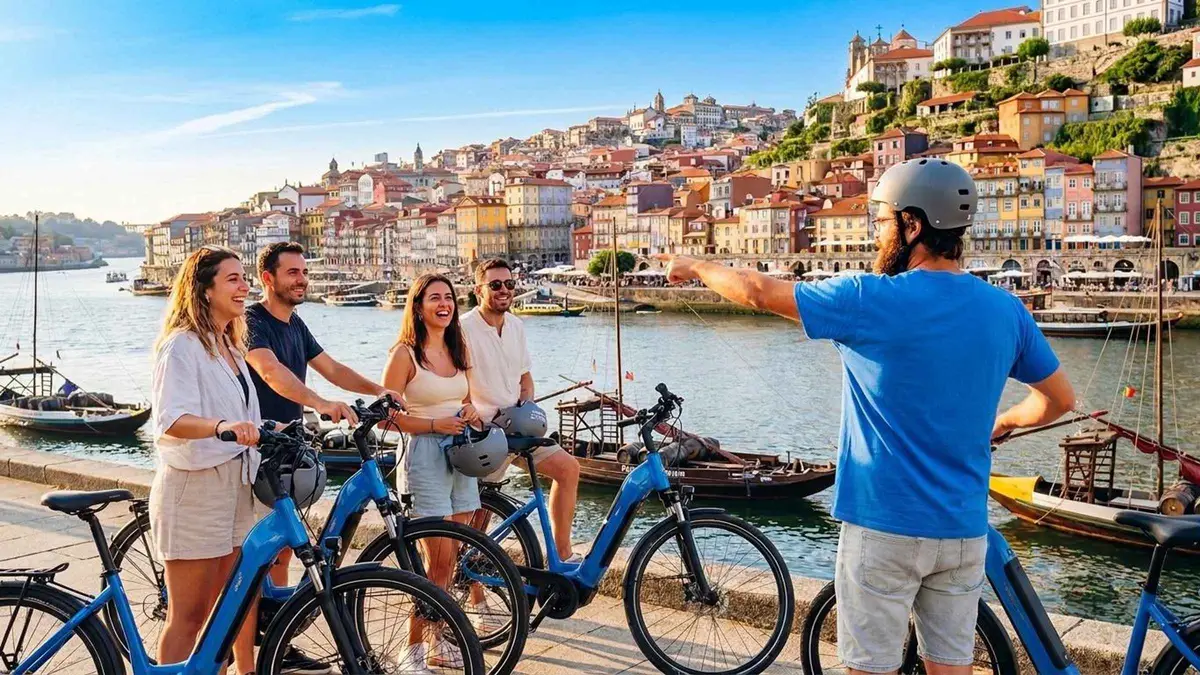 from €28
Porto: City Highlights 3-Hour Guided Electric Bike Tour
listed at $33.10
Three hours by e-bike across the historic centre and the riverfront with Bluedragon, in five languages. The weight limit is 118 kg and the operator can refuse riders who cannot handle a bike, without refund.
Check Availability from €25
Porto: Taylor's Port Cellars & Tasting
listed at $29.03
Taylor's self-guided cellar visit with a QR-code audio guide in 13 languages and three glasses at the end, plus grape juice for children. Bring headphones; the masterclass options need 24 hours' notice.
Check Availability from €30
Matosinhos: Surfing Lesson with Equipment
listed at $34.84
A 90-minute lesson at Matosinhos beach with Fish Surf School, board and wetsuit included, eight people to an instructor. The beach is 25 minutes from the centre by bus or metro.
Check AvailabilityPrices, ratings and details are the platform's own. Dollar figures are the listed prices. The platform bills in your account's currency.
Which Porto Neighbourhood For Which Visitor
First visit, two or three nights: Baixa. It puts the station, the tower, the market and the metro inside a ten-minute radius, it is the only base from which you never think about transport, and the noise is street-specific rather than general — a room off the Galerias de Paris block is quiet.
A romantic two nights, and you have accepted the stairs: Ribeira. Wake up on the water, eat two streets back from it, and treat every return to the room as a climb. With the funicular shut, that climb is real; the tuk-tuk loop exists partly because of it.
Port wine as the point of the trip: Gaia. You sleep on the slope where the lodges are, you walk to Taylor's after dinner instead of crossing a bridge to reach it, and you pay the lowest median rate of the seven — offset a little by Gaia's own city tax.
A week, or a second visit: Cedofeita or Miragaia. Both are ten to fifteen minutes from everything on the list and neither is on the list itself, which is what makes them liveable for seven days. Cedofeita is flat and shop-lined; Miragaia is steep and quiet.
With children, or in July and August: Matosinhos. The beach, the metro line into town, the fish restaurants, and none of the stairs. The Porto with kids page has the rest of the case; Foz is the same idea with better sunsets and no metro.
And the question behind all of them: which neighborhood in Porto is considered the nicest? Foz do Douro, if you ask people who live in the city — it is where the money moved, it has the sea, the gardens and the promenade, and it is considered the pleasant address rather than the interesting one. Visitors almost never mean that when they ask; they mean the prettiest to walk in, which is Ribeira from below and Miragaia from above.
The Hills Are The Thing The Map Does Not Show
Porto is built on a gorge, and the distance between two points tells you almost nothing about the effort between them.
The river runs in a cut, and the city sits on the lip of it. Ribeira and the Gaia Cais are at water level; the Sé, the Clérigos and the Aliados are on the rim, sixty-odd metres above. Every one of the connections between them is a climb, a staircase or a piece of machinery — and the machinery is thin on the ground. The Funicular dos Guindais, which lifts you from the Ribeira end of the bridge to the Batalha in a couple of minutes, is closed for maintenance with no reopening date on the operator's tariff page in Q3 2026; when it runs the fare is $4.65 (€4) one way, not the $2.90 (€2.50) that older guides print. The Gaia cable car does the same job on the other bank for $8.14 (€7) one way or $11.62 (€10) return, and it is neither Andante nor Porto.CARD.
What is left is the upper deck of the Luís I bridge, which is level, free and the single most useful piece of infrastructure for a visitor: it links the Sé side of Porto to Jardim do Morro in Gaia without a metre of climbing, and Metro do Porto's own notices describe the pedestrian deck as always guaranteed during works. It closes only for São João, from midday on 23 June to about 04:00.
Practical consequences. A hotel described as five minutes from Ribeira may be five minutes down and fifteen back. Wheeled luggage on the Escadas do Codeçal or the Barredo lanes is a bad afternoon; take a taxi to the door on arrival and walk afterwards. And if you are choosing between two rooms at the same price, the one on the ridge — Baixa, Batalha, Cedofeita — will cost you less energy across a week than the one on the quay.
Accessibility follows the same logic: the flat walking in this city is the Aliados axis, the Cedofeita grid, the Foz promenade and the Gaia riverside, and the getting around page has the fares for skipping the rest.
Gaia Is A Different City, With A Different Tax
Vila Nova de Gaia is not a district of Porto. It is a municipality of its own on the south bank, with its own council, and everything that follows from that: its own tourist tax, its own beaches, its own museum rules. Visitors treat it as a neighbourhood because the bridge is 400 metres long, and functionally they are right — the metro's line D runs across the upper deck to Jardim do Morro, General Torres and Câmara de Gaia, and the walk over the top deck takes about eight minutes.
What differs. The city tax on the Gaia side is $3.49 (€3) a night, introduced on 21 August 2026, which brings it level with Porto's own $3.49 (€3) charge in force since December 2024; the exemptions and the cap on the Gaia regulation were not published in a form we could read, so we do not print them, while Porto's are seven nights and under-13s. The port lodges are all here, not in Porto — Taylor's with its no-booking self-guided visit at $29.10 (€25), Cálem at $25.60 (€22), Cockburn's and Graham's requiring reservations. The Serra do Pilar monastery above the bridge is here too, and it is closed for works. And World of Wine is a Gaia site, on the hill behind the lodges.
What it costs you: one bridge crossing every time you want the Porto side, which is free and level on the upper deck but a genuine climb from the Cais below. Budget the cable car at $8.14 (€7) one way for the days you have walked enough, and remember it stops at 20:00 in high summer and 18:00 in winter.
The Coast: Foz, Matosinhos And What The Tram Actually Costs
Two of the seven areas are on the Atlantic rather than the river, and the difference between them is a metro line.
Foz do Douro is where the river ends: a lighthouse at the bar, a promenade, gardens, and four Porto beaches on the 2026 Blue Flag list — Homem do Leme, Gondarém, Praia da Luz at the Foz itself and the Aquário beach. It is expensive to live in and reasonable to sleep in, and it has no metro station. The connection people romanticise is tram line 1, which runs along the riverbank from Infante to the Passeio Alegre; it is a heritage service, and the fare is $6.97 (€6) for a single or $13.95 (€12) for a two-day tram ticket, per the operator's tariff in Q3 2026. That is a sightseeing price, not a commuting one, and the Andante passes that cover the metro do not cover it. Buses do the same route for an Andante fare.
Matosinhos is the next municipality north, and it has line A. Trains run from Senhor de Matosinhos from 05:59 to about 01:00, which is what separates a beach suburb from a beach base. Eighteen Matosinhos beaches carry a 2026 Blue Flag, the bathing season runs 13 June to 13 September, the grilled-fish restaurants on Rua Heróis de França are the reason locals come out here to eat, and the Leixões cruise terminal is three kilometres from the city. Surf schools work the beach all year; the lesson with equipment on this page is the cheapest of them on the platform.
Between the two, at the river mouth on the Gaia side, sit the Gaia beaches — nineteen of them on the same Blue Flag list. The beaches page has all three coasts with the season dates and the water they are in, which is the Atlantic and is cold; no official body publishes a monthly sea temperature we could cite.
The Areas People Ask About Avoiding
The most-asked question about Porto neighbourhoods after where to stay is which ones not to walk in. Here is what can honestly be said.
No authority publishes a district-level crime map for Porto, and the police page that would carry one was down when we checked in Q3 2026. What exists officially is a tourist police post — Praça de Pedro Nunes 16, +351 222 461 190, open daily 08:00 to midnight — which tells you where the visitor problems are concentrated: the centre, and pickpocketing rather than anything worse.
So the honest version. The seven areas on this page are all places visitors sleep and walk, including at night, and none of them is a district anyone would tell you to avoid. What varies is comfort: the lanes below the Sé and behind Ribeira are unlit in stretches and steep, and they empty out after the restaurants close; the Aliados nightlife blocks are loud and busy in the way city-centre nightlife blocks are everywhere; the residential estates on the eastern and northern edges of the municipality are simply not places a visitor has a reason to be, which is different from being dangerous.
The practical risks are the ones the tourist board itself names: crowded São Bento and the tram stops for pickpockets, the São João night of 23 June for anything left in a pocket, and the taxi you did not agree a price with. The safety and scams page has the numbers, the emergency line and the two scams that actually run in this city.
One genuine no-go, and it is physical rather than social: the riverside quays have no railing in long stretches on both banks, and the drop is straight into a tidal river with a current. That is the accident this city has, not the mugging.
Where To Go From Here
The three pages that follow once you have picked a slope.
Where To Stay In Porto
The same seven districts with the middle half of the rates read on Google Hotels, the $3.49 (€3) tourist tax on both banks and what each area is for.
Rate bands, the tax and the hotel areasGetting Around Porto
The $6.22 (€5.35) 24-hour Zone 2 ticket, the $9.01 (€7.75) Andante Tour 1, the $6.97 (€6) tram fare and the funicular that is shut.
Andante fares, metro hours, what the trams costRibeira
What to eat where on the quay, the alleys behind it and the climb out. The tuk-tuk loop does the hill for you.
The riverfront quarter in detailPorto Neighborhoods: Questions
Which Porto neighborhood is best for a first visit?
Baixa. It is the flattest central ground, it holds São Bento, the Clérigos and the Bolhão, and every metro line stops at Trindade or Aliados. The comparison table has it against the other six; the where to stay page has the rates.
Are there no-go areas in Porto?
None of the seven areas here is one, and no authority publishes a district crime map for the city. The real cautions are pickpocketing around São Bento and the trams, the unlit steep lanes below the Sé late at night, and the unrailed quays. The avoid section and the safety page have the detail.
Is the port-lodge bank across the river a Porto neighborhood?
No — it is a separate municipality with its own council and its own $3.49 (€3) nightly city tax since August 2026, though the metro and the bridge make it feel like one. It holds every port lodge, including the Taylor's visit. The section on it explains what changes when you sleep on that bank.
Which Porto neighborhood is quietest at night?
Cedofeita inland and Foz do Douro on the coast, on our own reading rather than any measurement; Miragaia once the riverside restaurants shut. Ribeira and the Aliados nightlife blocks are the loud ones. The table marks each.
Which Porto neighborhoods have a metro station?
Baixa, Cedofeita, Matosinhos and Gaia directly; Ribeira and Miragaia use São Bento on line D a few minutes uphill. Foz has none — tram 1 at $6.97 (€6) or a bus. Metro runs about 06:00 to 01:00; fares are on the getting around page.
Is Porto walkable between neighborhoods?
Between the central four, yes — nothing is more than twenty minutes apart — but almost every walk is up or down sixty metres of hill, and the Guindais funicular that used to shorten it is closed. The hills section has the workarounds, starting with the free level crossing on the Luís I bridge upper deck.
Which Porto neighborhood is cheapest to stay in?
Vila Nova de Gaia on the median rate we read in Q3 2026, at $94.10 (€81) for a midweek October double, with Matosinhos next. Both are outside the city of Porto proper. The where to stay page has the middle-half bands rather than a single figure.
Porto's Neighbourhoods On Film
Three walk-throughs that show the difference between the ridge, the quay and the coast better than a map does.
This REALLY is the Best Neighborhood in Porto (For Us)
One area argued in detail, with the streets this page compares.
Video: ExpatsEverywhereIs This Europe's Most Charming City? | 4 Days in Porto Travel Guide
Four days across the districts on this page, in the order most visitors take them.
Video: Top Travel48 HOURS IN PORTO - Best Places to Visit in 2025
A two-day route that shows how far apart the ridge and the river really are.
Video: Dave in PortugalVideos load from YouTube only when you press play.
Prices, hours and terms are set by the venue or operator and confirmed at checkout.
We may earn a commission if you book through one of our links, at no extra cost to you. Full affiliate disclosure