 Visit Porto City Guide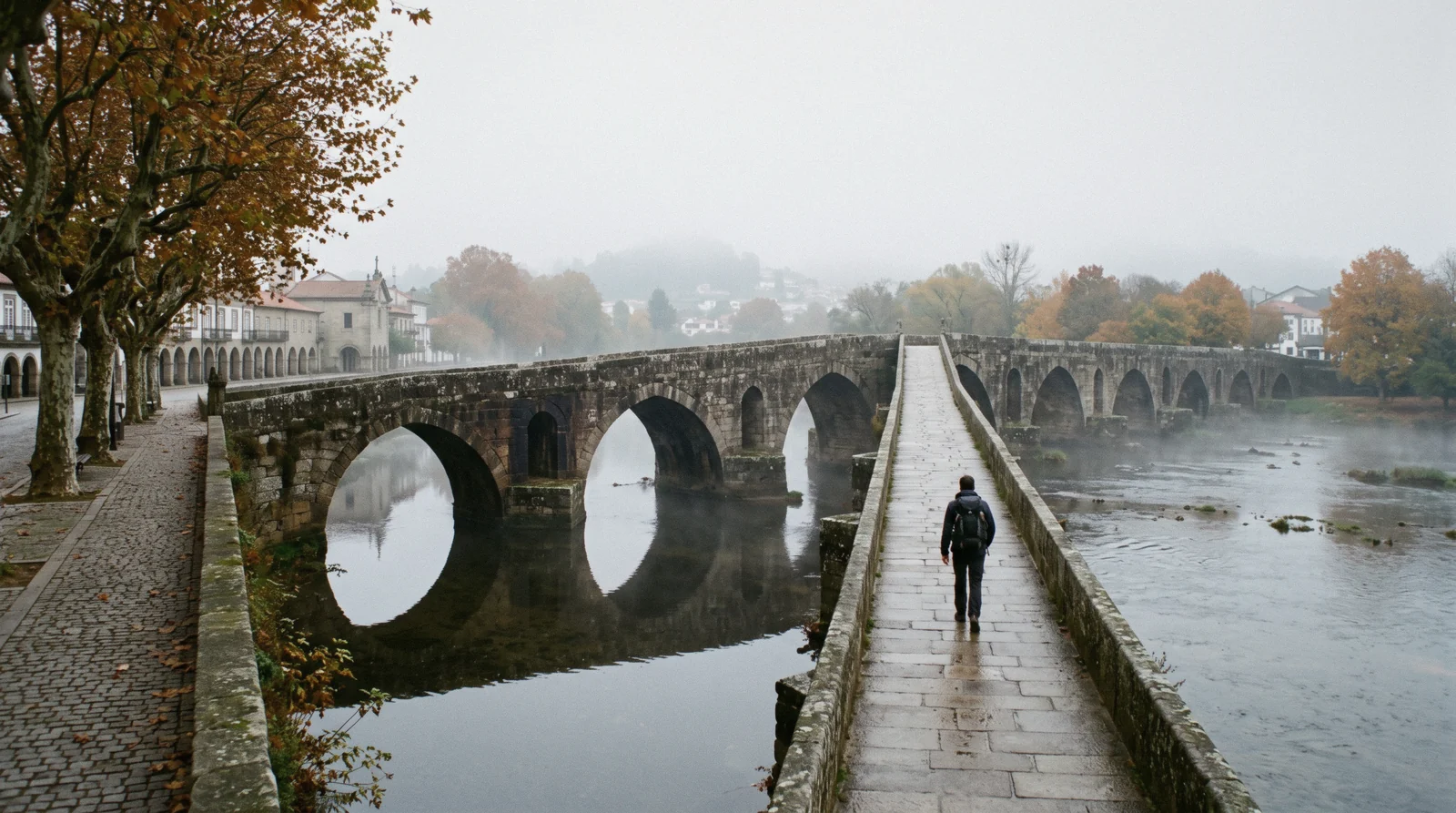
Ponte de Lima
Ponte de Lima is the one day trip in this guide with no train: a river town of arcaded streets and a bridge that has been carrying pilgrims north since the Romans, reached from Porto by car, by coach or as a stop on somebody else's northern loop. Below, getting there is set out honestly — including the fares no operator publishes — the museums are priced from the municipality's own tariff pages, the Feiras Novas dates come from the council's calendar, and the guided walk that starts by the bridge is the one bookable thing in the town itself. Every figure was read in Q3 2026. Braga is the nearest day with a railway, the day-trips hub sets them side by side, and for the city you drive back to, where to stay in Porto covers the bases.
Quick answer How to get there without a train, what it costs, and when to avoid it
Ponte de Lima has no railway station on any CP price sheet or stop list we could read, so it is a car, a coach or a tour stop — the guided walks and small-group days out of Porto reach it, the trains do not. Once there, the town is free: a Roman and medieval bridge over the Lima, a riverside path, arcaded streets and two small museums at $2.91 (€2.50) and $3.49 (€3). Everything municipal is closed on Mondays.
Key takeaways
- The one bookable thing in the town itself is a 90-minute guided walk from the kiosk by the medieval bridge at $31.40 (€27), capped at ten people and rated 4.9 — it includes no transport from Porto, so you arrive under your own steam.
- Feiras Novas, the town's great September fair, runs 9 to 14 September 2026, and the Monday of the festival closes the museums; the International Garden Festival across the river runs 29 May to 31 October 2026. The events calendar covers Porto's own dates.
- No operator publishes a Porto–Ponte de Lima fare on a page we could read: the coach company's timetable pages returned a 403 and its only public figure is a network-wide minimum. Budget for a hire car or a tour day, not for a ticket price you can check in advance.
- The nearest day trip with a railway is Braga, 40 minutes further south on the CP urban line; the day-trips hub compares every northern option on one table.
Key facts
Opening hours
| Museu dos Terceiros, Tuesday–Sunday (morning) | 10:00–12:30 |
|---|---|
| Museu dos Terceiros, Tuesday–Sunday (afternoon) | 14:00–17:30 |
| Museu do Brinquedo and the interpretation centres, Tuesday–Sunday (afternoon) | 14:00–18:00 |
Closed Every Monday. The municipal museums also close on 1 January, Easter Sunday, the Monday of Feiras Novas, the municipal holiday and 25 December; the Museu do Brinquedo adds 1 May. Last entry at the Museu do Brinquedo and the interpretation centres is 12:00 in the morning and 17:00 in the afternoon
Admission
- Adult
- Museu dos Terceiros $2.91 (€2.50); Museu do Brinquedo Português $3.49 (€3); Centro de Interpretação e Promoção do Vinho Verde and Centro de Interpretação do Território: no tariff published on a page we could read. The medieval bridge, the arcades, the riverside path and the church of Santo António da Torre Velha are free
- Reduced
- Museu do Brinquedo half price $1.74 (€1.50) for students aged 6–25, Cartão Jovem holders and visitors over 65; family ticket $6.97 (€6) for two adults with one or more children; groups of 10 to 30 $1.16 (€1) each. Organised groups of 15 to 30 at the Museu dos Terceiros get $1.74 (€1.50) off the general fare
- Free
- Children up to and including 6 at the Museu do Brinquedo when not in a group, and visitors with certified cognitive disability
Planning it
- Time needed
- Not stated by the municipality. Our routing: three hours for the bridge, the arcades and one museum; a full day if you add the gardens across the river or a wine estate
- Book ahead
- Optional — walk-up usually fine
- Address
- Praça da Rainha 20, 4990-062 Ponte de Lima (municipal tourism office); Museu dos Terceiros on Avenida 5 de Outubro; Museu do Brinquedo Português at Casa do Arnado, Largo da Alegria, Arcozelo
Ponte de Lima from Porto: the four ways, and what each costs
Four ways to reach a town with no station, compared in Q3 2026. The rail row is from CP's own Celta stop list and price sheet; the coach row is what Rede Expressos would tell us, which is very little; tour prices, ratings and review counts are the platform's own as listed that day, converted at €1 = $1.1622. Where nobody publishes a figure, the table says so rather than guessing.
| Way in | Time | You pay | What you get | Watch for | Book |
|---|---|---|---|---|---|
| Hire car from Porto | Not published; the A3 and A27 north | Rental plus motorway tolls — Brisa's toll-rate page returned a 404 to us | The only way to reach the wine estates and the villages up the Lima valley | Parking on the riverbank fills during Feiras Novas; no municipal fee published | |
| Coach from Campanhã terminal | Not stated by any operator page we could read | Not stated — the timetable pages returned a 403; the only published figure is a network-wide 'from €2.95' | A seat, in principle; departures exist but we cannot confirm the day's pattern | Do not build a return day around a timetable nobody will show you | |
| Train to Viana do Castelo, then local transport | Not stated; Viana is a named stop on CP's Celta service | Celta Porto Campanhã–Vigo $19.47 (€16.75) single, with Viana do Castelo on the stop list | A rail leg to the district capital, then a bus or taxi inland | The Celta runs twice a day from Campanhã; the connection inland is not published | CP Celta |
| Guided walk, starting in Ponte de Lima | 1.5 h | $31.40 (€27) as listed | A local guide, insurance, ten people maximum, wheelchair accessible | Rated 4.9 from 27 reviews; no transport from Porto — you must already be in the town | Check Availability |
The northern coach days out of Porto reach Ponte de Lima's neighbours rather than the town itself: the Viana do Castelo, Braga and Guimarães day is the closest thing to a bus that goes this way, and it stops at Viana rather than on the Lima.
What costs money in Ponte de Lima, read from the municipality's own museum tariff and hours pages in Q3 2026, with the one platform product that operates in the town beside them. Official rows carry plain links with no tracking; the tour row shows what the platform listed that day, converted at €1 = $1.1622.
Are you paying for a building or for an explanation? Almost everything worth seeing here is free; the only real decisions are two small museums and a guide.
| Option | Price | Includes | When | Book |
|---|---|---|---|---|
| Museu dos TerceirosThe one indoor hour worth buying if the weather turns | $2.91 (€2.50); organised groups of 15–30 pay $1.74 (€1.50) less each | The baroque church and convent of the Third Order, its sacred art and the cloister | Tuesday–Sunday 10:00–12:30 and 14:00–17:30; closed Mondays | Official site |
| Museu do Brinquedo Português, Casa do ArnadoFamilies, and the reason to cross the bridge on foot rather than photograph it from the bank | $3.49 (€3); half price $1.74 (€1.50); family $6.97 (€6); groups $1.16 (€1) each | The Portuguese toy collection, across the bridge in Arcozelo | Tuesday–Sunday 10:00–12:30 and 14:00–18:00, last entries 12:00 and 17:00 | Official site |
| Vinho Verde and Território interpretation centresWine drinkers — but ask the price at the door, because the tariff page is empty | Price not published on a page we could read | The wine region's own visitor centre and the territory museum | Tuesday–Sunday 10:00–12:30 and 14:00–18:00, last entries 12:00 and 17:00 | Official site |
| Guided walking tour of the town, 1.5 hAnyone who has driven an hour and a half and wants more than a pretty bridge | $31.40 (€27) | A local guide, insurance, groups capped at ten, wheelchair accessible | Meets at the kiosk by the medieval bridge; free cancellation up to 24 hours before | Check Availability |
There is no combined ticket for the municipal museums on any page we could read, and no discount for arriving as a couple or a family at the Museu dos Terceiros — the family and group prices belong to the toy museum alone.
The one guided tour in Ponte de Lima
A single card operates inside the town on the platform we checked, and its most important line is the one about transport: it starts here, so you arrive on your own. Price in euro as listed in Q3 2026; the platform charges in your own currency.
 from €27
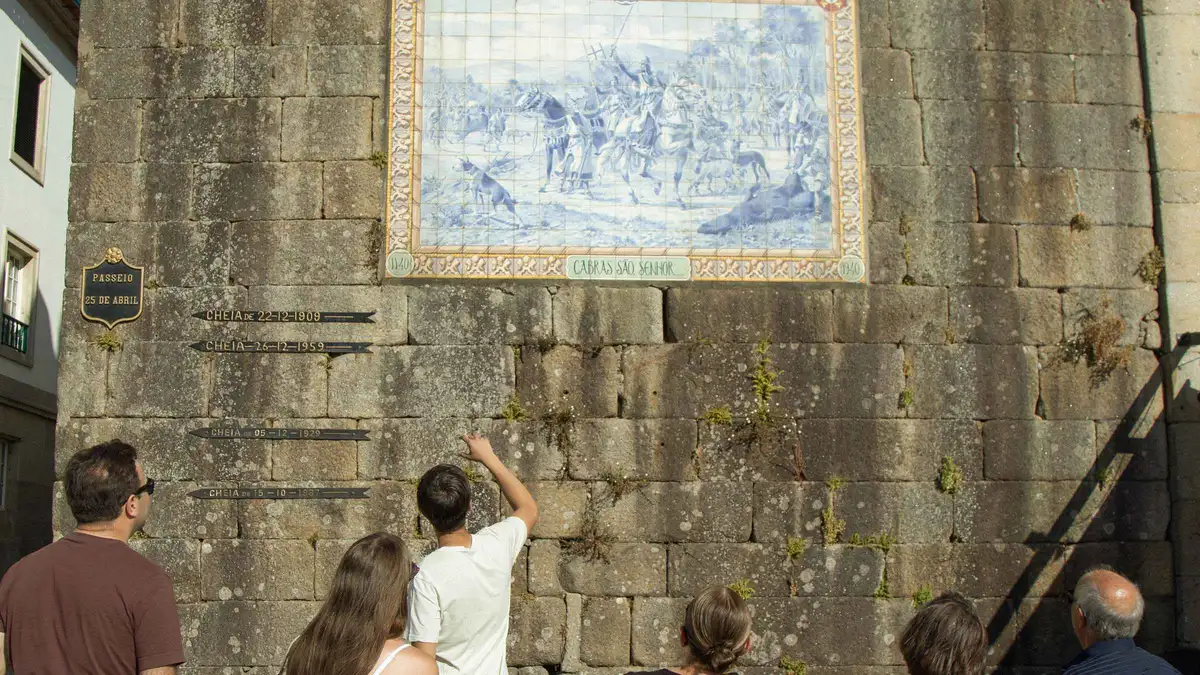
Ponte de Lima: Guided Walking Tour Through the Oldest Village in Portugal
listed at $31.36
A 90-minute walk through Portugal's oldest village with a local guide, capped at ten people. It starts in Ponte de Lima, so pair it with a hire car or the bus from Porto.
Check AvailabilityPrices, ratings and details are the platform's own. Dollar figures are the listed prices. The platform bills in your account's currency.
Getting to Ponte de Lima from Porto, honestly
This is the section most guides fudge. Here is what is actually published, and what is not.
Ponte de Lima appears on no CP price sheet and on no stop list we could read in Q3 2026. The Minho line north from Porto carries the Celta service to Vigo, and CP's own page names its stops as Nine, Viana do Castelo and Valença — the Lima valley is inland of all three. So the honest position is that there is no train to Ponte de Lima, and anyone telling you otherwise means a train to somewhere else followed by a road journey nobody prices.
That leaves the road. Coaches do run north from the Campanhã intermodal terminal, but Rede Expressos returned a 403 to us and publishes only a network-wide 'from €2.95' on its homepage, while FlixBus is a booking engine rather than a tariff. We will not print a fare we could not read. A hire car is the option that actually matches the town: the Lima valley, the wine estates and the villages behind it are why people come this far, and none of them are on a bus route we can verify.
| Option | Published fare | Published journey time | What we can confirm |
|---|---|---|---|
| CP train direct | None — no such service | — | Ponte de Lima is on no CP price sheet or stop list we read |
| CP Celta to Viana do Castelo | $19.47 (€16.75) single to Vigo; $31.10 (€26.80) return | Not stated | Viana do Castelo is a named stop; two daily departures from Campanhã on CP's page |
| Rede Expressos coach | Not stated (site returned 403) | Not stated | Only a network-wide minimum fare on the homepage |
| Hire car, A3 and A27 | Rental plus tolls; toll page 404 | Not published | The only way to reach the estates and the upper valley |
| Northern coach day from Porto | $45.30 (€39) as listed for the Viana, Braga and Guimarães day | 10.5 h | It reaches Viana do Castelo, not Ponte de Lima — see the Braga page |
Arriving on foot: the Camino Português
The other way people reach Ponte de Lima is by walking to it. The town is a stage on the Camino Português, the route from Porto to Santiago de Compostela, and its pilgrim hostel and the stamps in the credencial are part of the town's daily life rather than a tourist attraction. The Pilgrim's Office in Santiago requires at least 100 continuous kilometres on foot for the Compostela certificate, which Porto comfortably exceeds — the Santiago de Compostela page has the requirements and the way back by train.
The bridge, the arcades and the river
The free half of the day, which is most of it.
The bridge is the town's name and its reason: a long, low crossing of the Lima in stone, Roman at the southern end and medieval across the rest, running from the arcaded riverfront on the town side to the church of Santo António da Torre Velha and the Arnado gardens on the other. Walking it takes five minutes and photographing it takes considerably longer, because the best light is early, when the mist sits on the water and the arches double in it.
The town side is a single long riverfront of arcades, plane trees and cafés, with two surviving medieval towers and a market square behind. The riverside path runs both ways from the bridge and is flat, shaded and free. Ponte de Lima calls itself the oldest vila in Portugal, and the claim is on the municipality's own material rather than ours; what is not in dispute is that this is one of the few Portuguese towns whose historic centre still faces its river rather than turning its back on it.
- The bridge — free, always open, best in the first hour of light.
- The arcaded riverfront and its plane trees — free; the cafés under the arches are where the town sits.
- Santo António da Torre Velha and the Arnado gardens, across the water — free, and the walk that gets you the classic view back.
- The riverside path — flat both ways from the bridge, part of the Ecovia along the Lima.
- The medieval towers — free from outside; one houses municipal services rather than a museum.
Vinho Verde, and where the wine actually is
Ponte de Lima sits in the Lima sub-region of Vinho Verde, and the municipality runs a Centro de Interpretação e Promoção do Vinho Verde in the town — open Tuesday to Sunday, 10:00 to 12:30 and 14:00 to 18:00, with last entries at 12:00 and 17:00, and no admission price published on a page we could read in Q3 2026. The estates themselves are spread through the valley and reachable only by car; none publishes a tasting price we could verify, so none is named here. If wine is the point of your northern day, the port lodges in Gaia publish their prices to the cent, which is the opposite of the situation up here.
The museums, priced from the municipality's own pages
Four municipal venues, two with published tariffs on the municipality's own museum site and two without — and every one of them closed on Mondays.
Ponte de Lima's museums are municipal and small, which is why they cost less than a coffee in Porto's Ribeira. The Museu dos Terceiros occupies the church and convent of the Third Order on Avenida 5 de Outubro and holds the town's sacred art. The Museu do Brinquedo Português is across the bridge at the Casa do Arnado and collects Portuguese-made toys — the one thing on this page that a child will remember.
Two interpretation centres, one for Vinho Verde and one for the territory, publish their hours but not their prices: the tariff pages exist in the site's own menu and render empty. Ask at the desk, and note that everything municipal shuts on the Monday of Feiras Novas as well as on ordinary Mondays.
| Venue | Adult | Reduced and family | Hours |
|---|---|---|---|
| Museu dos Terceiros | $2.91 (€2.50) | Groups of 15–30: $1.74 (€1.50) off each; nothing else published | Tue–Sun 10:00–12:30 and 14:00–17:30 |
| Museu do Brinquedo Português | $3.49 (€3) | Half price $1.74 (€1.50) for 6–25, Cartão Jovem and 65+; family $6.97 (€6); groups $1.16 (€1) | Tue–Sun 10:00–12:30 and 14:00–18:00, last entries 12:00 and 17:00 |
| Centro de Interpretação e Promoção do Vinho Verde | Not stated | Not stated | Tue–Sun 10:00–12:30 and 14:00–18:00, last entries 12:00 and 17:00 |
| Centro de Interpretação do Território | Not stated | Not stated | Tue–Sun 10:00–12:30 and 14:00–18:00, last entries 12:00 and 17:00 |
Why the toy museum is the one to choose
If you are picking one, pick the Casa do Arnado. It is across the bridge, which means the walk there is the best fifteen minutes of the day; it is the only venue in the town with a published family price at $6.97 (€6); and it admits children up to and including six free when they are not part of a group. The Museu dos Terceiros is the better building and the shorter visit.
Both are covered by the same Monday closure, which is the single most useful fact on this page for anyone planning a Porto week — the Monday openings page explains what that pattern does to a whole northern itinerary.
Feiras Novas and the garden festival: when the town changes
Two events dominate the calendar, and one of them turns a quiet river town into the largest fair in the north.
Feiras Novas runs from 9 to 14 September 2026 on the municipality's own calendar: a religious festival that has grown into a fair of processions, brass bands, fireworks and a market that fills the riverbank. The council publishes traffic-alteration notices for it weeks in advance, which is the clearest sign of its size. If you want the town at its noisiest and most Portuguese, this is the week; if you want the bridge to yourself, this is the week to avoid, and note that the museums close on the Monday of the festival.
The International Garden Festival — the twenty-first edition — runs across the river from 29 May to 31 October 2026, a season of commissioned garden installations in the Arnado meadows. It is the reason a summer visit here lasts longer than an afternoon. Two smaller fixtures overlap it: the Art'in Lima contemporary art show from 27 June to 27 September, and an exhibition on the Feiras Novas themselves at the municipal library and the territory centre from 10 July to 30 September.
- Feiras Novas 2026 — 9 to 14 September; museums closed on the festival Monday.
- 21st International Garden Festival — 29 May to 31 October 2026, across the bridge in Arnado.
- Art'in Lima contemporary art — 27 June to 27 September 2026.
- 'As Minhas Feiras Novas' exhibition — 10 July to 30 September 2026, municipal library and the Centro de Interpretação do Território.
- Municipal tourism office and information: Praça da Rainha 20, 4990-062 Ponte de Lima, +351 258 900 400.
Half a day in Ponte de Lima, hour by hour
Built around three facts: the museums open at 10:00 and shut at 12:30 for lunch, the toy museum's last morning entry is 12:00, and nothing at all opens on a Monday.
This is the shape of a day arriving by car in the morning. Road times are not published by anyone, so no arrival hour is given — set out early and the mist on the river is the reward.
- On arrival — park on the riverbank and walk the bridge before anything else, north to south and back.
- Late morning — the Museu dos Terceiros at $2.91 (€2.50), or across the water to the Casa do Arnado at $3.49 (€3); the toy museum stops admitting at 12:00 for lunch.
- Around midday — the arcades. Lunch under the plane trees on the riverfront; no citable list names a venue here, so choose by which terrace is full of locals.
- Early afternoon — the guided walk if you booked the 90-minute tour, which meets at the kiosk by the medieval bridge.
- Mid-afternoon — the Arnado gardens and, from late May to the end of October, the International Garden Festival installations.
- Late afternoon — the riverside path, then the drive back; Porto's port lodges still take visitors into the early evening.
Adding Ponte de Lima to a northern day
The efficient version of this town for anyone without a car is not a day trip at all — it is a stop. Ponte de Lima sits between Braga and the coast at Viana do Castelo, so a hire car doing the northern loop can take in Bom Jesus in the morning and the Lima at teatime. The coach days sold from Porto do the same loop without the Lima: the $45.30 (€39) Viana, Braga and Guimarães day is the closest published product, and it does not come here.
Is Ponte de Lima worth visiting?
Yes, with a car, and no without one. What it offers is a genuine small Portuguese town that has not rearranged itself for visitors: a long stone bridge, a riverfront of arcades, two cheap museums, a wine region behind it and a fair in September that has been running for centuries. Almost none of it costs anything, and the pace is the point.
What it does not offer is a monument to justify the journey. There is no cathedral, no palace, no timed ticket, nothing to book weeks ahead. If your northern day has to deliver one big thing, take Braga for Bom Jesus or Guimarães for the castle hill; if it has to be reachable by public transport, take either of those, because both are on the urban rail network and this town is not on any railway at all. Come to Ponte de Lima when you have a car, a spare morning and an appetite for somewhere that is simply itself.
What goes wrong here
Monday, mostly. Every municipal venue in the town closes, and there is no wet-weather alternative once the arcade cafés have had their hour. The second trap is the lunch closure: both museums shut from 12:30, and the toy museum stops admitting at 12:00, so a late-morning arrival can miss both.
The third is Feiras Novas week, which is either the reason to come or the reason to stay away, and never neutral.
What the guided walk actually is
The one card on this page is a 90-minute walk with a local guide, capped at ten people, rated 4.9 from 27 reviews, and it starts at the kiosk by the medieval bridge. Insurance is included; transport is not, and that is the line to read twice. This is a product for people who are already in Ponte de Lima — driving the north, walking the Camino, or staying at one of the valley's hotels — not a day trip from Porto in disguise.
At $31.40 (€27) it costs ten times the museum ticket, which sounds absurd until you remember that the museums are $2.91 (€2.50) and the town's history is mostly not in a building. The listing marks it wheelchair accessible, which nothing else in this guide's northern pages does, and it is one of the very few tours anywhere on this site with no age limit stated. If you have driven ninety minutes to see a bridge, an hour and a half of someone explaining why it is there is a reasonable use of the afternoon.
Ponte de Lima on a map: the bridge, the museums and the way in
Where the town sits relative to Porto, what is on each bank, and the two places the northern coaches actually stop. Ponte de Lima's coordinates are from Wikidata; the museum positions are from the municipality's own published GPS references.
What the same day can add, or swap for
Ponte de Lima sits inland between Braga and the coast; these are the places a car pairs it with and the pages that price them.
Braga
Bom Jesus do Monte's stairway and its 1882 water funicular for $2.91 (€2.50), on a CP urban ticket: Porto to Braga prices the whole day.
South, and the nearest day trip with a railwaySantiago de Compostela
The pilgrim road that crosses this bridge ends there; Santiago de Compostela from Porto has the Celta train, the cathedral's timed tickets and the 100-kilometre rule.
North, up the Camino this town sits onEvery day trip from Porto
Transport, time and price for the Douro, Braga, Guimarães, Aveiro, Coimbra, Ponte de Lima and Santiago side by side on the day-trips hub.
Ponte de Lima is the quietest; the Douro the longestPonte de Lima questions
Is Ponte de Lima worth visiting?
Yes if you have a car and a spare half day, and no if you are relying on public transport. It is a genuine small river town — a Roman and medieval bridge, arcaded streets, two museums at $2.91 (€2.50) and $3.49 (€3) — with no single monument to justify a long journey. The worth-it section sets it against Braga, which has both a railway and a sanctuary.
How do I get from Porto to Ponte de Lima?
By road. The town appears on no CP price sheet or stop list we could read in Q3 2026, coach fares are not published — Rede Expressos returned a 403 and shows only a network-wide minimum — and the nearest railhead named on CP's own Celta page is Viana do Castelo, at $19.47 (€16.75) as far as Vigo. A hire car is the option that matches the place. The getting-there section lays out what each option publishes.
What is Ponte de Lima known for?
Its bridge, its September fair and its wine. The Roman and medieval crossing of the Lima gives the town its name; Feiras Novas fills the riverbank from 9 to 14 September 2026; and the surrounding valley is a sub-region of Vinho Verde, with the municipality's own interpretation centre in the town. The bridge section and the festival section cover all three.
When is the Ponte de Lima festival in 2026?
Feiras Novas runs from 9 to 14 September 2026 on the municipality's calendar, with traffic restrictions published in advance and the museums closed on the festival Monday. The International Garden Festival across the river runs 29 May to 31 October 2026. Porto's own dates are on the events calendar.
How much do the museums in Ponte de Lima cost?
The Museu dos Terceiros is $2.91 (€2.50), with $1.74 (€1.50) off each for organised groups of 15 to 30. The Museu do Brinquedo Português is $3.49 (€3), half price at $1.74 (€1.50) for students 6–25, Cartão Jovem holders and over-65s, $6.97 (€6) as a family and $1.16 (€1) each in groups. The two interpretation centres publish hours but no price. The museums table has the hours beside them.
Is there a guided tour of Ponte de Lima?
One, and it starts in the town rather than in Porto: a 90-minute walk with a local guide at $31.40 (€27), capped at ten people, wheelchair accessible and rated 4.9 from 27 reviews. Transport is not included, so it suits drivers, pilgrims on the Camino and anyone staying in the valley. The tour section explains what you are buying.
Is Ponte de Lima on the Camino Português?
Yes — it is a stage town on the walking route from Porto to Santiago, with a pilgrim hostel and stamps for the credencial. The Pilgrim's Office requires at least 100 continuous kilometres on foot for the Compostela, which any start in Porto exceeds. Santiago de Compostela from Porto has the certificate rules and the train home.
Our verdict on Ponte de Lima
Drive, arrive early, walk the bridge in the mist, buy the $3.49 (€3) ticket at the Casa do Arnado if you have children and the $2.91 (€2.50) one at the Terceiros if you do not, eat under the arcades and leave in the middle of the afternoon. Add the guided walk if the history matters to you and you can meet a guide at the kiosk. Do not come on a Monday, do not come expecting a monument, and do not build the day around a bus timetable nobody publishes.
If any of that rules it out, Braga is the same direction with a railway, the day-trips hub has the rest, and for the evening back in the city, see things to do in Porto.
Ponte de Lima on Video
Three films: an argument for coming at all, the municipality's own short, and a full walking tour that covers the bridge, the arcades and the far bank.
Most Travelers Get Portugal Wrong | Ponte de Lima Proves It
The case for a town with no monument, filmed on the riverfront this page describes.
Video: Atypical Vagabond in PortugalVisit Ponte de Lima
The municipality's own film of the town, the bridge and the Arnado bank.
Video: Município de Ponte de LimaPonte de Lima - Portugal - Walking Tour (4K UHD 60fps)
A full walk through the streets and across the bridge, at the pace the plan section suggests.
Video: Walking and FoodVideos load from YouTube only when you press play. Prices and festival dates mentioned on camera may predate the 2026 figures printed on this page.
Prices, hours and terms are set by the venue or operator and confirmed at checkout.
We may earn a commission if you book through one of our links, at no extra cost to you. Full affiliate disclosure