 Visit Porto City Guide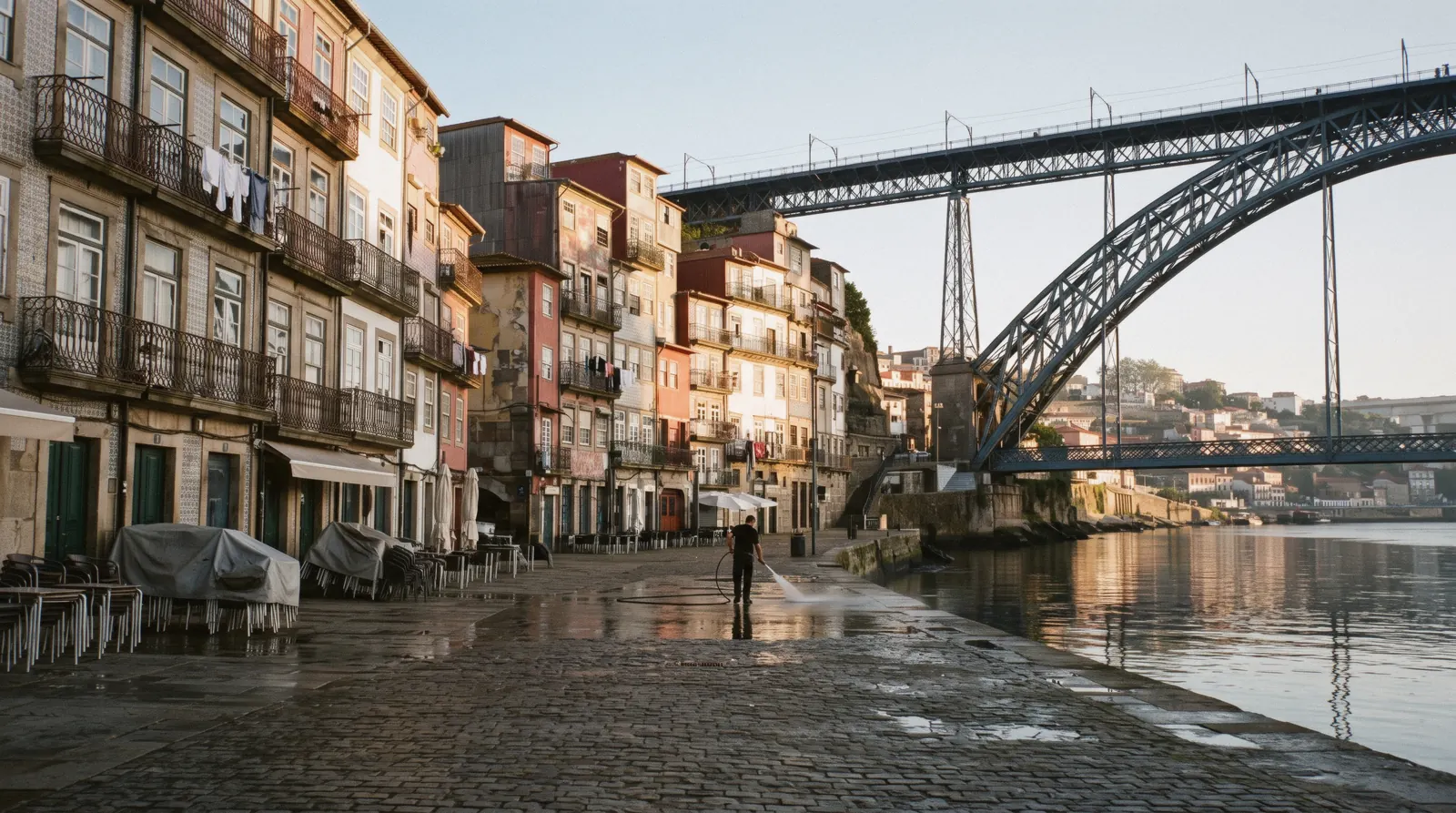
Ribeira, Porto
Ribeira, Porto's quay and the oldest street plan in the city, is the strip of tall painted houses between the Sé hill and the Douro, with the Luís I bridge landing in the middle of it and the port lodges of Gaia staring back across the water. It has been inside the UNESCO World Heritage site since 1996 and it is where every first visit ends up by late afternoon. This page gives every sight in the quarter with the official hours and prices we read in Q3 2026, a loop that walks it in about two hours, the boats that leave from the quay, the ways in and out now that the funicular is shut, what goes wrong here after dark, and what a room on the quay costs against one on the ridge above. The quay is the low end of the walk that starts on the ridge among the top things to do in Porto.
Quick answer What it is, what costs money, how long, how to get down and back up, in four lines
Ribeira is the riverside quarter below the cathedral: the Praça da Ribeira with its arcades, the Cais da Ribeira with the restaurant terraces, the medieval lanes of the Barredo climbing behind them, and the lower deck of the Luís I bridge to Gaia. Two hours covers it on foot; the quay, the square, the bridge and the views cost nothing. The paid sights sit on its edges — the Sé cloister at $3.49 (€3), the Palácio da Bolsa at $16.27 (€14), Casa do Infante at $4.65 (€4) — and the boats leave from the quay itself.
Key takeaways
- Walk it downhill: the Sé at 9:00, down the Barredo stairs to the square by 10:00, west along the quay to the Bolsa and São Francisco, then back across the lower deck of the bridge — the three-hour city walk does the same ground with a guide for $33.68 (€29)
- The Six Bridges cruise at $20.90 (€18) is the cheapest way onto the water and the most-booked, not the best boat; the two-hour seven-bridges sailing with a glass of port at $47.03 (€40) is the one the reviews prefer
- The Funicular dos Guindais that used to lift you back to Batalha is closed for maintenance with no reopening date, so the way up is the Barredo stairs, the Rua de Mouzinho da Silveira to São Bento, or tram 1 along the river at $6.97 (€6)
- Sleep on the quay for the view and expect the terraces under the window until 02:00; the Baixa ridge seven minutes uphill is flat, on the metro and quieter, and where to stay puts the two side by side
Every sight in Ribeira: hours, price, closed day
The paid and free sights of the quarter and its immediate edges, with adult prices and hours read on the official pages in Q3 2026 — diocese-porto.pt and culturaportugal.gov.pt for the Sé, palaciodabolsa.com, ordemsaofranciscoporto.pt, museudoporto.pt, metrodoporto.pt and stcpservicos.pt. Dollar figures at €1 = $1.1622. Where an official page prints no figure, the cell says so.
| Sight | Adult price | Hours | Closed | Note |
|---|---|---|---|---|
| Praça da Ribeira and the Cais da Ribeira | Free | Always open | Never | The square with the arcades, the cube fountain and the quay of terraces; the medieval Postigo do Carvão gate is in the wall behind |
| Luís I bridge, lower deck | Free | Always open to pedestrians; upper deck passage guaranteed during Metro works | Upper deck on São João night, 23 June, 12:00 to 04:00 | Lower deck is the road and pavement at quay level; the upper deck is the metro and the view, 60 metres up |
| Sé do Porto, cloister, museum and tower | $3.49 (€3), one ticket | April–October 9:00–18:30, tower to 18:00; November–March 9:00–17:30, tower to 17:00 | Christmas and Easter, exact dates not stated; Mass daily 11:00 | The church itself is free; the ticket is for the cloister and the tower, and the tower shuts 30 minutes before the rest |
| Palácio da Bolsa | $16.27 (€14); $11.04 (€9.50) student and senior; under-12 free | 9:00–18:30 year-round on both official pages | Not stated | Guided tour only, about 30 minutes, language by order of arrival; no self-guided visit |
| Igreja de São Francisco and catacombs | Not stated — the new official site prints hours but no price | 1 April–30 September 9:00–20:00; 1 October–31 March 9:00–19:00 | 25 December | The gilded church and the museum share the Rua da Bolsa entrance; blogs print €7.50 to €10, none of it official |
| Casa do Infante, Museu do Porto | $4.65 (€4) per space; $9.30 (€8) seven-day ticket across the Museu do Porto spaces; under-18 free | Tuesday–Sunday 10:00–17:30 | Mondays, public holidays, 24 and 31 December | The customs house where Henry the Navigator was born, with the Roman mosaics under it |
| Museu do Vinho do Porto, Rua de Monchique | $4.65 (€4); on the same $9.30 (€8) seven-day ticket | Tuesday–Sunday 10:00–17:30 | Mondays, public holidays, 24 and 31 December | A Museu do Porto space in an old riverside warehouse west of the quay; ten minutes' walk from the square |
| Funicular dos Guindais, Ribeira to Batalha | $4.65 (€4) single, $6.97 (€6) return when open | CLOSED for maintenance, no reopening date (stcpservicos.pt in Q3 2026) | Until further notice | 281 metres of track and 61 metres of climb; not covered by any Andante ticket even when it runs |
| Mercado Ferreira Borges | Free to look at | Not stated — an events and concert venue, opened by the programme | Not stated | The red iron market hall of 1885 beside the Bolsa; go in if a daytime event is on, otherwise photograph it |
No sight on this list has a free day for visitors from abroad: the Museu do Porto's free Sundays are for Cartão Porto residents, and the state museums' 52 free days a year are residents-only since August 2024. The Monday page has what shuts when.
Ribeira on foot, on the water, by tuk-tuk
The walks that cover the quarter, the boats that leave from its quay and the one port-wine walk that starts under the bridge. Prices in dollars as listed on the platform in Q3 2026, euro price beside; each card links to the operator's own page where the calendar shows what is still open.
 from €29
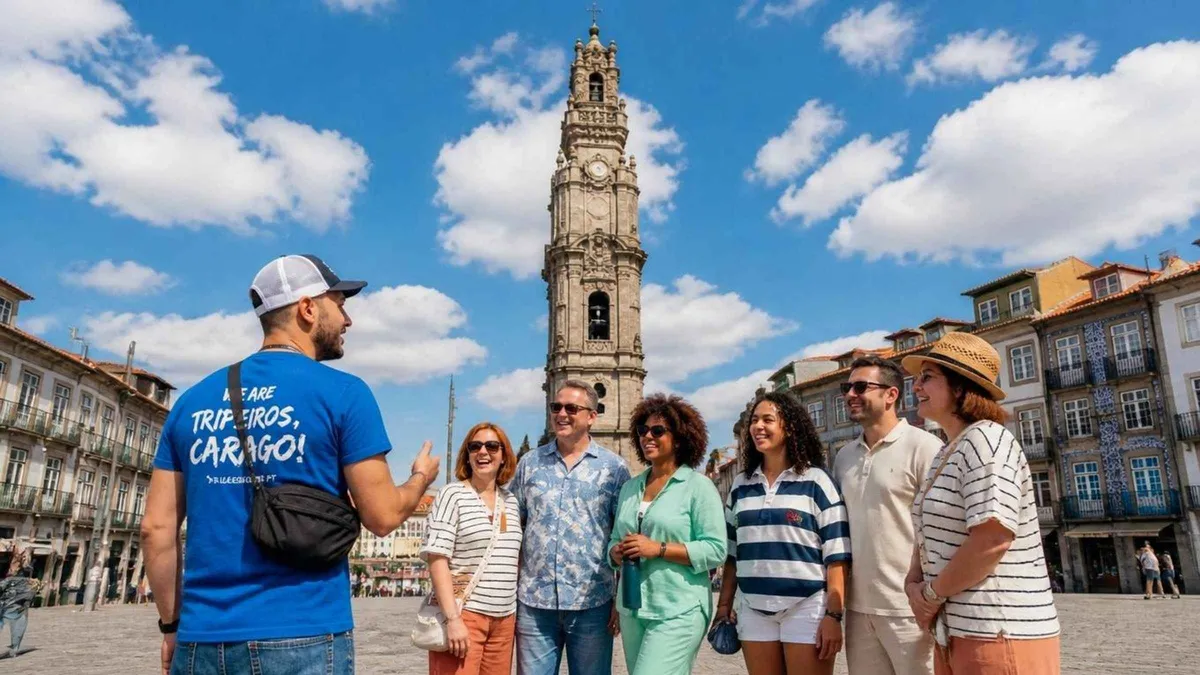
Porto: 3-Hour Guided City Highlights Walking Tour
listed at $33.68
The three-hour Bluedragon walk through the historic centre, offered in five languages with a private option. The most-booked classic walking tour in Porto, and a public tour needs at least two people.
Check Availability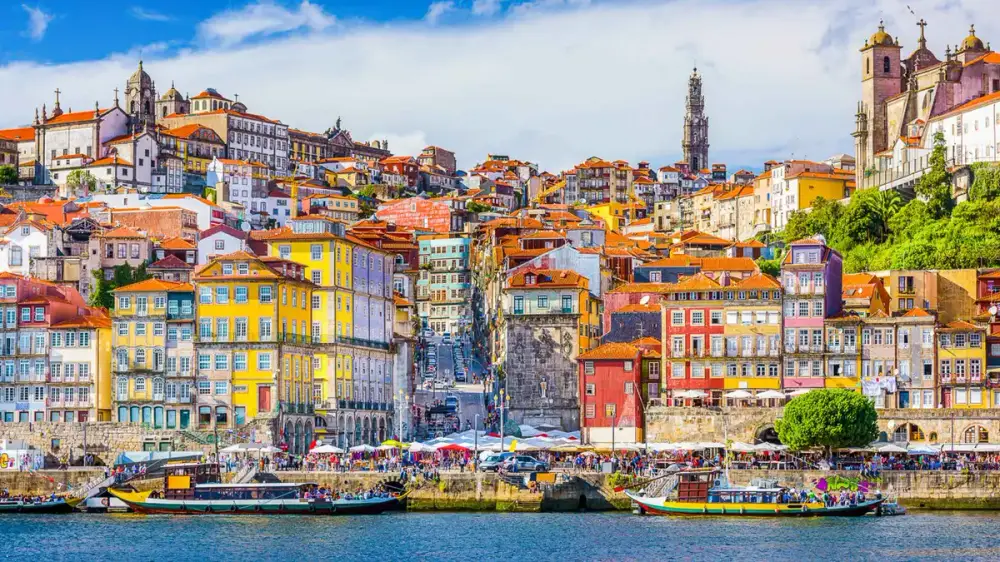 from €18
Porto: Six Bridges Cruise
listed at $20.90
The 50-minute Six Bridges loop on a traditional-style boat, the cheapest way onto the river and the most-booked. Audio comes by QR code on your own phone; the 4.2 rating reflects the crowds.
Check Availability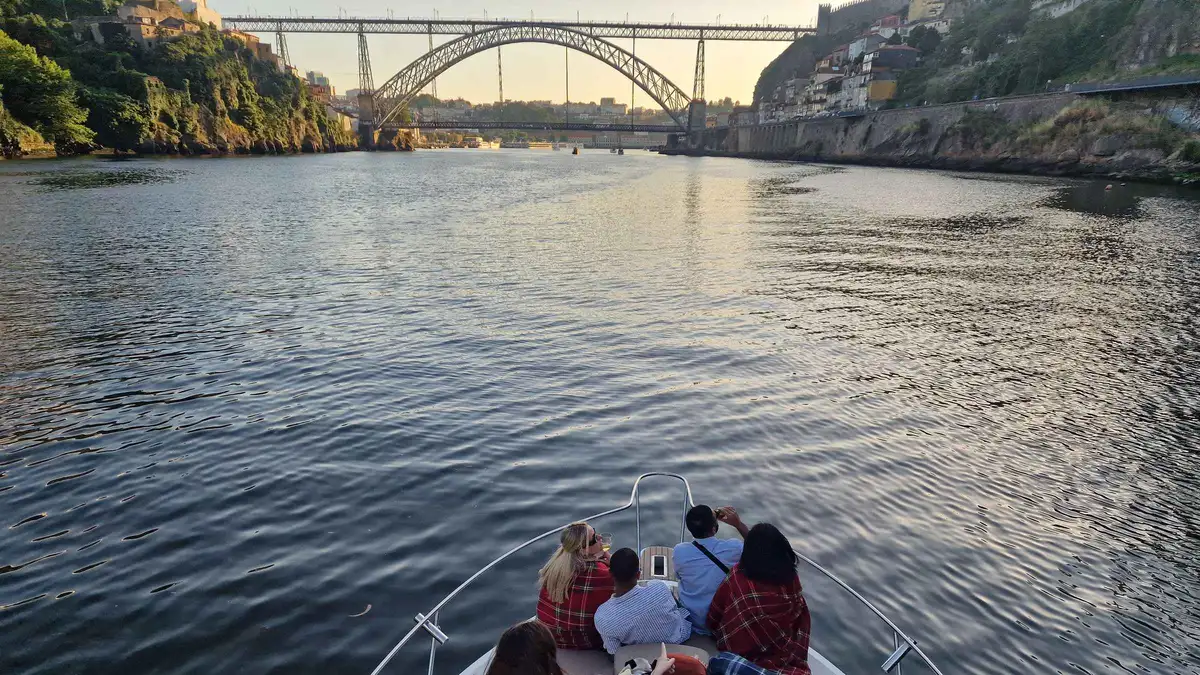 from €40
Porto: 7 Bridges Cruise & Port Wine with Sunset Option
listed at $47.03
Two hours from Afurada past all seven bridges with a certified crew, a glass of port and a bathroom on board, ten people at most. Near-perfect ratings; the sunset departure sells first.
Check Availability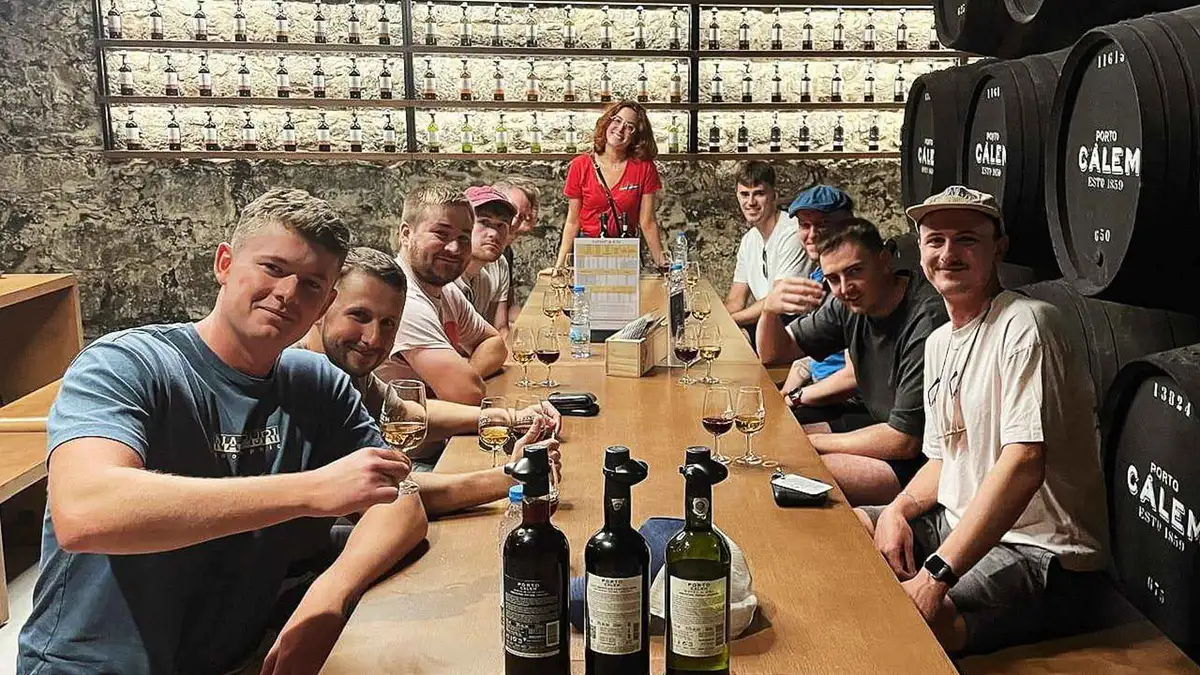 from €51
Porto: Port Wine Tour with 7 Port Tastings
listed at $59.23
Four hours with Porto Walkers across one traditional cellar and two tasting rooms, seven ports in all, no food. For someone who wants the categories explained side by side rather than one house's story.
Check Availability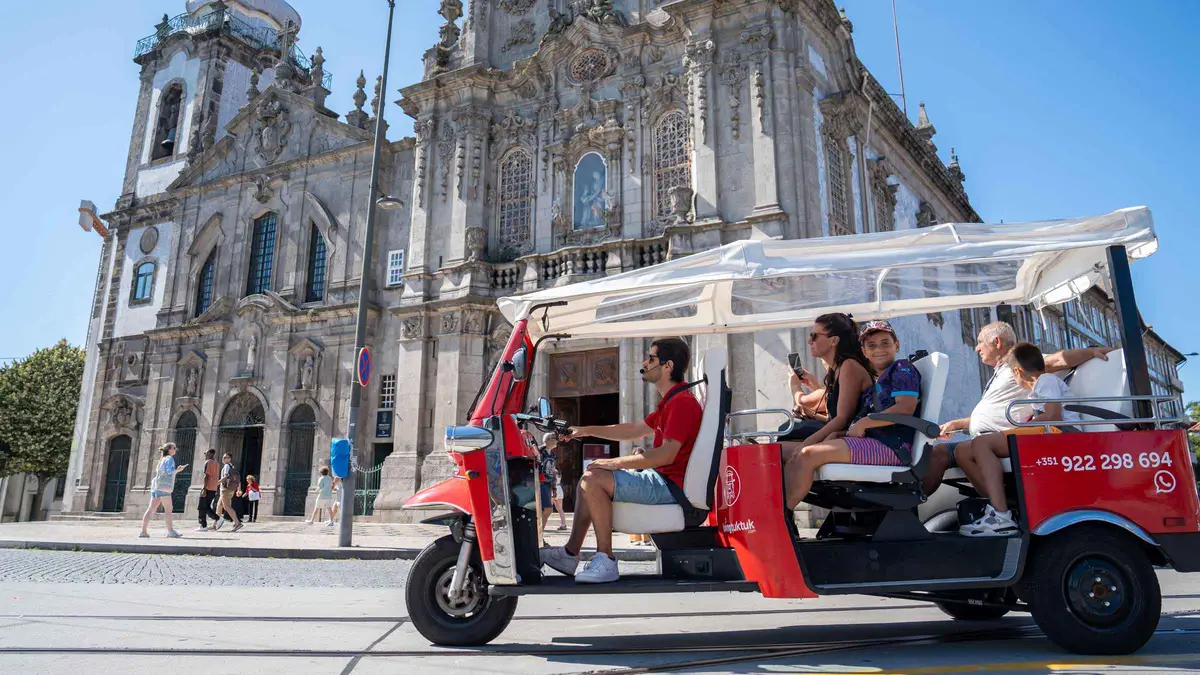 from €25
Porto: Guided Tour by Tuk-Tuk & Optional Douro River Cruise
listed at $29.03
A 50-minute electric tuk-tuk loop through the centre, with an open-dated Six Bridges cruise ticket on the combined option and a walking-tour voucher for the next day. Shared bookings may be split across several tuk-tuks.
Check Availability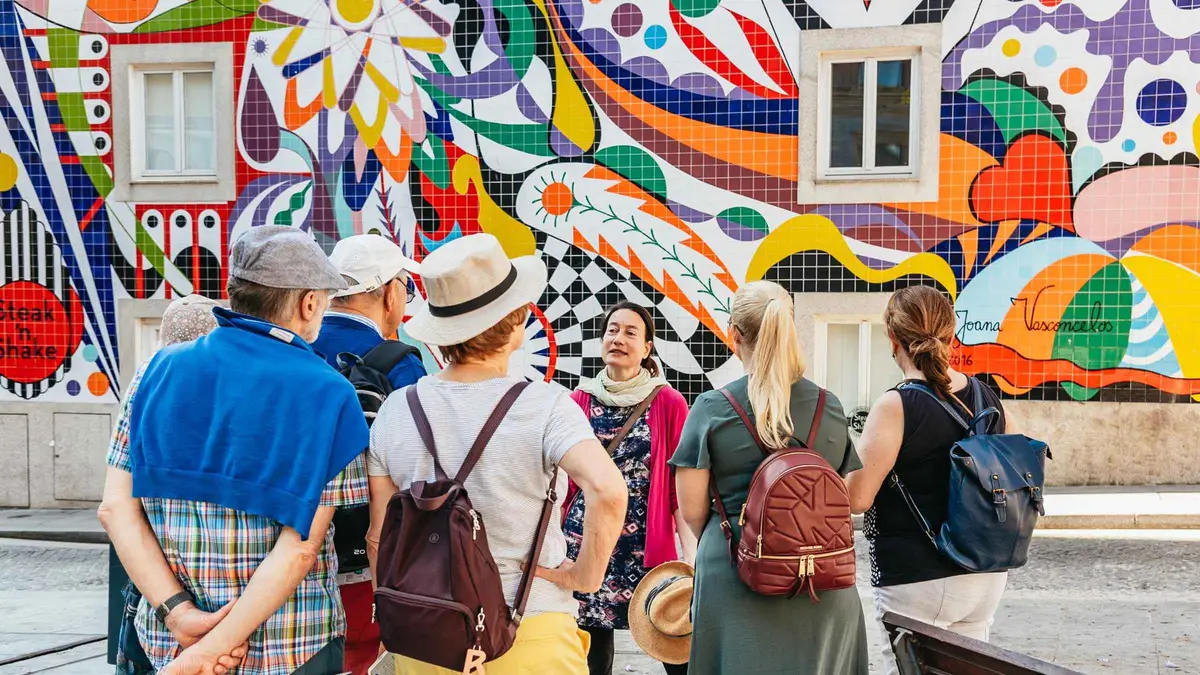 from €29
Porto Walking Tour: Highlights & hidden gems - max 8 pax
listed at $33.68
A capped-at-eight walk in English or German with restaurant recommendations written down at the end. The best-rated small-group walk here, with a two-person minimum to run.
Check AvailabilityPrices, ratings and details are the platform's own. Dollar figures are the listed prices. The platform bills in your account's currency.
What Ribeira is: the quay the city grew out of
Ribeira means riverbank, and the name still describes the place: a narrow shelf of granite between the Douro and the cliff the cathedral stands on, built up over eight centuries into the tall, thin, many-coloured houses that every photograph of Porto is taken of. Behind the quay the ground rises at once, and the Barredo — the wedge of lanes and stairways between the square and the Sé — keeps the medieval plan the rest of the centre lost: alleys a metre wide, houses with one room per floor, stairs where a street would be too steep. The city wall of the fourteenth century, the Muralha Fernandina, still runs along the top of the slope above the bridge, and the Postigo do Carvão in the wall behind the square is the one medieval gate left in it.
This was the working port until the twentieth century. Casa do Infante on Rua da Alfândega was the royal customs house and mint — Henry the Navigator, the prince who sent the caravels down the African coast, was born in it in 1394 — and the warehouses west of it along the river held the wine before the lodges moved across to Gaia. The old pontoon bridge that carried the road to Gaia collapsed under a fleeing crowd during the French assault of 29 March 1809; the plaque on the quay wall marks it, and the 1809 bridge disaster has the story. The iron bridge that replaced its successor, the Luís I of 1886, is what lands in the middle of the quarter now, its lower deck at quay level and its upper deck sixty metres up carrying the metro.
UNESCO listed the historic centre, the Luís I bridge and the Serra do Pilar monastery opposite as one World Heritage site in 1996. The listing did what listings do: the ground floors along the quay turned into restaurants, the upper floors into apartments, and the Barredo behind emptied and then filled again with short lets. It is still lived in — washing lines, a grocer, children on the stairs — and it is still the loudest place in the city to sleep.
The sights, in the order the loop reaches them
Top to bottom, because the hill is the argument for that order; walk minutes are ours, from the GPS distances.
The Sé and its terrace
The top of the hill and the start of the day. The cathedral square, the Terreiro da Sé, is a free terrace over the roofs of the Barredo and the river, with the medieval tower of the tourist office on one side — the Sé office on Calçada Dom Pedro Pitões is the one to ask at about the Porto.CARD, whose official sales page has vanished. The church is free; the $3.49 (€3) ticket buys the Gothic cloister with its blue-and-white tile panels, the chapter house and the tower, and the tower shuts thirty minutes before the rest.
The cathedral page has the Mass time and the winter hours; the tickets page has the guided options, of which the one-hour guided visit with entry at $18.77 (€16) is the cheapest way to have it explained.
The Barredo stairs
From the cathedral terrace the Escadas do Barredo and the Rua da Pena Ventosa drop through the medieval wedge to the square in about ten minutes. Nothing here is a sight in the ticketed sense; the lanes are the sight — the Rua Escura, the Rua dos Mercadores that was the merchants' street, the houses leaning into each other over stairs polished by six centuries of feet. Wet granite is ice; shoes with grip matter more here than anywhere in the city.
Praça da Ribeira
The square at the bottom, with the eighteenth-century arcades on its north side, the modern cube fountain in the middle and the statue of Saint John the Baptist in the wall fountain behind it. The Postigo do Carvão, the coal gate, is the arched opening in the old wall on the west side. This is where the quarter's price is set: a coffee on the square costs the view, and the same coffee two lanes back costs a coffee.
The Cais da Ribeira and the bridge
East from the square the quay runs under the terraces to the foot of the Luís I bridge, where the lower deck starts. Cross it — five minutes to the Gaia bank, free, at water level — and come back on the upper deck later from the Jardim do Morro for the view down onto the quarter, which is the view the postcards use. The bridge page has the Metro maintenance windows and the São João night closure.
Casa do Infante and the wine museum
West from the square, one block back from the river on Rua da Alfândega, the Casa do Infante is the Museu do Porto's archaeology space: the Roman mosaics found under the customs house, the mint, the room the prince was born in. $4.65 (€4), Tuesday to Sunday 10:00 to 17:30, and the $9.30 (€8) seven-day ticket covers it with the Museu do Vinho do Porto in the Monchique warehouse ten minutes further along the river and the other Museu do Porto spaces; the museums page lists them. Both close on Mondays.
The Bolsa and São Francisco
Ten minutes west of the square along Rua do Infante D. Henrique the quarter's two ticketed set pieces stand side by side: the Palácio da Bolsa, the stock exchange of 1842 with the Arab Room, seen only on a $16.27 (€14) guided tour of about thirty minutes whose language is set by who arrives first, and the Igreja de São Francisco, the Gothic church whose interior disappeared under gilded carving in the eighteenth century, with the catacombs under the museum next door. The church prints hours — 9:00 to 20:00 in summer, to 19:00 in winter — and no price, so this page prints none. The red iron Mercado Ferreira Borges between them is a concert venue now; the tram 1 stop for Foz is on the riverside road below.
The loop: two hours, top to bottom and back across the water
Start at the Sé at 9:00 when the cloister opens and the terrace is empty; the metro to São Bento and six minutes uphill, or the Baixa on foot. Cloister and tower until 9:45. Down the Barredo stairs to the Praça da Ribeira by 10:00, before the first terraces set out their chairs. East along the quay to the bridge, across the lower deck to the Gaia bank and back — or, if the port lodges are the afternoon plan, stay on that side and read the Gaia page instead. West from the square along the river past Casa do Infante to the Bolsa for a tour by 11:00, São Francisco after it, and lunch in the streets behind, not on the quay.
That is about three kilometres, most of it flat once the stairs are done, and the only real descent is at the start. The way back up is the problem this year: the Funicular dos Guindais from the east end of the quay to Batalha is closed for maintenance with no date, so it is the Rua de Mouzinho da Silveira on foot to São Bento — eight minutes, steady — or the Rua das Flores from Largo de São Domingos, which is the prettier climb and the one with the shops. Tram 1 at $6.97 (€6) does not climb; it runs west along the river to Foz.
Reverse the loop and you climb the Barredo in the afternoon with the sun on the stairs. The three-hour city highlights walk covers this ground and the ridge above it with a guide, in five languages, for $33.68 (€29); the small-group walk capped at eight is the better-rated version at the same price; the tuk-tuk loop at $29.03 (€25) does it on wheels for anyone who cannot do the stairs.
The boats from the quay: what the six bridges cruise is and is not
Every boat on the river sells the same fifty minutes of water; the price buys the boat, the crowd and whether anyone talks to you. Platform prices in Q3 2026, ratings the operators' own.
The Six Bridges cruise is the Ribeira product: a traditional-style boat that leaves from the quay on either bank, motors up to the Freixo bridge and down to the Arrábida and back in about fifty minutes, passing under all six. It is the cheapest way onto the water at $20.90 (€18) and the most-booked, with more than sixteen thousand reviews, and its 4.2 rating is the honest number — the boats are full, the audio is a QR code on your own phone with no headphones provided, and the seat you get is the seat you get. The Six Bridges cruise is the one to buy if the point is the view of the quarter from the water and nothing else; the cruise page on the tours hub puts every boat on one table.
The better boats cost roughly double and carry a tenth of the people. The seven-bridges cruise with a glass of port is two hours from the Afurada side with ten people at most, a certified crew and a bathroom, and its sunset departure sells first; the yacht version with a wine tasting and a snack board at $63.87 (€55) adds the river mouth. For quiet water rather than commentary there is the sailboat at sunset from the Douro Marina, eight people, Douro wines and charcuterie, $62.71 (€54). None of them sells out days ahead outside July and August; all of them cancel free up to 24 hours before.
| Boat | Length | Listed price | People | Leaves from |
|---|---|---|---|---|
| Six Bridges cruise | About 50 minutes | $20.90 (€18) | Full boat; 4.2 rating, 16,287 reviews | The Ribeira or Gaia quay |
| Seven bridges with a glass of port | 2 hours | $47.03 (€40) | 10 at most; 5.0 rating | Afurada, Gaia side; sunset option |
| Seven bridges yacht, wine and snacks | 2 hours | $63.87 (€55) | Shared or private; 4.9 rating | Meeting point set by the option booked |
| Sunset sailboat, wine and charcuterie | 2 hours | $62.71 (€54) | 8 at most; 4.9 rating | Pontoon B, Douro Marina, Afurada |
| Tuk-tuk loop with an open-dated cruise ticket | 50 to 105 minutes | $29.03 (€25) | Shared tuk-tuks; 4.5 rating | Centre pick-up; the cruise is the Six Bridges boat |
Where to eat in Ribeira, honestly
The Cais da Ribeira is a wall of terraces with menus in five languages, and you pay for the river in the bill; the lanes behind the square and the streets up towards São Bento have the tascas with the francesinha and the grilled fish at tasca prices. We do not name a restaurant without a citable list, and the Michelin Guide's Portugal 2026 selection puts one starred table on the quarter's edge: dop, in the Palácio das Artes on Largo de São Domingos, one star (Michelin Guide Portugal 2026). Everything else here is a judgement, and the where to eat page makes it for the whole city with the couvert rule, the tripe and the gluten-free venues certified by the coeliac association.
Three rules that need no list. The bread, olives and cheese that land on the table unasked are the couvert and are charged the moment you touch them; send them back if you do not want them. A francesinha is a lunch that ends the afternoon, so order it on a day with nothing booked after the Bolsa. And the port is better across the river: the lodges in Gaia pour it by the flight at the source, five minutes over the lower deck, while the three-hour food walk from the Aliados eats through the Baixa rather than the quay for a reason.
Getting there, and getting back up
Fares from the 2026 intermodal tariff in force since 1 January 2026, read on the STCP tariff poster and metrodoporto.pt in Q3 2026; the English metro page still shows 2024 fares. Walking times ours.
Ribeira is the bottom of the centre, and the centre is the way in. From São Bento station — metro line D, the terminus of the trains from the Douro — the square is a ten-minute walk down Rua de Mouzinho da Silveira; from the Aliados fifteen minutes; from Trindade, where the airport line ends, twenty. A Zone 2 metro ticket is $1.63 (€1.40) for an hour on a $0.70 (€0.60) Andante card, and the airport page has the Zone 4 fare from the airport. There is no metro station at river level on the Porto bank; the nearest is Jardim do Morro on the Gaia side, at the far end of the upper deck.
Tram 1 stops at Infante, on the riverside road below São Francisco, and runs west along the river to the Passeio Alegre at Foz every twenty minutes or so, 8:40 to 20:43, at $6.97 (€6) a ride paid on board; no Andante ticket or tourist pass covers it. It is a way out of the quarter, not a way up. The way up, with the funicular shut, is on foot: the Barredo stairs to the Sé in ten steep minutes, Mouzinho da Silveira to São Bento in eight, or the Rua das Flores. A taxi or Bolt can reach the square by the riverside road but not the lanes behind it. The getting around page has the full tariff, the night buses and the funicular's status.
| From | How | Fare | Time | Note |
|---|---|---|---|---|
| São Bento station | On foot, Rua de Mouzinho da Silveira | Free | About 10 minutes down | Same street back up; steady, not steep |
| Trindade or the Aliados | Metro line D to São Bento, then on foot | $1.63 (€1.40) Zone 2 | About 15 to 20 minutes | One Zone 2 ticket lasts an hour |
| Gaia quay | Lower deck of the Luís I bridge on foot | Free | About 5 minutes | Upper deck is the metro and the view, from Jardim do Morro |
| Foz do Douro | Tram 1 to Infante | $6.97 (€6) on board | About 25 minutes | Every 20 minutes or so, 8:40–20:43; not on any pass |
| Batalha, above the east end | Funicular dos Guindais | $4.65 (€4) when it runs | Closed for maintenance | No reopening date printed; walk Rua de Augusto Rosa instead |
Is Ribeira safe, and what goes wrong here
Yes, in the way a busy tourist quay in a western European city is safe: the problems are pockets, not people. The crowd on the Cais da Ribeira and the lower deck of the bridge from noon to sunset is where phones leave back pockets, and the terraces' hard sell is the other complaint — a waiter at the pavement edge is a menu, not an obligation. The lanes of the Barredo are dim and steep after the restaurants close and the reported issue in them is a fall on wet granite rather than anything criminal. The tourist police station is up in Cedofeita at Praça de Pedro Nunes 16, open daily 08:00 to 24:00 on +351 222 461 190, and 112 is the emergency number; the safety page has the rest.
The noise is the thing nobody warns you about in a listing. The quay's terraces and bars run until the small hours in summer and the sound bounces off the houses and the cliff; a room facing the river on the Cais da Ribeira is a room over a party. On the night of 23 June, São João, the whole quarter is the party, the bridge's upper deck is closed from noon to 04:00 and the fireworks go off over the river at midnight for twelve minutes — book the room for that, or book somewhere else.
Ribeira walking map
The paid sights on the quarter's edges, the free quay and square, the bridge decks, the tram stop and the ways up now that the funicular is shut. Coordinates from Wikidata and OpenStreetMap; walk minutes on the page are ours.
The lanes of the Barredo between the Sé and the square are stairs and have no step-free route; the riverside road and the lower deck are level.
Next stop from Ribeira
Walk minutes are our estimates from the Praça da Ribeira.
Vila Nova de Gaia
The port lodges, the cable car and the Jardim do Morro terrace above the bridge. Gaia is the afternoon that follows a Ribeira morning; Taylor's takes no bookings.
5 min across the lower deckBaixa
The ridge with the station, the Aliados, Lello and Clérigos. Baixa is where the metro, the ticketed slots and the flat streets are.
10 min uphill to São BentoMiragaia
The quieter riverside lane beyond São Francisco, with the Alfândega customs house and the Casa do Fado. Miragaia is Ribeira without the terraces.
12 min west along the riverWhat a room in Ribeira costs, and whether to sleep here
Three bases on or beside the quay, with the trade-offs that decide them. We do not print a nightly rate band we have not measured; the where to stay page carries the dated bands for every district, and the links below open the live search for your dates. Porto adds $3.49 (€3) per person per night in tourist tax for up to seven nights, children of 12 and under exempt, on top of any rate.
Cais da Ribeira, on the quay
- Walking distance
- On the river; 10 minutes up to São Bento, 5 across the bridge to Gaia
- Typical double
- See live rates for your dates
- Suits
- The view of the lodges and the bridge from the window, the boats at the door
The terraces run until the small hours in summer and the sound carries; ask for a room at the back, or accept the party. No taxi below the riverside road for the lanes behind.
See stays in Cais da Ribeira, on the quayThe Barredo and the Sé slope
- Walking distance
- 5 minutes down to the square, 5 up to the cathedral
- Typical double
- See live rates for your dates
- Suits
- The medieval lanes, quiet nights, waking up above the roofs
Stairs to every door and a suitcase carried by hand; the quietest sleep in the quarter and the hardest to reach with luggage
See stays in The Barredo and the Sé slopeLargo de São Domingos and Rua das Flores, above the west end
- Walking distance
- 7 minutes to the square, 6 to São Bento
- Typical double
- See live rates for your dates
- Suits
- Ribeira without the noise; the Bolsa, São Francisco and the Baixa within ten minutes
The pretty climb with the shops; level enough for wheels once you are on the Rua das Flores itself
See stays in Largo de São Domingos and Rua das Flores, above the west endVila Nova de Gaia across the water charges its own $3.49 (€3) Taxa de Cidade from 21 August 2026. We take a commission if you book through these links, at no extra cost to you.
Ribeira, Porto: questions
Is Ribeira in Porto worth visiting?
Yes — it is the oldest street plan in the city, the quay every photograph is taken of and the foot of the bridge, and it costs nothing to walk. The way to get it wrong is to arrive on the quay at noon with the cruise crowd and eat on the terraces; the loop above starts at the Sé at 9:00 and comes down the Barredo stairs instead, and the three-hour walk does it with a guide.
What is there to do in Ribeira, Porto?
Walk the Praça da Ribeira and the quay, cross the lower deck of the bridge and come back on the upper one, climb the Barredo to the Sé for $3.49 (€3), take the Bolsa tour at $16.27 (€14), see the gilded São Francisco, and get onto the water on the Six Bridges boat. The sights table has every hour and price.
How walkable is the Ribeira district?
The quay and the riverside road are flat and level; everything behind them is stairs. From the square to the cathedral terrace is about ten minutes of steps with no step-free route, and the funicular that used to do the climb is closed for maintenance with no date. A pushchair manages the quay and the bridge decks; a wheelchair manages the riverside road and the lower deck and not the Barredo. The getting there section lists the ways up.
Is Ribeira in Porto safe at night?
Yes. The quay is busy and lit until the bars close, and the reported problems are pickpockets in the daytime crowd on the Cais da Ribeira and the lower deck rather than anything after dark; the Barredo lanes are dim and steep, and a fall on wet granite is the real risk there. The tourist police are at Praça de Pedro Nunes 16, daily 08:00 to 24:00. The safety section has the noise warning that matters more.
Where do the Douro river cruises leave from in Ribeira?
The Six Bridges boats leave from the Cais da Ribeira itself and from the Gaia quay opposite, about fifty minutes for $20.90 (€18) with no booking needed most of the year; the Six Bridges cruise card has the live calendar. The smaller two-hour boats with a glass of port leave from Afurada and the Douro Marina on the Gaia side; the boats section compares them.
Is it better to stay in Ribeira or in the Baixa?
Ribeira for two nights and the view; the Baixa for anything longer. The quay is stairs, evening noise from the terraces and a taxi that cannot reach the door; the ridge above it is flat along the main streets, on the metro and where the ticketed places cluster. The hotel block above has the three bases on the quay, and where to stay compares every district with walk minutes.
How do I get from Ribeira back up to the centre without the funicular?
On foot: the Rua de Mouzinho da Silveira from the square to São Bento in about eight minutes, the Barredo stairs to the Sé in ten, or the Rua das Flores from Largo de São Domingos, the prettier climb. The Funicular dos Guindais to Batalha is closed for maintenance with no reopening date printed by STCP Serviços; the getting around page tracks it.
Ribeira on Video
Three filmed walks along the quay and through the lanes, useful for seeing the stairs and the terraces before you decide where to sleep. The quarter looks the same as on camera; the hours and prices of the sights are the ones we read in Q3 2026.
Porto, Ribeira Walking Tour [4K HDR] Portugal
The quay, the square and the Barredo lanes at walking pace, the same ground as the loop above.
Video: Walk and Look by coffeepirroPorto Portugal Walking Tour | Jardim do Morro to Ribeira | 4K City Walk
Across the upper deck from the Gaia terrace and down into the quarter — the return leg of the loop, filmed.
Video: No Rush WalksPorto, Portugal Evening Walk Beautiful Douro Riverfront & Ribeira | 4K
The riverfront after dark, which is what a room on the Cais da Ribeira sounds like.
Video: VenturaFloVideos load from YouTube only when you press play.
Prices, hours and terms are set by the venue or operator and confirmed at checkout.
We may earn a commission if you book through one of our links, at no extra cost to you. Full affiliate disclosure